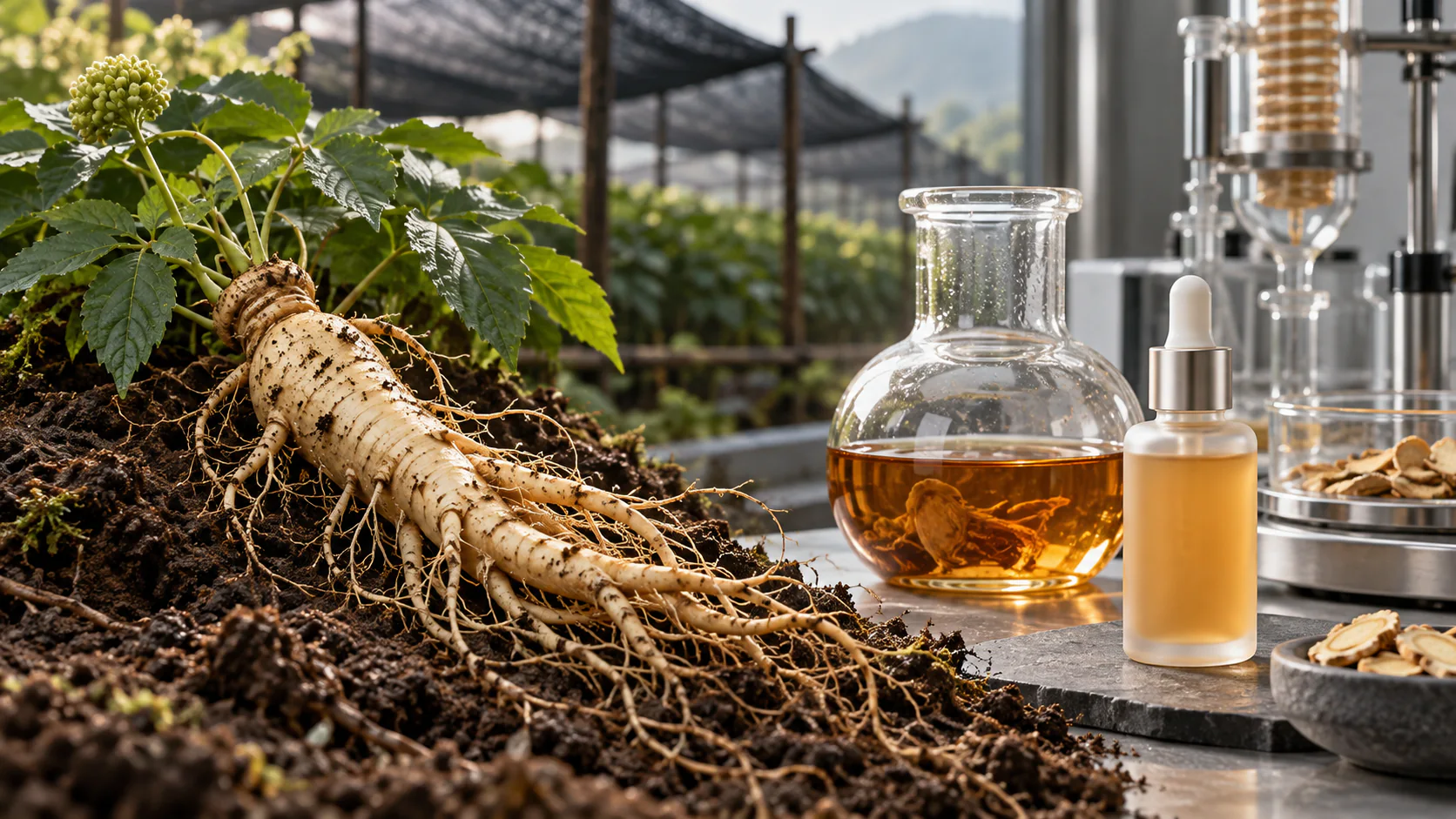
Ginseng Is Ancient in Korea. Ginseng Skincare Is Modern.
Ginseng has a long history in Korea as a crop and medicinal root. Ginseng in Korean skincare is much newer. Steaming, extraction, fermentation and enzyme treatment can produce ingredients with different chemical profiles, while the evidence for finished products remains limited to a handful of small, specific studies.
Two bottles sit side by side. Beauty of Joseon’s Ginseng Essence Water lists ginseng root water, callus culture extract, root extract, berry extract and a ferment filtrate. Donginbi’s 1899 Signature Oil puts “Red Ginseng” on the front, while its ingredient list names Panax ginseng root oil.
Both are ginseng products, but the word ginseng does not tell you how much is present, how old the plant was or how the raw material became a cosmetic ingredient. Those details decide whether a label is informative or simply persuasive.
The root has a long history
The Rural Development Administration says ginseng is usually grown for four to six years before harvest. It also leaves growers with a rotation problem. Fields may stay out of ginseng production for a decade or longer, and the FAO profile of the Geumsan system describes a 15-to-20-year rotation cycle. As first-time fields became scarce, paddy fields accounted for 49.6% of Korea’s ginseng area in 2022, according to RDA figures reproduced in an industry cultivation guide.
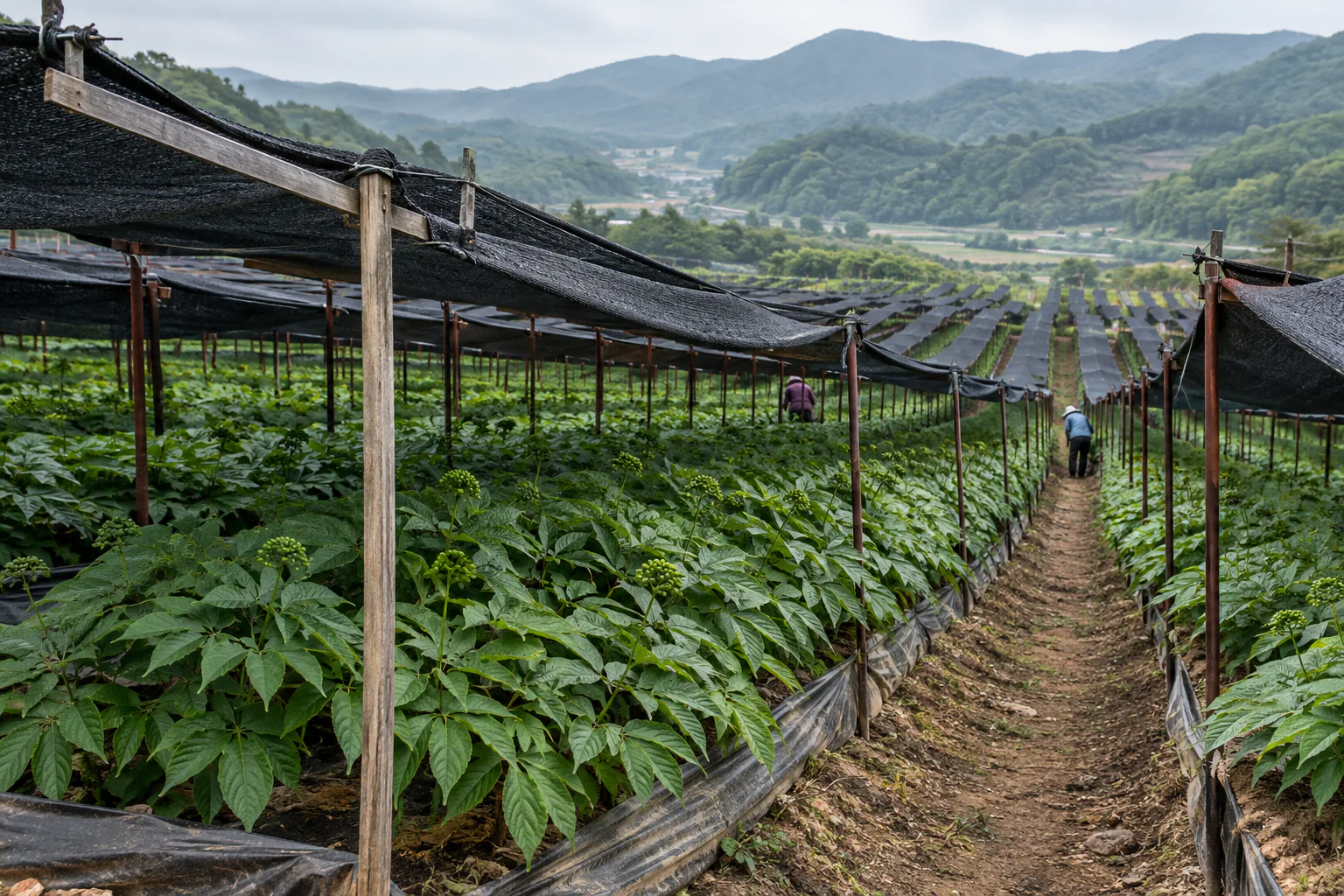
The history is easy to overstate. The FAO page uses a 1,500-year figure, but a footnote in the nomination dossier says it refers to the history of wild ginseng. The dossier describes the farming system, including shade cultivation, as about 500 years old. Neither date describes a cosmetic tradition.
The cosmetic chapter is younger
Amorepacific’s corporate history dates ABC Ginseng Cream to 1966. Some media accounts give 1964, so 1966 is best treated as the company’s chronology, not a settled starting date for the whole category.
Cosmetic use brought a different set of technical questions. An ingredient has to remain stable in a formula, survive storage and appear on a label under an accepted name. The way manufacturers process the root became as relevant as the plant itself.
That ingredient-to-formula pipeline sits inside the manufacturing network described in How Korea Built the K-Beauty Industry.
What “ginseng” in Korean skincare actually means
Korea’s Ginseng Industry Act defines fresh ginseng, or susam, as undried. White ginseng, or baeksam, is dried without being cooked. Red ginseng, or hongsam, is steamed or otherwise cooked before drying. These are processing categories, not quality grades.
Cosmetic labels introduce more variation. In a purposive sample of twelve products checked on 4 October 2026, ginseng appeared as root water, root extract, root oil, seed oil, berry extract, flower extract, leaf and stem extract, callus culture extract, hydrolyzed ginseng saponins, ginsenosides and ferment filtrate. Seven products listed at least one plant part other than the root.
Some studies use the term “fermented black ginseng.” This article does not treat that material as interchangeable with black ginseng as defined under Korean law because the studies do not establish that they are the same.
Processing changes the ingredient
Steaming changes ginseng’s chemical profile. Research papers report different proportions of ginsenosides in red and white ginseng, although the evidence reviewed here does not support a blanket claim that red ginseng is stronger.
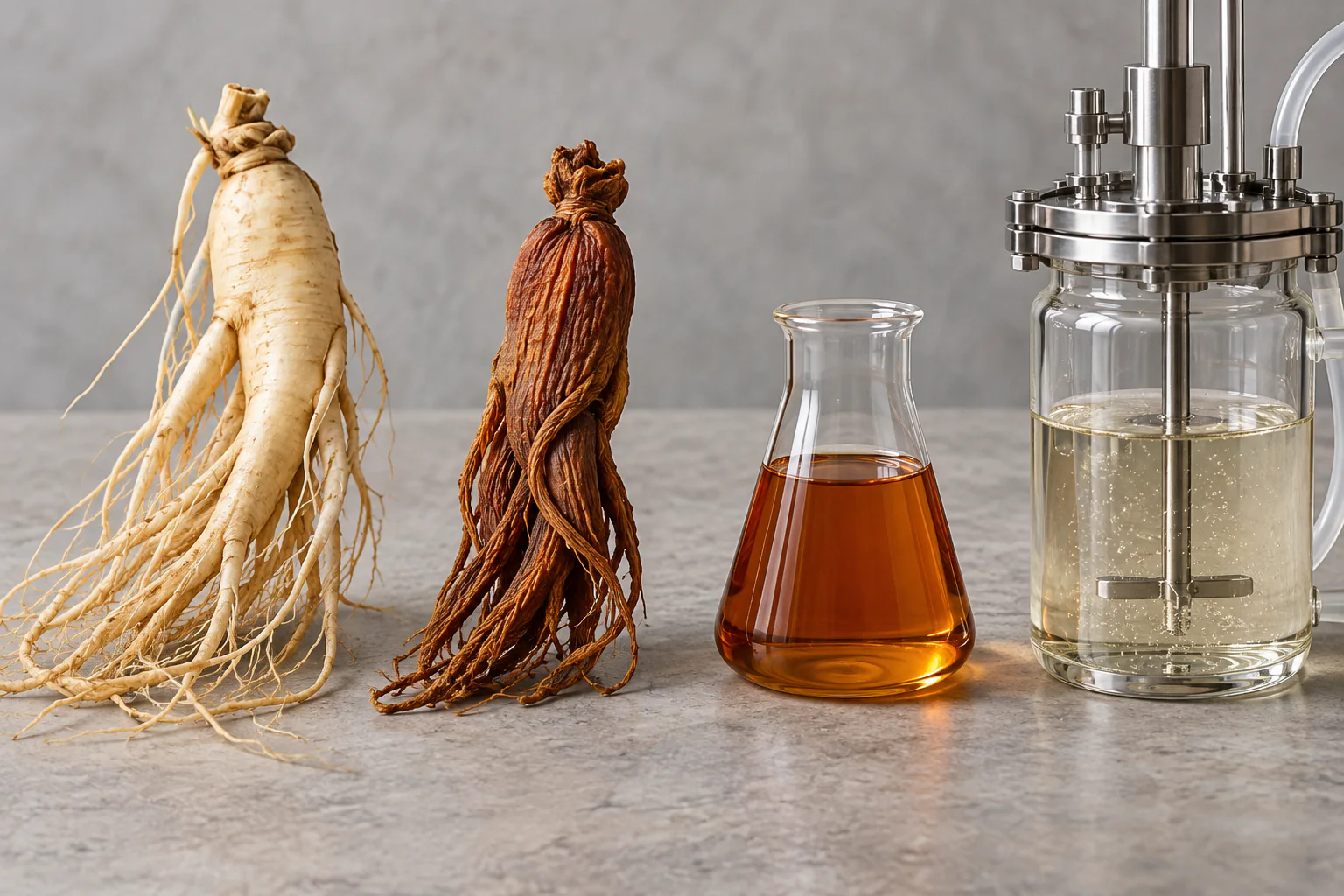
Fermentation and enzyme treatment can change the profile again. In one pharmacokinetic study, a fermented red ginseng extract contained 3.65 mg/g of Compound K, while the non-fermented extract had none detectable. The result belongs to one commercial extract tested through oral dosing. It does not show what happens on skin or in every fermented product.
Amorepacific says raw ginseng contains less than 1 ppm of Compound K and that its bioconversion process raises the concentration about 6,000-fold. Those figures come from the company; I did not find an independent paper confirming the same numbers.
Extraction also matters. A 2024 review cites a laboratory study in which water, 30% ethanol and 30% butylene glycol extracts of red ginseng marc produced different results for antioxidant activity, elastase inhibition and cytotoxicity. The material was leftover pulp, and the work was done in the lab. It shows why the word extract needs context, not how a finished cream performs.
What researchers know, and what they do not
The same 2024 review states that researchers still do not know which ginseng component directly contributes to skin health. Much of the literature it discusses comes from cells and animals. Those studies can help identify a mechanism worth testing, but they cannot establish what a product will do on a person’s face.
Human trials are more useful when they test a topical product against a suitable control. Even then, the result applies to the formulation, dose, body area and study population that were tested.
What human studies show about ginseng skincare
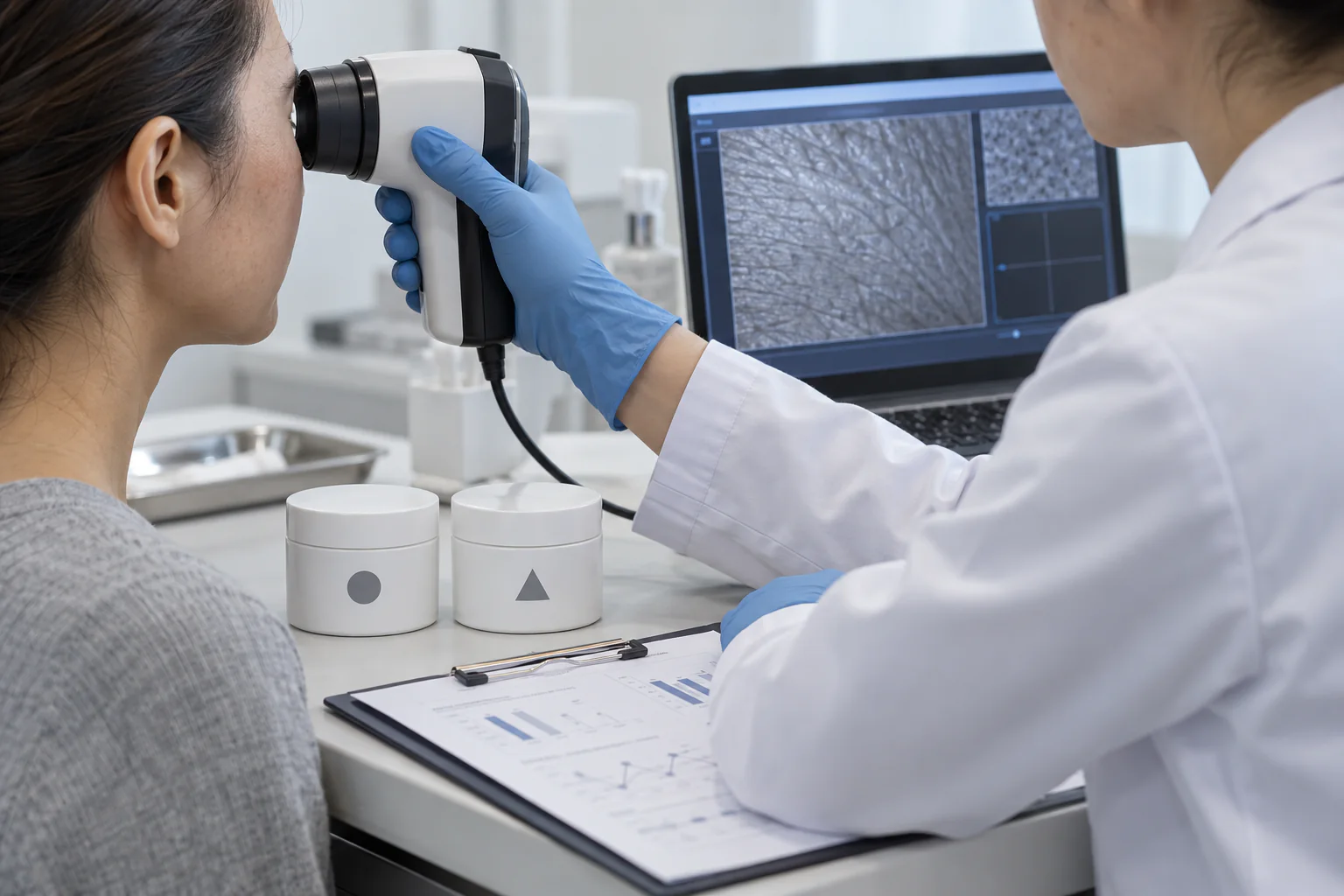
The human evidence consists of small trials that tested different materials and routes. The studies are not interchangeable.
| Study | What was tested | Size and length | Main limitation |
|---|---|---|---|
| Enzyme-modified ginseng extract cream | Eye-area cream versus placebo; randomized and double-blind | 23 people; 12 weeks reported in a later review | One modified ingredient; the full-text concentration, funding and conflicts were not independently extracted |
| Fermented black ginseng 1% cream | Split-face comparison with a control cream; evaluator-blinded | 23 people; twice daily for 8 weeks | The abstract does not report randomization; a co-author was affiliated with a ginseng company research institute |
| Ginseng and hawthorn cream | 1:1 mixture; randomized, double-blind split-face comparison | 21 enrolled, 20 analyzed; 12 weeks | The result cannot be assigned to ginseng alone; Korea Ginseng Corporation supplied the ginseng |
| RDA sprout-ginseng cream | Fermented leaf and stem extract compared with untreated skin | 32 women; 2 and 4 weeks | Reported in a press release; the comparison was untreated skin rather than a placebo cream |
| Red ginseng with two herbs, taken orally | Three-herb supplement; randomized and double-blind | 82 women completed; 24 weeks | Oral use and a mixed formula, so it is not evidence for a ginseng cream |
| Enzyme-treated red ginseng powder, taken orally | Supplement versus placebo | 98 enrolled, 78 completed and analyzed; 24 weeks | Oral use; one author worked at Korea Ginseng Corporation |
The first trial found improvements in selected eye-area photodamage and roughness measures versus placebo. The fermented black ginseng study reported differences in selected eye-wrinkle and skin-color measures after eight weeks. Both trials included 23 people.
The RDA reported wrinkle-index reductions of 5.26% after two weeks and 9.62% after four weeks for a cream containing fermented sprout-ginseng leaf and stem extract. Its collagen and MMP results came from cell experiments, not from the 32 participants. The ginseng and hawthorn trial tested a mixture, while the last two studies tested supplements that participants swallowed.
Together, these studies justify further research. They do not justify a general promise that any ginseng cream will reduce wrinkles.
Ginseng cream and functional cosmetics are different questions
Korea has a regulatory route for cosmetics that make functional claims such as wrinkle improvement. The notification-based list in the MFDS functional-cosmetics review regulation contains four wrinkle-improvement ingredients: retinol, retinyl palmitate, adenosine and polyethoxylated retinamide. Ginseng is not on that list.
That list is one route, not the whole system. Other products can seek individual review with supporting evidence. A product containing ginseng may therefore qualify as a functional cosmetic, but the ingredient alone does not establish that status. The claim has to be checked product by product.
In a 2025 consumer notice, the MFDS reminds shoppers that cosmetics are not medicines and advises them to check whether a functional claim has been reviewed. The notice applies to cosmetics generally.
How to read a ginseng skincare label
Start with the ingredient list. The EU’s CosIng database and its official ingredient glossary include names such as Panax Ginseng Root Water, Panax Ginseng Root Extract, Panax Ginseng Seed Oil, Panax Ginseng Berry Extract and Lactobacillus/Panax Ginseng Root Ferment Filtrate. A name can identify the plant part or a processing step. Its presence in CosIng does not amount to approval of an efficacy claim.
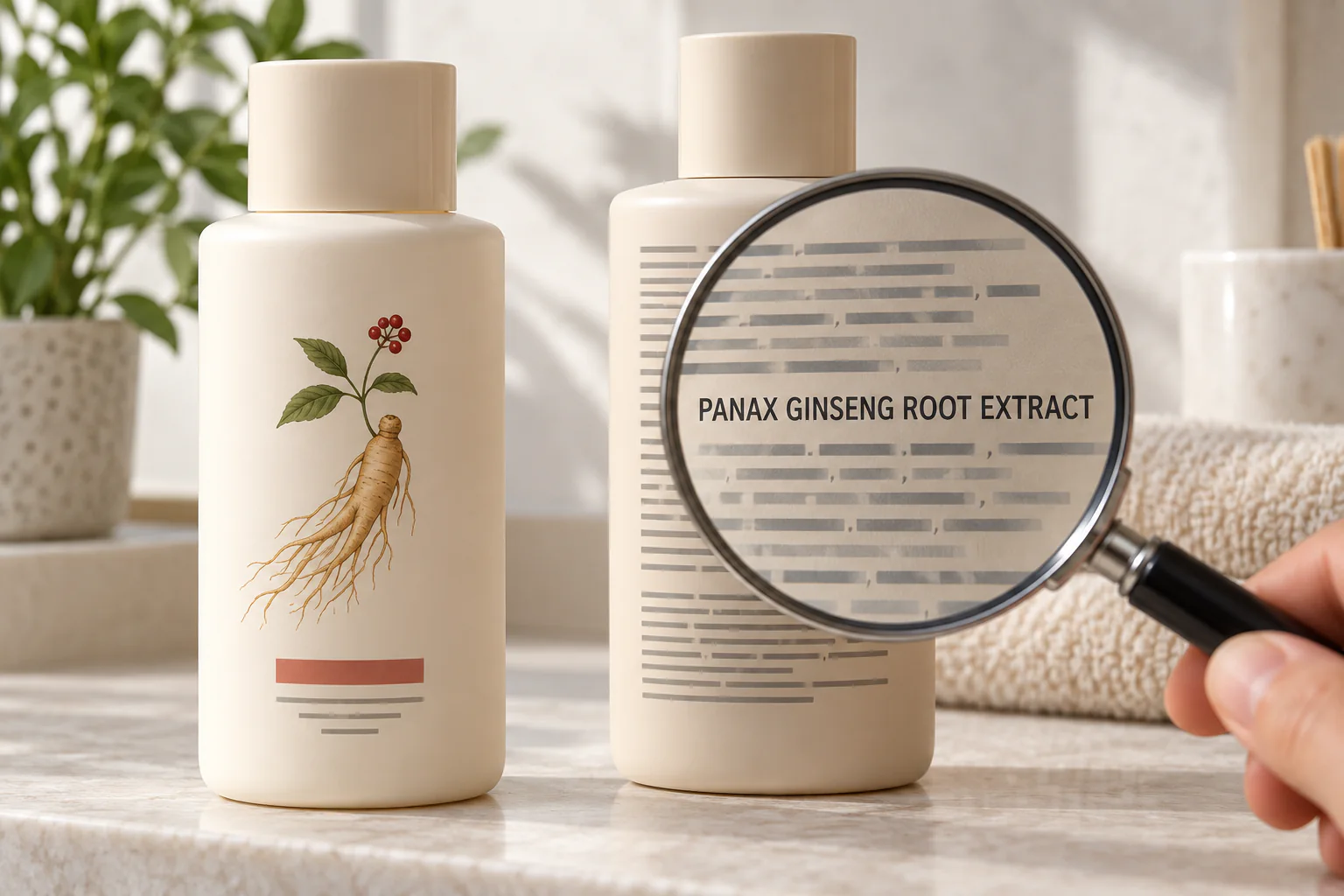
In the twelve-product sample, ingredient lists often identified a plant part or process but usually did not specify red versus white ginseng, growing age, origin or extract strength. One retailer’s list used the words “Red Ginseng Extract.” Two Donginbi products used red ginseng in their product names or marketing while their standard ingredient names did not. This was a small, purposive sample rather than a survey of the market, and regional formulas can change.
Percentages also need a date. Beauty of Joseon’s 2022 brand article described an earlier Revive Serum formula as 63% ginseng root water. The current official ingredient list is different and places Panax Ginseng Root Water eighth. The 63% figure belongs to the earlier version.
The same comparison problem appears in Korean PDRN skincare, where large PPM figures can refer to different raw materials or disclosures.
A Cosmetic Ingredient Review assessment concluded that 13 Panax root-derived ingredients were safe in the uses and concentrations it evaluated. The assessment dates to 2015 and covers those root-derived ingredients, not every plant part or finished product. People with sensitive skin may still choose to patch-test any unfamiliar product, whether it contains ginseng or not.
Is a ginseng skincare product worth buying?
The word ginseng is a starting point. Before paying more for it, check:
- Which ginseng ingredient appears in the current formula and where it sits in the list
- Whether a percentage refers to the same version now on sale
- Whether a functional claim has been reviewed for that product
- Whether the cited human study tested a comparable topical formula rather than cells, a supplement or a mixed herbal product
Ginseng skincare has enough human evidence to be plausible and too little to support broad promises. Processing determines what reaches the formula, and the finished product matters more than the story on the front.
The root may be ancient. The ingredient in the bottle is not.