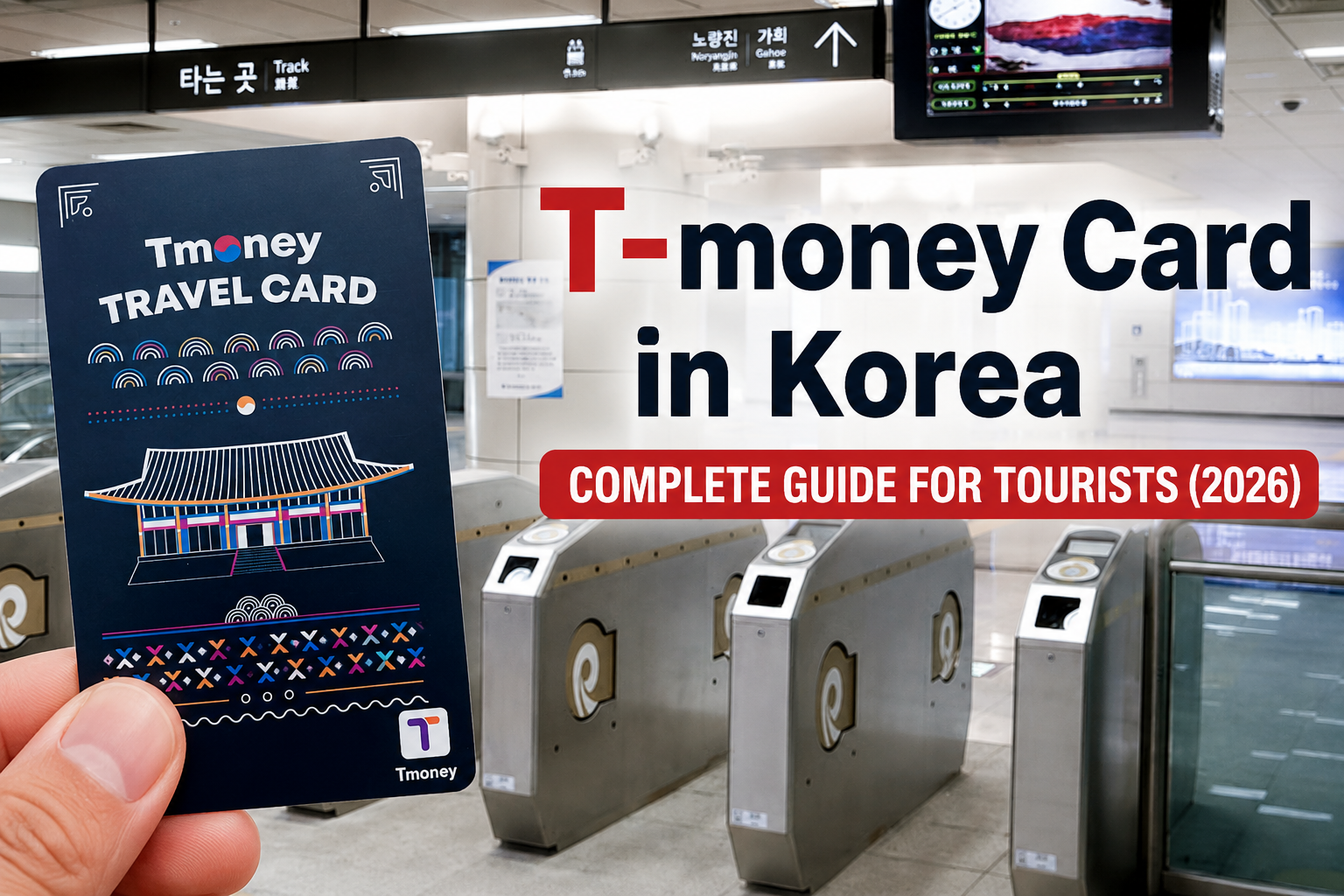
T-money Card in Korea: Complete Guide for Tourists (2026)
Last updated: August 2026
If you already read our guide on getting from Incheon Airport to Seoul, you know the next question is usually: how do you actually get around once you are here? For almost every traveler, the answer starts with a small plastic card called T-money.
For most visitors, getting a T-money card in Korea is one of the simplest things to sort out after arriving. But buying it, topping it up, using it on AREX, and getting a refund can be more confusing than it first looks. Here is what you actually need to know in 2026.
Quick answer
A T-money card is a rechargeable transit card for Korea’s subways and buses. If you are staying more than a day or two, get one after you land and load a modest amount.
- Where to buy: convenience stores (CU, GS25, 7-Eleven, Emart24), staffed subway station counters, and convenience stores and transit centers in both Incheon Airport terminals.
- Card cost: roughly 4,000 to 8,000 won, a one-time price, not a refundable deposit.
- First load: about 20,000 to 30,000 won. Top up with cash.
- AREX: works on the All-Stop Train. The Express Train needs a separate ticket.
At a glance
T-money card basics: price, where to buy and how much to load
| Question | Short answer |
|---|---|
| How much is the card? | Roughly 4,000 to 8,000 won for many standard cards. One-time purchase, not a refundable deposit. It does not come preloaded. |
| Where do I buy it? | Convenience stores, staffed station counters on Lines 1 to 8, and convenience stores and transit centers at Incheon Airport. |
| How much should I load? | About 20,000 to 30,000 won to start. A single top-up maxes out at 500,000 won. |
| How do I top up? | Cash at station machines (English menu) or at a convenience store counter. Some newer machines may accept international cards, but it varies, so carry won. |
| Where does it work? | Subways, buses, AREX All-Stop, many taxis, and shops with the T-money logo, in cities including Seoul, Busan and Daegu. |
| Does it work on the AREX Express? | No. The nonstop Express Train to Seoul Station uses a separate ticket. |
| Can I get a refund? | Small balances at participating convenience stores and subway service centers. Over 50,000 won you may need Tmoney Town at Seoul Station. |
The basics
What is T-money, and do you actually need one?
T-money (티머니) is Korea’s rechargeable transit card. Tap it on subway gates, tap it on buses, and in most cities that covers your entire trip. It also works at convenience stores, some taxis, and vending machines, so it doubles as a low-effort payment card for small purchases.
Do you need one? For anyone spending more than a day or two in Seoul, yes. Paying cash for single-ride tickets every time gets tedious fast, and T-money fares are cheaper than single tickets on top of that. If your whole trip is one taxi from the airport to a hotel and back, you can probably skip it. Everyone else should get one on day one.
Inside Korea
Most Koreans do not use T-money the same way tourists do.
Many Korean residents use the transit function built into their credit or debit cards rather than topping up a physical T-money card. That means buying, reloading, and refunding a physical T-money card can actually be less familiar to some locals than you might expect.
That is different from a Korean-issued credit or debit card with a dedicated transit function. Here is how Korea’s postpaid transit card system actually works.
Where to buy
Where to buy a T-money card in Korea
You have three easy options:
Convenience stores
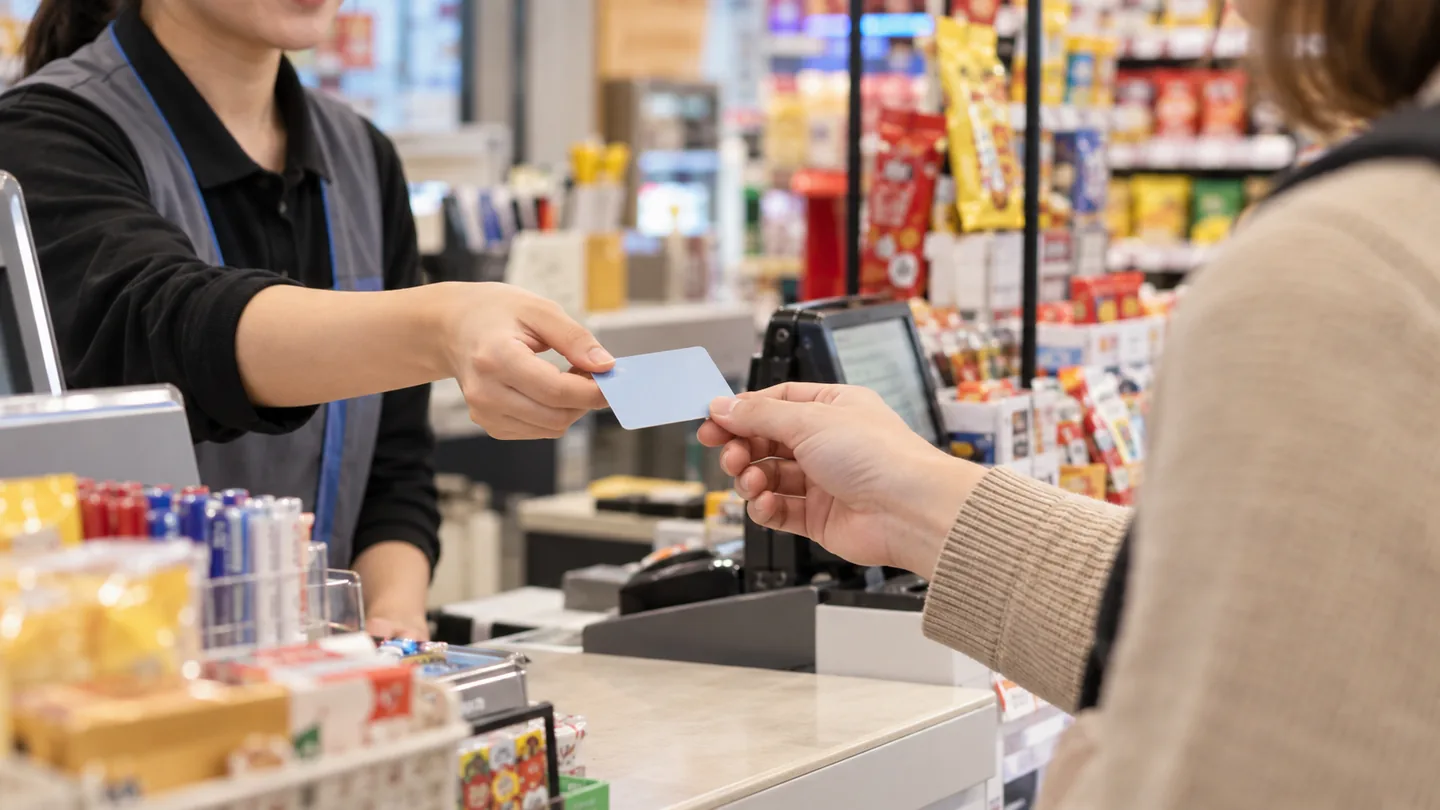
CU, GS25, 7-Eleven, and Emart24 all sell T-money. This is the most common way tourists get one, since these stores are everywhere.
Subway station counters
Staffed information counters at stations on Lines 1 to 8 sell cards too. This is different from the unstaffed ticket vending machines, which mainly handle top-ups rather than new card sales.
Incheon Airport
Available at convenience stores and transit centers in both terminals, so you can pick one up right after landing.
Once you have a card, the unstaffed vending machines inside any station work fine for reloading it, English menus included.
Actually
Older guides still mention the “Korea Tour Card.” It has been phased out.
Korea’s tourist transportation card lineup has changed, so be careful with older information. A standard T-money card, or the newer traveler-oriented T-money card options sold at the same convenience stores, covers the same ground.
The money
How much does T-money cost, and how much should you load?
Card price
Usually a few thousand won, depending on design and type. Expect roughly 4,000 to 8,000 won for many standard cards. It is a one-time purchase, not a refundable deposit.
First load
It does not come preloaded. A reasonable start is 20,000 to 30,000 won if you ride the subway a few times a day. Top up again whenever you run low.
Top-up limit
A single top-up maxes out at 500,000 won. For most short trips there is little reason to load anywhere near that.
Top up
How to top up your T-money card
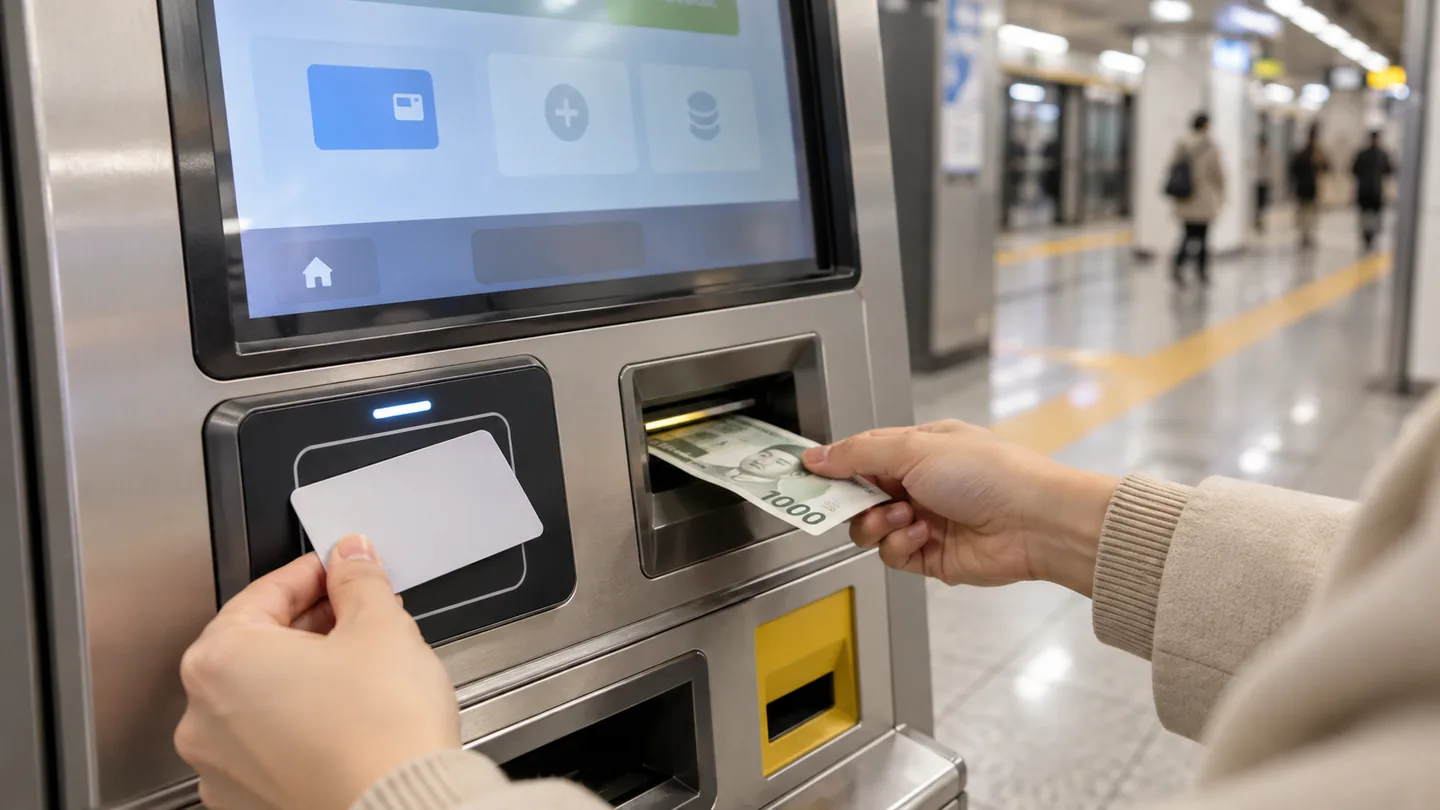
The traditional way to top up is with cash. At a subway station:
1 | Find a ticket vending or card reload machine Look inside any station. |
2 | Switch the screen to English The menu is available in English. |
3 | Place your T-money card on the reader |
4 | Choose the amount |
5 | Insert Korean won Convenience store staff can also reload the card for you. Hand them the card and tell them how much to add. |
What about credit cards?
This is where 2026 information gets messy. Some Seoul subway stations have introduced newer machines that may support international credit cards, but availability and supported cards vary by station and machine.
If you want the least complicated option, carry some Korean won for top-ups. Korea is becoming more card-friendly for visitors, but T-money top-up infrastructure is not completely uniform yet, so do not arrive assuming you can recharge a physical card everywhere with Visa or Mastercard.
Where it works
Where can you use T-money?
T-money is not just a Seoul subway card. You can use it on most public transportation systems across Korea, including subways and buses in major cities such as Seoul, Busan, and Daegu.
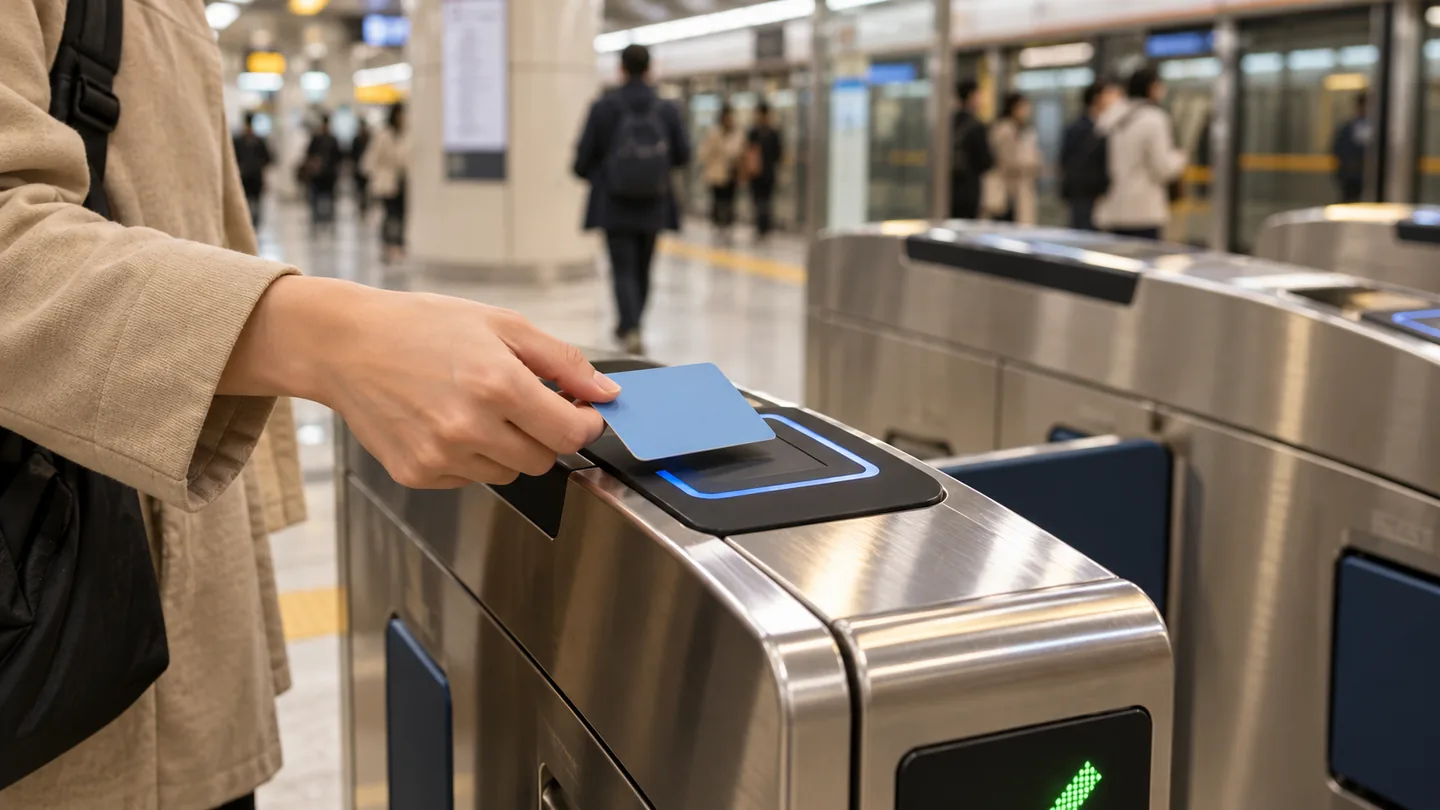
Subways
Tap when entering and again when leaving the station.
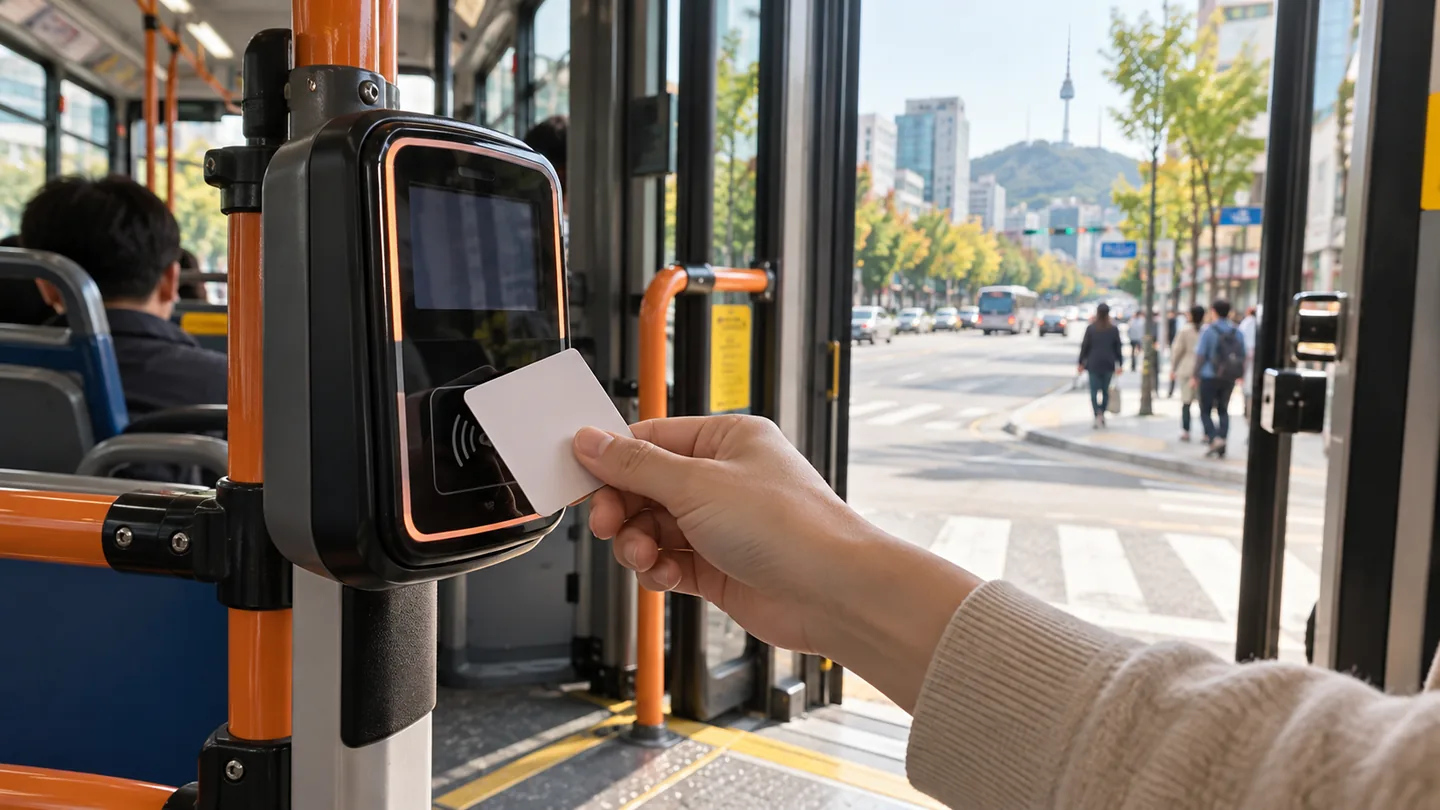
Buses
Tap when boarding, and remember to tap again before getting off, especially if you are transferring.
AREX All-Stop Train
T-money works like a normal transit card between Incheon Airport and Seoul.
Taxis
Many taxis accept T-money, although a regular credit card is usually just as convenient.
Convenience stores and vending machines
Look for the T-money logo. Many locations accept the card for small purchases.
The AREX distinction
AREX Express Train is different. The nonstop Express Train to Seoul Station uses a separate ticket rather than a normal T-money fare.
Taking the All-Stop Train from Incheon Airport? Just use T-money. Taking the Express Train? Buy a separate Express ticket.
New to Seoul’s subway? See our Seoul Subway Guide for Tourists for current fares, single-journey tickets, transfer rules, exit numbers and the 2026 foreign credit card update. For a full comparison of the airport train, limousine bus, and taxi, see our guide to getting from Incheon Airport to Seoul.
Transfers
How the transfer discount works
One reason T-money is worth using is Korea’s integrated transfer system. When you move between eligible buses and subways, you generally do not pay a completely new base fare each time. The system calculates the transfer automatically.
The important part is tapping correctly. On the subway, you naturally tap when entering and leaving through the gates. On buses, tap your card when you get off, not just when you get on.
1 | Tap when you board the bus |
2 | Tap again when you get off |
3 | Transfer within the allowed window Move to the next eligible bus or subway. |
4 | The system applies the fare The appropriate fare is calculated automatically. |
Seoul’s standard transfer window is generally 30 minutes, with a longer window during late-night and early-morning hours. Because fare and transfer rules can change, check the current Seoul transportation guidance if your trip depends on a specific fare or transfer condition.
Balance
How to check your T-money balance
The easiest way is to look at the screen when you tap. Subway gates and bus card readers briefly display your remaining balance after each transaction. You can also check it at subway ticket machines, or ask staff at convenience stores that handle T-money top-ups.
Do not worry about keeping the balance perfectly calculated. If it starts getting low, add another 10,000 or 20,000 won.
Refunds
How to get a T-money refund
If you have money left on your card at the end of your trip, you can get the remaining balance refunded. For smaller balances, refunds are available at participating convenience stores and subway service centers, although the exact limit and handling fee can depend on where you request the refund.
Larger balances require a designated T-money service location. If your remaining balance is over 50,000 won, do not assume a convenience store can refund it. You may need to visit the Tmoney Town service center at Seoul Station.
Other cards
T-money vs WOWPASS vs Climate Card vs EZL
T-money is not the only transportation card you will see in Korea. For a first-time visitor, the number of cards can make a simple decision feel more complicated than it needs to be.
| Card | Best for | Main advantage | Keep in mind |
|---|---|---|---|
| T-money | Most tourists | Simple, widely accepted transit card | Requires topping up |
| WOWPASS | Tourists who also want a payment card | Transit plus tourist-focused payment features | More features than some travelers need |
| Climate Card | Heavy public-transit use in Seoul | Unlimited eligible transit during the pass period | Mainly useful in Seoul |
| EZL | Alternative transit card users | Works across many Korean transit systems | T-money is generally easier for first-time visitors to recognize |
For most first-time tourists, I would start with T-money. It is simple, widely recognized, and works for the normal subway-and-bus travel most visitors need.
The Climate Card becomes more interesting if you are staying in Seoul and taking public transportation repeatedly every day. WOWPASS makes more sense if you specifically want its additional payment and tourist services. You do not need to collect multiple cards just because they are available.
Mobile
Can you use T-money on your phone?
Mobile transit options in Korea are changing quickly, but they are still more complicated for international visitors than simply buying a physical T-money card.
Depending on your phone, account region, payment method, and the services available when you visit, mobile T-money options may differ. For that reason, I would not plan a first trip around using your overseas phone exactly like a physical card.
If mobile payment works for your setup, that is convenient. If not, a physical T-money card is inexpensive and easy to replace, so it is still the safest default recommendation for most visitors. Whichever you choose, make sure your phone has data on arrival: see our Korea eSIM and SIM card guide.
Questions
T-money FAQ
How much is a T-money card?
The card itself costs roughly 4,000 to 8,000 won for many standard cards, paid once and not refundable. That is separate from the balance you load for rides.
Where can I buy a T-money card at Incheon Airport?
Convenience stores and transit centers in both terminals sell them, so you can pick one up right after landing.
Can I use T-money on the AREX?
Yes on the AREX All-Stop Train. The AREX Express Train requires its own ticket.
How much should I load at first?
Around 20,000 to 30,000 won is a practical starting point if you expect to use buses and subways regularly. Add more whenever you need it.
Do I need to tap off buses?
Yes. Tap when you board and again when you get off, especially if you are transferring.
Can I use T-money outside Seoul?
Yes. T-money works on public transportation in many cities across Korea, so you do not normally need a new card every time you leave Seoul.
Can two people share one card?
For normal subway and transfer use, each traveler should have their own card. The system tracks each passenger’s entry, exit, and transfers separately.
Does T-money expire?
The physical card can generally be kept and reused on a future trip. If you plan to return to Korea, keeping the card is often easier than refunding every last won.
Can I get a refund on my balance?
Yes. Small balances at participating convenience stores and subway service centers. Over 50,000 won, you may need Tmoney Town at Seoul Station.
The verdict
So, should you get a T-money card?
For most visitors, yes. T-money is not something you need to overthink. Buy one after you arrive, add a reasonable amount, and use it for buses and subways as you travel around Korea.
The parts that actually cause confusion are the small details: where you can top it up, remembering to tap off buses, knowing that the AREX Express Train is different, and avoiding outdated advice about old tourist cards. Once those are clear, using public transportation in Korea becomes much easier.
◆
Read next
T-money is only one part of getting around. Continue with our practical guides for first-time visitors.
Complete guide to getting around Seoul by subway, bus and taxi
Getting from Incheon Airport to Seoul
Seoul Subway Guide for Tourists
Sources and updates
Official sources
Transportation fares, card policies, refund rules, and payment options can change. This guide was last reviewed in August 2026. Check the official sources below for the latest information.
VISITKOREA: Transportation Cards
Card prices, where to buy and reload T-money, accepted locations, and refund information.
Tmoney: Official English Website
Official Tmoney service and product information.
Seoul Metropolitan Government: Public Transportation
How transportation cards work on Seoul buses and subways, including transfer rules.
Seoul Metropolitan Government: Climate Card
Current Climate Card prices, coverage, purchase, charging, and refund information.