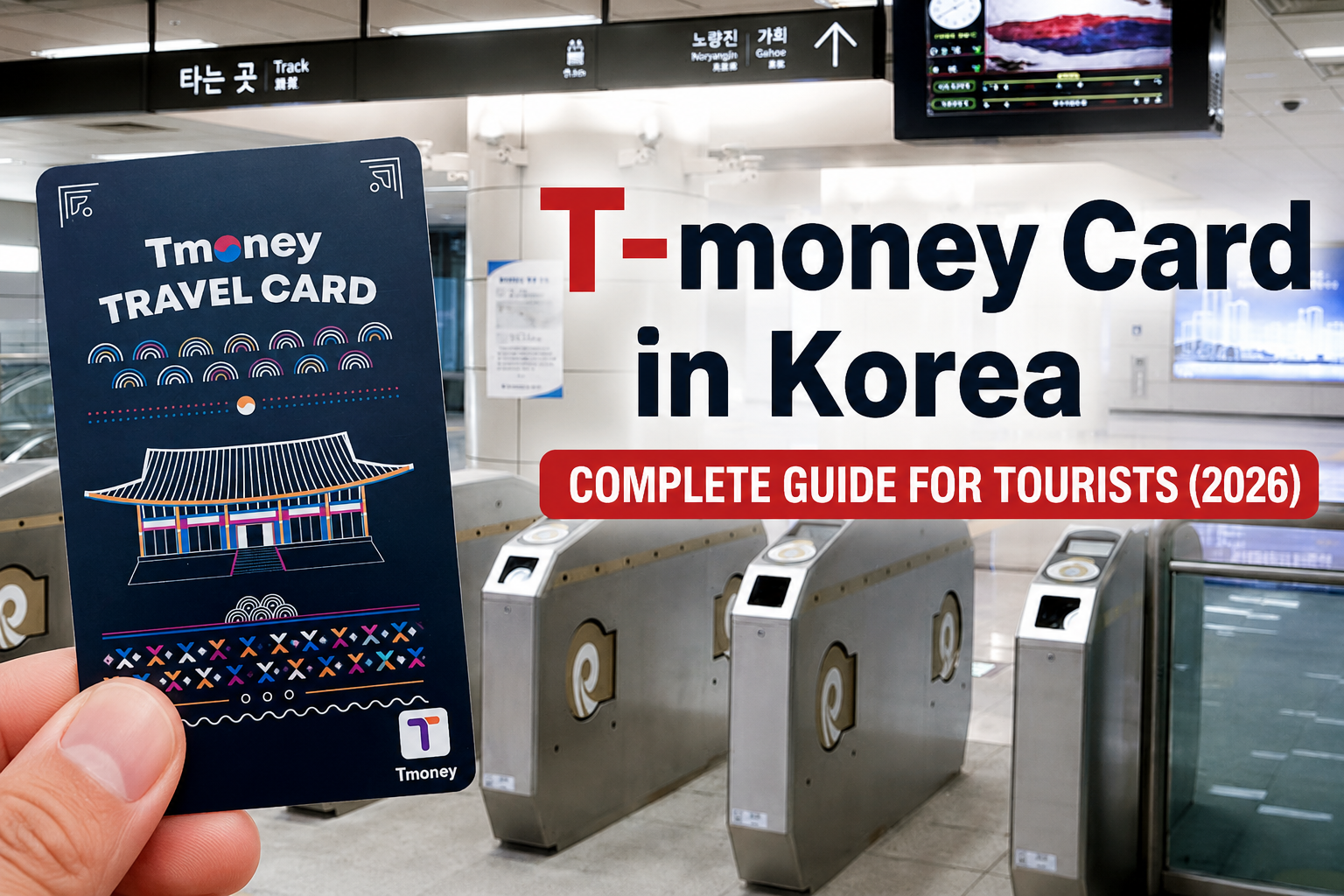
T-money Card in Korea: Complete Guide for Tourists (2026)
Last updated: August 2026
If you already read our guide on getting from Incheon Airport to Seoul, you know the next question is usually: how do you actually get around once you’re here? For almost every traveler, the answer starts with a small plastic card called T-money.
For most visitors, getting a T-money card in Korea is one of the simplest things to sort out after arriving. But buying it, topping it up, using it on AREX, and getting a refund can be more confusing than it first looks. Here’s what you actually need to know in 2026.
What Is T-money — and Do You Actually Need One?
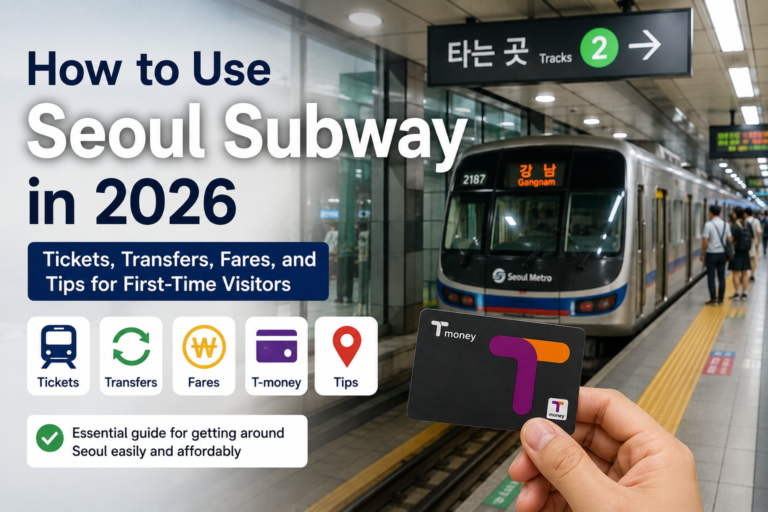
T-money (티머니) is Korea’s rechargeable transit card. Tap it on subway gates, tap it on buses, and in most cities that covers your entire trip. It also works at convenience stores, some taxis, and vending machines, so it doubles as a low-effort payment card for small purchases.
Do you need one? For anyone spending more than a day or two in Seoul, yes. Paying cash for single-ride tickets every time gets tedious fast, and T-money fares are cheaper than single tickets on top of that. If your whole trip is one taxi from the airport to a hotel and back, you can probably skip it. Everyone else should get one on day one.
INSIDE KOREA
Most Koreans don’t use T-money the same way tourists do.
Many Korean residents use the transit function built into their credit or debit cards rather than topping up a physical T-money card. That means buying, reloading, and refunding a physical T-money card can actually be less familiar to some locals than you might expect.
That is different from a Korean-issued credit or debit card with a dedicated transit function. Here’s how Korea’s postpaid transit card system actually works.
Where to Buy a T-money Card in Korea
You have three easy options:
- Convenience stores — CU, GS25, 7-Eleven, and Emart24 all sell T-money. This is the most common way tourists get one, since these stores are everywhere.
- Subway station information counters — Staffed counters at stations on Lines 1–8 sell cards too. Note this is different from the unstaffed ticket vending machines, which mainly handle top-ups rather than new card sales.
- Incheon Airport — Available at convenience stores and transit centers in both terminals, so you can pick one up right after landing.
Once you have a card, the unstaffed vending machines inside any station work fine for reloading it — English menus included.
You’ll notice older travel guides still mention the “Korea Tour Card.” That card has been phased out. You may still see older Korea travel guides recommending it — be careful with older information, since Korea’s tourist transportation card lineup has changed. A standard T-money card, or the newer traveler-oriented T-money card options sold at the same convenience stores, covers the same ground.
How Much Does T-money Cost?
The card itself usually costs a few thousand won, with the exact price depending on the card design and type. Expect roughly 4,000–8,000 won for many standard cards — this is a one-time purchase price, not a refundable deposit. It doesn’t come preloaded, so budget a bit extra to charge it right away.
There’s no fixed “correct” amount to load. A reasonable starting point is 20,000–30,000 won if you’re taking the subway a few times a day, and you can top up again whenever you’re running low. Just note that a single top-up maxes out at 500,000 won.
How to Top Up Your T-money Card
The traditional way to top up T-money is with cash. At subway stations, look for a ticket vending or card reload machine, switch the screen to English, place your T-money card on the reader, choose the amount, and insert Korean won. Convenience store staff can also reload the card for you — just hand them the card and tell them how much you want to add.
What about credit cards? This is where 2026 information gets messy. Some Seoul subway stations have introduced newer machines that may support international credit cards, but availability and supported cards can vary by station and machine. If you want the least complicated option, carrying some Korean won for T-money top-ups is still the safest approach.
This is also why I wouldn’t arrive in Korea assuming you can recharge a physical T-money card everywhere with Visa or Mastercard. Korea is becoming more card-friendly for visitors, but T-money top-up infrastructure isn’t completely uniform yet.
Where Can You Use T-money?
T-money isn’t just a Seoul subway card. You can use it on most public transportation systems across Korea, including subways and buses in major cities such as Seoul, Busan, and Daegu.
- Subways — Tap when entering and again when leaving the station.
- Buses — Tap when boarding and remember to tap again before getting off, especially if you’re transferring.
If you’re using Seoul’s subway for the first time, see our Seoul Subway Guide for Tourists for current fares, single-journey tickets, transfer rules, exit numbers and the 2026 foreign credit card update.
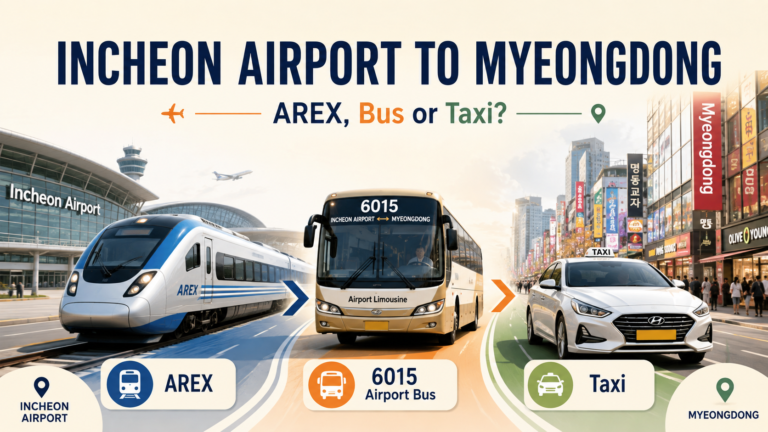
- AREX All-Stop Train — T-money works like a normal transit card between Incheon Airport and Seoul.
- AREX Express Train — This is different. The nonstop Express Train to Seoul Station uses a separate ticket rather than a normal T-money fare.
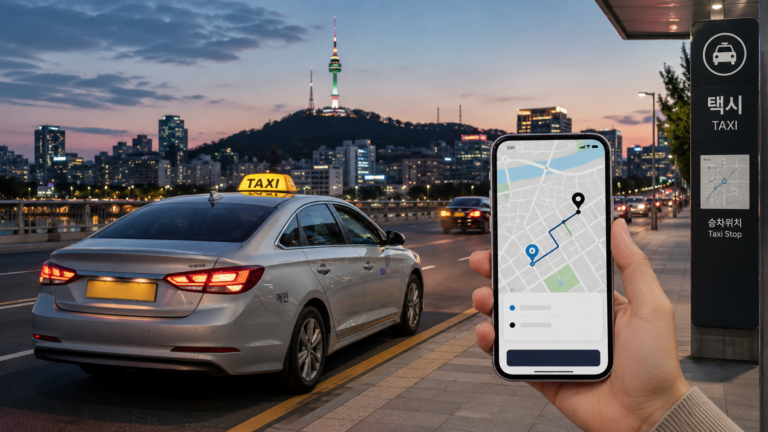
- Taxis — Many taxis accept T-money, although a regular credit card is usually just as convenient.
- Convenience stores and vending machines — Look for the T-money logo. Many locations accept the card for small purchases.
The AREX distinction is particularly important. If you’re taking the All-Stop Train from Incheon Airport, you can simply use T-money. If you’re taking the Express Train, buy a separate Express Train ticket.
For a full comparison of the airport train, limousine bus, and taxi, see our guide to getting from Incheon Airport to Seoul.
How the Transfer Discount Works
One reason T-money is worth using is Korea’s integrated transfer system. When you move between eligible buses and subways, you generally don’t pay a completely new base fare each time. Instead, the system calculates the transfer automatically.
The important part is tapping correctly. On the subway, you naturally tap when entering and leaving through the gates. On buses, make sure you tap your card when you get off — not just when you get on.
- Tap when you board the bus.
- Tap again when you get off.
- Transfer to the next eligible bus or subway within the allowed transfer window.
- The system automatically applies the appropriate fare.
Seoul’s standard transfer window is generally 30 minutes, with a longer window during late-night and early-morning hours. Because fare and transfer rules can change, check the current Seoul transportation guidance if your trip depends on a specific fare or transfer condition.
How to Check Your T-money Balance
The easiest way is simply to look at the screen when you tap. Subway gates and bus card readers briefly display your remaining balance after each transaction.
You can also check your balance at subway ticket machines and ask staff at convenience stores that handle T-money top-ups.
Don’t worry about keeping the balance perfectly calculated. If it starts getting low, just add another 10,000 or 20,000 won. For most short trips, there’s little reason to load a large amount at once.
How to Get a Refund
If you have money left on your T-money card at the end of your trip, you can get the remaining balance refunded. For smaller balances, refunds are available at participating convenience stores and subway service centers, although the exact limit and handling fee can depend on where you request the refund.
Larger balances require a designated T-money service location. If your remaining balance is over 50,000 won, don’t assume that a convenience store can refund it — you may need to visit the Tmoney Town service center at Seoul Station.
For most tourists, the easiest approach is simply not to load too much money onto the card near the end of the trip. Top up in smaller amounts during your final few days so you don’t have to worry about a large refund before leaving Korea.
T-money vs WOWPASS vs Climate Card vs EZL
T-money isn’t the only transportation card you’ll see in Korea. For a first-time visitor, the number of cards can actually make a simple decision feel more complicated than it needs to be.
| Card | Best for | Main advantage | Keep in mind |
| T-money | Most tourists | Simple, widely accepted transit card | Requires topping up |
| WOWPASS | Tourists who also want a payment card | Transit plus tourist-focused payment features | More features than some travelers need |
| Climate Card | Heavy public-transit use in Seoul | Unlimited eligible transit during the pass period | Mainly useful in Seoul |
| EZL | Alternative transit card users | Works across many Korean transit systems | T-money is generally easier for first-time visitors to recognize |
For most first-time tourists, I’d start with T-money. It’s simple, widely recognized, and works for the normal subway-and-bus travel most visitors need.
The Climate Card becomes more interesting if you’re staying in Seoul and taking public transportation repeatedly every day. WOWPASS makes more sense if you specifically want its additional payment and tourist services. You don’t need to collect multiple cards just because they’re available.
Can You Use T-money on Your Phone?
Mobile transit options in Korea are changing quickly, but they’re still more complicated for international visitors than simply buying a physical T-money card.
Depending on your phone, account region, payment method, and the services available when you visit, mobile T-money options may differ. For that reason, I wouldn’t plan a first trip around being able to use your overseas phone exactly like a physical T-money card.
If mobile payment works for your setup, that’s convenient. If not, a physical T-money card is inexpensive and easy to replace, so it’s still the safest default recommendation for most visitors.
T-money FAQ
Can I use T-money outside Seoul?
Yes. T-money can be used on public transportation in many cities across Korea, so you don’t normally need to buy a new transit card every time you leave Seoul.
Can two people share one T-money card?
For normal subway and transfer use, each traveler should have their own card. The transit system needs to track each passenger’s entry, exit, and transfers separately.
Does T-money expire?
The physical card can generally be kept and reused on a future trip. If you’re planning to return to Korea, keeping the card is often easier than refunding every last won.
Can I use T-money on the AREX?
Yes on the AREX All-Stop Train. The AREX Express Train is different and requires its own ticket. This distinction is worth remembering when traveling between Incheon Airport and Seoul.
How much should I load at first?
There’s no need to load a huge amount. Around 20,000–30,000 won is a practical starting point for many visitors who expect to use buses and subways regularly, and you can add more whenever you need it.
So, Should You Get a T-money Card?
For most visitors, yes. T-money isn’t something you need to overthink. Buy one after you arrive, add a reasonable amount, and use it for buses and subways as you travel around Korea.
The parts that actually cause confusion are the small details: where you can top it up, remembering to tap off buses, knowing that the AREX Express Train is different, and avoiding outdated advice about old tourist cards.
Once those are clear, using public transportation in Korea becomes much easier.
Planning Your First Trip to Korea?
T-money is only one part of getting around. Continue with our practical guides for first-time visitors.
If you’re deciding how to actually move around Seoul once you have your T-money card, see our complete guide to getting around Seoul by subway, bus and taxi.
Sources & Updates
Transportation fares, card policies, refund rules, and payment options can change. This guide was last reviewed in August 2026. Check the official sources below for the latest information.
Official sources
VISITKOREA — Transportation Cards
Card prices, where to buy and reload T-money, accepted locations, and refund information.
Tmoney — Official English Website
Official Tmoney service and product information.
Seoul Metropolitan Government — Public Transportation
How transportation cards work on Seoul buses and subways, including transfer rules.
Seoul Metropolitan Government — Climate Card
Current Climate Card prices, coverage, purchase, charging, and refund information.