Korean Phone Plan After Getting Your Residence Card: What to Do
Quick Answer
Getting your Residence Card does not automatically mean you need a new phone number.
A Korean phone plan after Residence Card issuance can work differently from the passport-based SIM you used when you first arrived.
You may be able to keep your existing number after moving from a passport-based prepaid SIM to a longer-term setup, but the process depends on your carrier, plan type, and how your line was originally registered.
Before buying a new SIM or signing up for another plan, check one thing first: is your current phone number registered using your passport, or is it connected to your Residence Card?
Here’s the short version of what to do next:
- Check how your current line is registered
- Ask your carrier whether your identity information can be updated to your Residence Card
- Check whether you can keep your existing number
- Decide whether your current plan still makes sense for a long-term stay
Why Your Arrival SIM May Not Be Enough
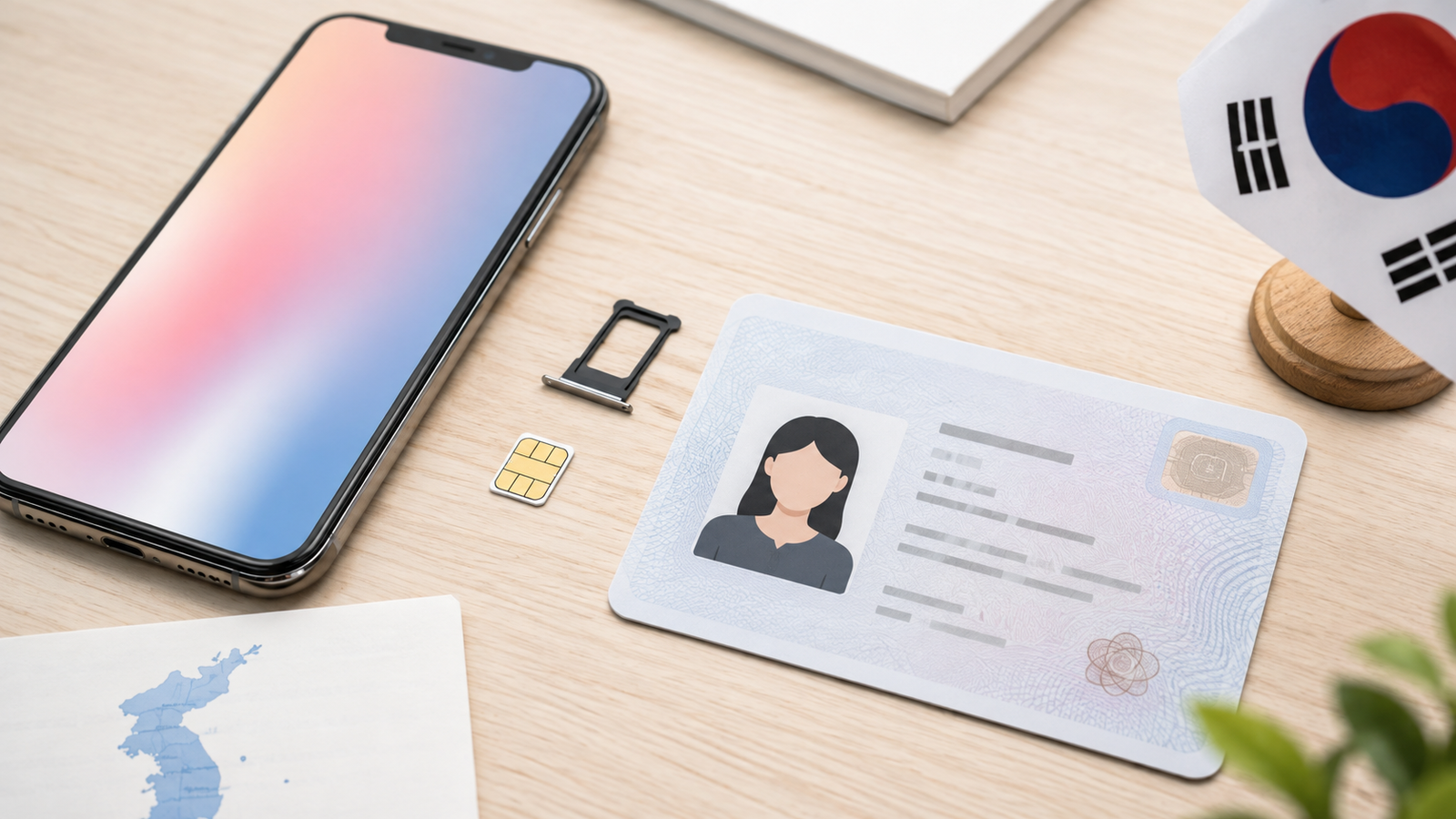
Many SIMs and eSIMs used when first arriving in Korea are designed primarily to get you connected quickly: mobile data, calls, texts, and sometimes a Korean phone number.
Once you’re settling in for the long term, another issue becomes important: how that phone line is registered to your identity in Korea.
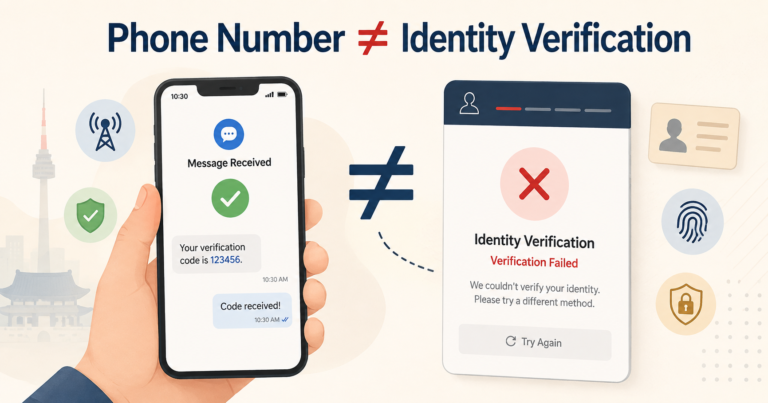
That matters because many Korean banking, shopping, delivery, and online services use mobile identity verification.
A working Korean phone number and a phone number that works for Korean identity verification are not always the same thing.
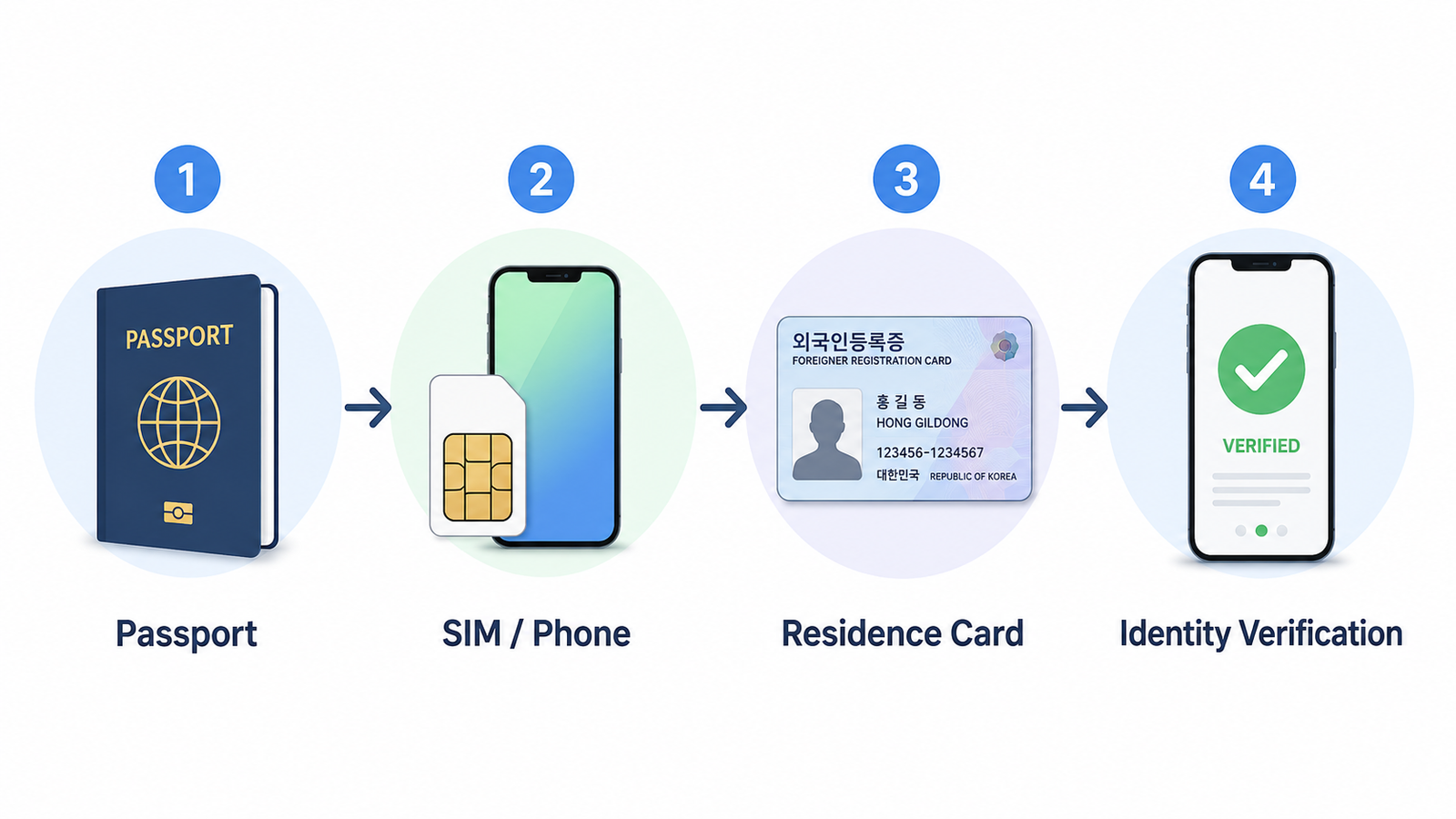
That’s the gap covered in Why Your Korean Phone Number Still Doesn’t Work for Identity Verification. That article explains why the mismatch happens. This one is about what to do once your Residence Card is in hand.
First, Check How Your Current SIM Was Registered
Before shopping for a new plan, check your current line. A few questions will help determine what comes next:
- Did you sign up using your passport or your Residence Card?
- Is your line prepaid or postpaid?
- Is the line registered in your own name?
- Can your identity information be updated without closing the line?
- Can you keep the same number if you change plans?
Name and identity details matter more than many people expect. If the information held by your carrier doesn’t match the identity information you enter during verification, authentication can fail. The identity-verification guide explains this issue in more detail.
There is also a practical reason to check your registration status rather than simply continuing to use the SIM you already have.
KT, for example, currently states that prepaid service activated with a passport is available for 90 days from activation. Prepaid service activated with a Residence Card can remain available until the card expires. KT also says that users who have not registered a foreigner identification number can extend service after visiting a store for real-name verification.
Official source: KT Global — What You’ll Need
Do You Need to Change Your Phone Number?
Not necessarily. But don’t assume you’ll automatically be able to keep it either.
Once your Residence Card arrives, check these possible paths with your current carrier:
1. Keep your number and update your identity information
Depending on your carrier and current registration type, it may be possible to update the identity information attached to your existing line without changing the number.
2. Keep your number and change plans with the same carrier
Ask whether your current line can be moved from its existing prepaid or short-term setup to a longer-term plan while keeping the same number. Availability and procedures can vary by carrier and product.
3. Move your number to another carrier
If you want to switch providers, ask whether your current line is eligible for number portability, often referred to as MNP. Eligibility can depend on the provider and how your existing line is registered.
4. Start with a new number
If your existing line can’t be updated, converted, or transferred, the simplest option may be to open a new line using your Residence Card from the start.
The important point is to check before cancelling anything. Losing a number unnecessarily can create extra work if you’ve already started using it for accounts, apps, or contacts in Korea.
Prepaid vs. Postpaid After You Get Your Residence Card
| Prepaid | Postpaid | |
|---|---|---|
| Payment | Pay in advance | Billed monthly |
| Signup difficulty | Usually simpler | May require more documentation |
| Long-term use | Possible | Often more convenient |
| Identity verification | Depends on registration and eligibility | Depends on registration and eligibility |
| Contract commitment | Usually minimal | Varies by plan |
The important point isn’t prepaid versus postpaid on its own.
Whether mobile identity verification works depends on more than how you pay for the plan. Your line also needs to be registered with identity information that the mobile identity-verification system can use.
Should You Switch to an MVNO?
Once you have your Residence Card and plan to stay in Korea long term, a Korean MVNO, commonly called 알뜰폰, is worth considering.
MVNO plans can be cheaper than plans sold directly by SKT, KT, and LG U+, while using those carriers’ mobile networks.
Advantages
- Often lower monthly prices
- Plans using SKT, KT, or LG U+ networks
- Many combinations of data, calls, and texts
Trade-offs
- English support varies by provider
- Online signup can be less foreigner-friendly
- Less in-person support than the major carriers
- Foreigner eligibility and required documents vary by provider and plan
- Some providers may require a Korean bank account, card, or other payment method
There is one more thing to watch: the promotional price.
Many Korean MVNO promotions offer a heavily discounted introductory rate that changes after a fixed period. A plan that looks extremely cheap for the first several months may cost considerably more later.
Don’t compare only the advertised introductory price. Check both the promotional period and the regular monthly price before signing up.
Big 3 or MVNO: Which Is Better for You?
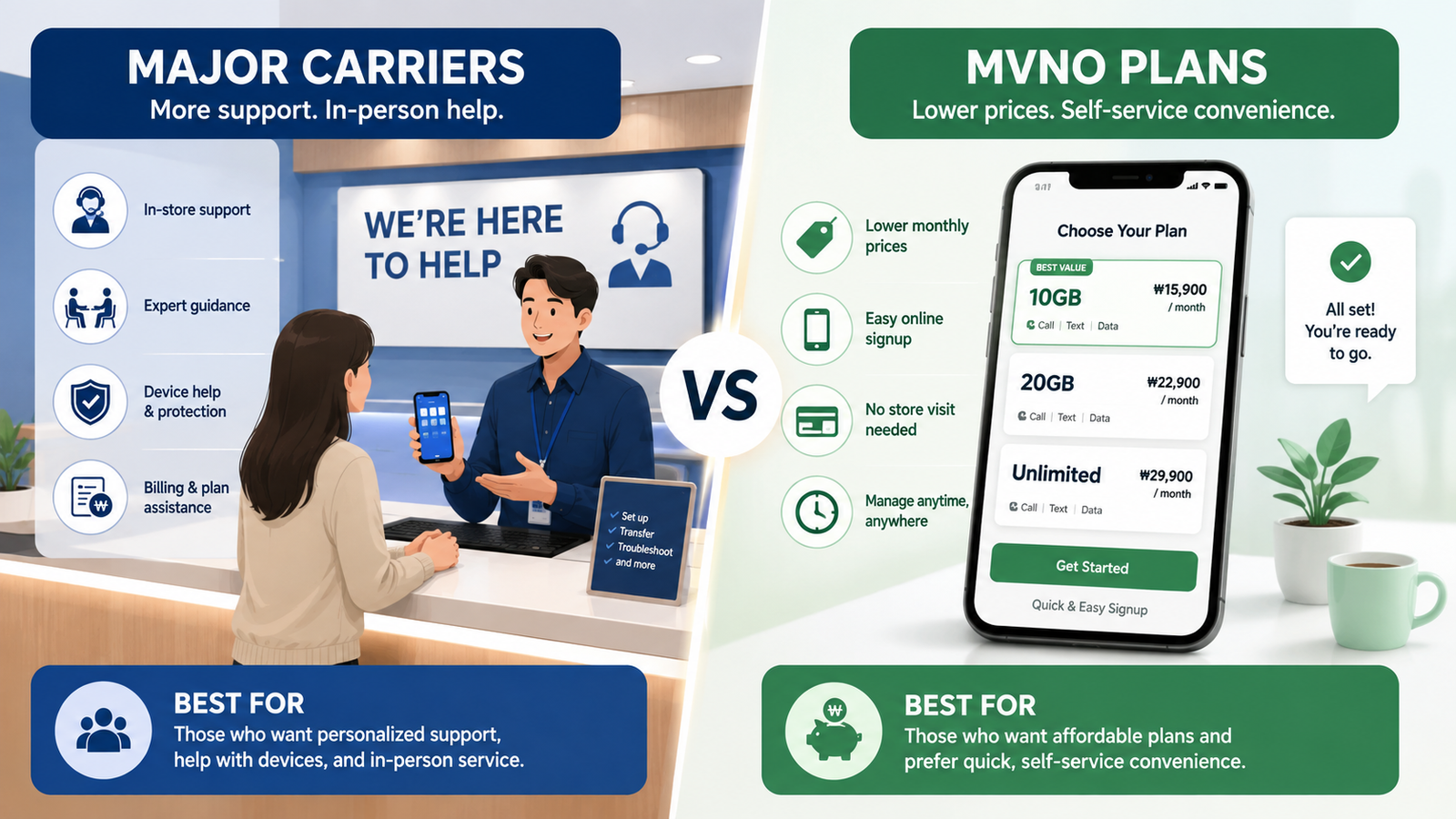
Consider SKT, KT, or LG U+ if:
- You want easier access to an in-person store
- You prefer having someone help with the signup process
- Korean-language online signup would be difficult for you
- Customer support matters more than getting the lowest possible monthly price
Consider an MVNO if:
- You already have your Residence Card
- You have the payment method required by the provider
- Lowering your monthly phone bill matters to you
- You’re comfortable comparing and signing up for plans yourself
There isn’t one best Korean phone plan after getting your ARC or Residence Card. The better choice depends on how much support you need, how much data you use, and how comfortable you are handling the signup process yourself.
What to Do After Your Residence Card Arrives
- Check your current line’s registration status with your carrier.
- Ask whether your identity information can be updated to your Residence Card.
- Ask whether you can keep your existing phone number.
- Decide whether your current plan still makes sense for a long-term stay.
- If necessary, compare a major carrier plan with available MVNO options.
- If you make a change, test mobile identity verification afterward on a service you actually use.
Don’t cancel your existing SIM before confirming whether its number can be kept, updated, or transferred.
Before You Switch: Checklist
- Residence Card in hand
- Your name and identity information are correctly recorded by the carrier
- Whether your current number can be kept
- Number-portability eligibility if you’re switching carriers
- Regular monthly price after any promotional period ends
- Data speed after your monthly high-speed allowance is used
- Whether eSIM is available if you want it
- Whether foreigners can complete signup online
- Which payment methods the provider accepts
- Whether English customer support is available
If Your Phone Still Fails Identity Verification
If your phone works normally for calls and data but Korean websites or apps still reject your identity verification, changing the phone plan may not solve the underlying problem.
The issue could instead involve how your name or identity information is registered with the carrier.
Read: Why Your Korean Phone Number Still Doesn’t Work for Identity Verification