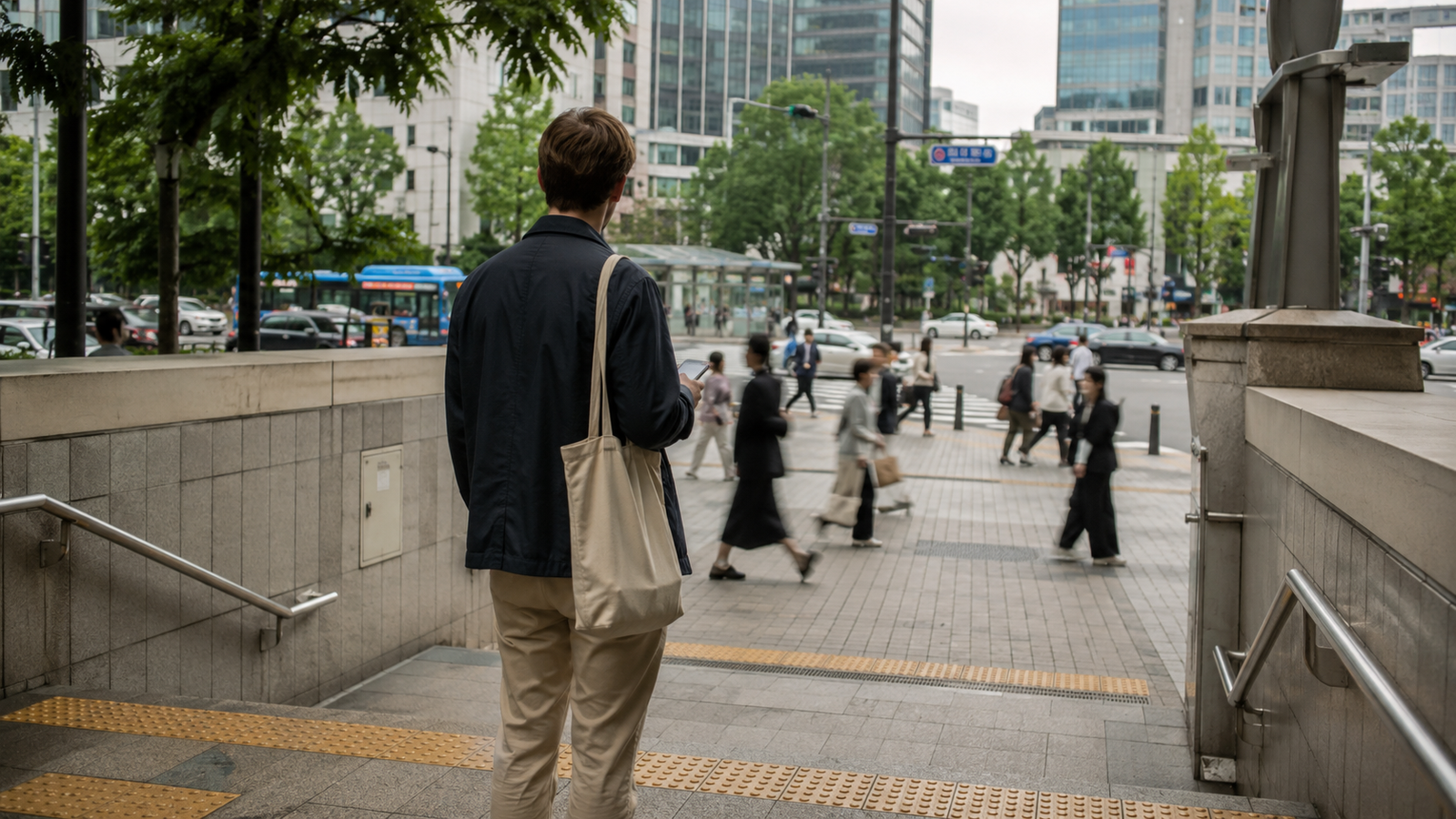
Is Living in Korea as a Foreigner Hard—or Is Living Abroad Just Hard?
The short answer is both.
Living in Korea as a foreigner comes with some specifically Korean difficulties. The language matters in more situations than many newcomers expect. Workplaces can be hierarchical. Administrative systems are not always designed with foreign residents in mind. Building relationships may also feel different from what you are used to.
Even everyday phrases can carry more social meaning than their literal translation suggests. For example, 밥 (bap) can mean much more than rice or a meal in Korean.
But another part of the difficulty begins before Korea enters the picture.
Living abroad means losing much of the invisible knowledge you never realized you had at home.
I know this from the opposite direction.
I am Korean, but I spent five years in the United States for university, three years in China for graduate school, and more than two years across several Southeast Asian countries.
Those places were very different from one another. Still, the same feeling followed me.
I was living outside the language and system I instinctively understood. When something went wrong, I had to work out where to go, whom to ask and whether I had understood the situation correctly.
That low-level uncertainty can become exhausting. It can also feel a lot like loneliness.
So when a foreign resident says Korea feels difficult, the experience should not be dismissed. But it helps to ask a more precise question:
How much of that difficulty comes from Korea, and how much comes from being a foreigner anywhere?
Korea Can Be Easy to Use Before It Feels Easy to Live In
Korea often makes an excellent first impression.
Public transportation is extensive. Convenience stores stay open late. Food, shopping and delivery services are easy to access. Many neighborhoods feel safe to walk through, even at night.
These are visible conveniences. Visitors encounter them almost immediately.
Long-term residents eventually meet a different layer of the country.
You may need a Korean phone number that works for online identity verification, not just calls and data. You need to understand a rental system with unfamiliar deposits and legal protections. Your visa may affect where you can work, and your employment may affect whether you can remain in the country.
What changes is your relationship with Korea. You are no longer simply using its convenient services. You are depending on systems built primarily around the lives of Korean citizens.
That is why someone can love traveling in Korea but dislike working here. It is also why studying in Korea, working in Korea and building a long-term life here can produce very different opinions of the same country.
You Lose the Knowledge You Never Knew You Had
At home, most people carry around an enormous amount of practical knowledge without thinking about it.
You know what kind of problem requires a phone call and what can wait. You understand whether someone is being firm, rude or simply formal. You have a rough idea of how a hospital, landlord, university or government office is supposed to respond.
You also know whom to ask when you do not know.
Much of this disappears when you move abroad.
A minor problem can create a disproportionate amount of anxiety because you cannot easily judge what is normal. Even if you can translate every word, you may not understand the expectations behind them.
Research on international students commonly describes language difficulties, unfamiliar social norms, separation from existing support networks and loneliness as parts of “acculturative stress.” That is the strain that can come with adapting to a different society.
In simpler language, you are rebuilding ordinary life without its original instruction manual.
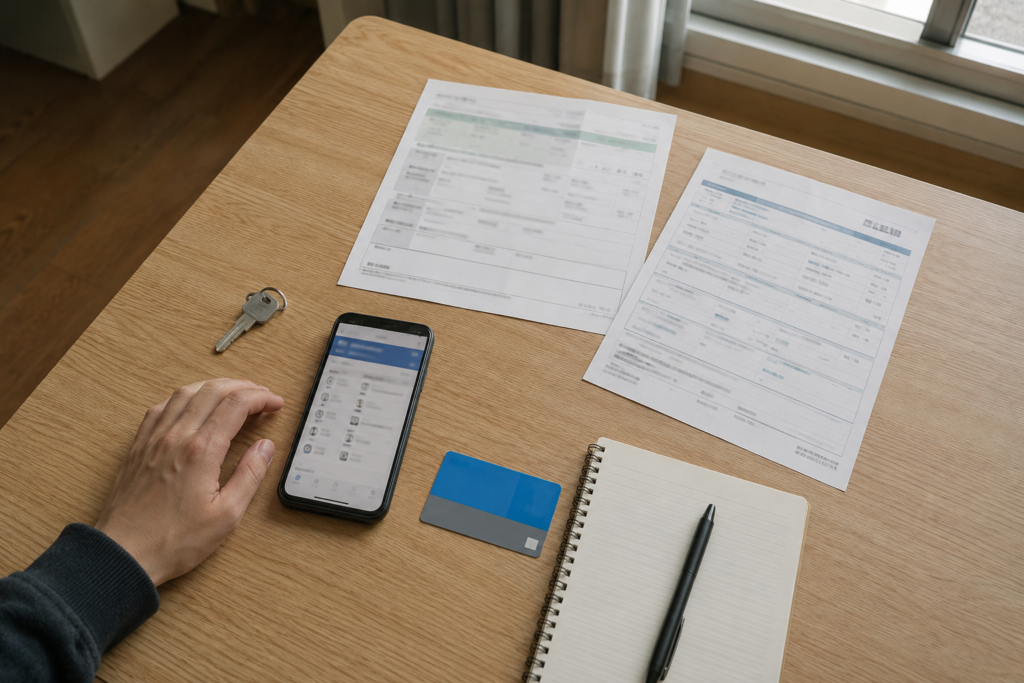
Homesickness and isolation, then, are not automatic proof that the host country is uniquely hostile. They may be part of living outside the language, relationships and systems that once made everyday life feel predictable.
At the same time, culture shock cannot explain away every problem.
Some Difficulties Really Are Specific to Korea
Korea creates some genuine country-specific barriers.
Language is one of them. English can carry a visitor surprisingly far in popular areas, but resident life requires much more than ordering food or asking for directions.
The OECD reported that 50% of foreign-born residents in Korea described themselves as having advanced proficiency in the country’s main language in its 2020–2021 comparison. It also identifies host-country language ability as central to full participation in work and society.
The remaining gap appears in practical situations: employment, housing, medical care, contracts and government procedures.
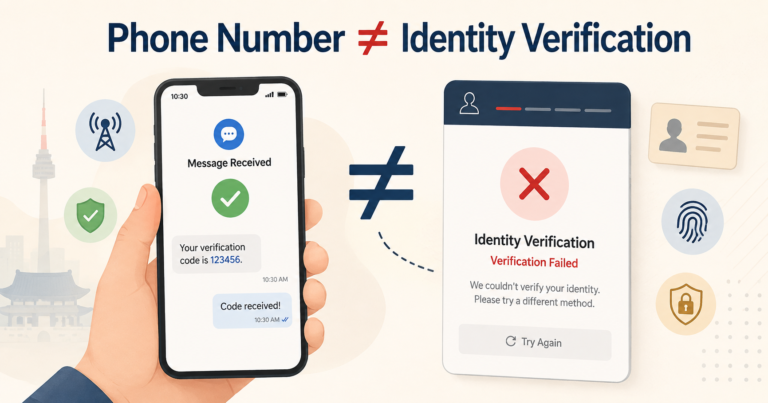
Digital systems can add another barrier. A Korean phone number may work perfectly for calls while failing to verify your identity online. Names written differently across a passport, Residence Card and mobile account can create problems that most Korean citizens never encounter.
Work and visa status can also become intertwined. Before looking for a job, many foreigners first need to determine whether their immigration status allows that work. This can make a bad workplace feel harder to leave than it would at home.
These are real problems, and foreigners do encounter unequal treatment.
In the 2022 Seoul Survey, 38.1% of foreign residents surveyed said they had experienced discrimination. Frequently cited reasons included nationality, Korean proficiency and appearance.
Among foreigners in their 20s and 30s, major reported difficulties included visa status, economic opportunities and forming relationships with Koreans.
Some parts of living in Korea are therefore harder specifically because the resident is foreign.
Why Small Talk Can Feel So Different in Korea
The social side is more difficult to measure.
People from cultures where strangers regularly chat with cashiers, neighbors or other customers may find everyday life in Korea unusually quiet.
A lack of small talk can easily be interpreted as coldness:
Why does no one talk to me?
Why do my neighbors barely acknowledge me?
Why is it so difficult to turn a casual encounter into a friendship?
The feeling is real. But the intention behind the silence may be different from how it appears.
I personally find small talk with strangers difficult, even as a Korean living in Korea. It is not because I dislike the other person. I am simply not accustomed to searching for questions to ask someone I may never meet again.
I often do not know what the conversation is supposed to be about or how long it should continue. Leaving the other person alone can feel more considerate than starting a conversation they did not ask for.
A 2025 Korea Herald report on Koreans and small talk found similar explanations. Some interviewees saw one-time conversations as unnecessary, while others described casual interaction as another form of social effort after spending the workday being polite and attentive.
There are even Korean salon and taxi services that allow customers to request a quiet, conversation-free experience.
Koreans certainly do talk to strangers, and individual personalities vary too much for one national explanation. Still, Korean public life often demands less casual interaction with unknown people than visitors from some countries may expect.
To a Korean, silence may mean:
“I am respecting your space.”
To someone accustomed to small talk, the same silence may mean:
“You are not welcome here.”
Neither interpretation fully explains the other person.
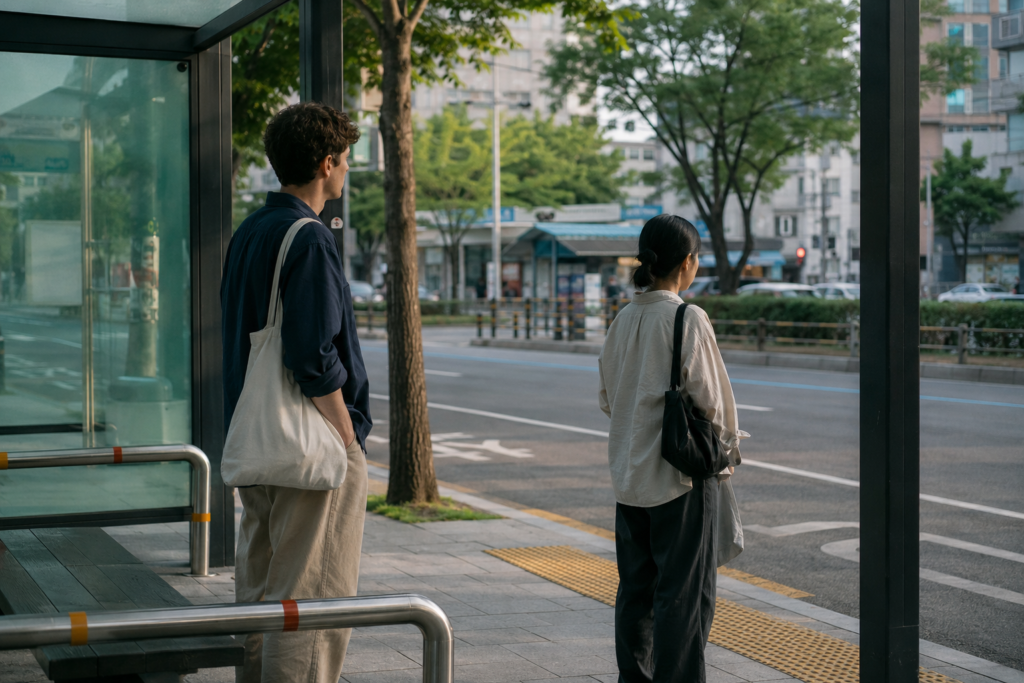
There is also a real consequence. Small talk may be superficial, but it gives people brief moments of recognition. Without those moments, a foreign resident who already lacks family and an established social circle can feel even more invisible.
Different social habits can therefore produce genuine loneliness without anyone deliberately excluding anyone else.
Loneliness in Seoul Is Not Only a Foreigner’s Problem
It is tempting to describe this as an expat problem, but loneliness has become a wider issue in Korean society.
Seoul created a senior government position dedicated to care and loneliness in 2024 and has since expanded counseling lines and low-pressure community spaces. According to the city’s 2026 announcement, 22.1% of single-person households in a 2025 national survey said they did not regularly interact with family members or relatives.
Foreign residents carry additional language and cultural burdens, yet they are also entering a society where many Koreans struggle with isolation, long workdays, smaller households and weaker everyday connections.
This broader context helps explain why “Koreans do not talk to me” cannot always be reduced to hostility toward outsiders.
Just as importantly, difficult experiences do not make foreign residents universally unhappy here.
The same 2022 Seoul Survey found that 56.3% of foreign residents wanted to continue living in the city, while 57.1% said they would recommend life in Seoul. Their reported happiness score was also higher than that of Seoul citizens in the survey.
Both things can be true.
A person can enjoy living in Korea and still face discrimination.
Korea can be safe and convenient while remaining socially difficult.
Someone can appreciate the country but decide that building a permanent life here is not for them.
Your Stage of Life Changes the Korea You Experience
A visitor mainly interacts with transportation, attractions, restaurants and shops.
An international student may have a university, classmates and a built-in reason to meet people. Even then, language, attendance rules, finances and isolation can reshape the experience over time.
A foreign worker experiences Korea partly through the workplace. A supportive employer can make the country feel manageable. A stressful workplace can affect almost every part of life, especially when employment and immigration status are connected.
A long-term resident eventually encounters housing, career progression, relationships, family decisions and the question of belonging.
These are not simply longer versions of a vacation.
The same person may describe Korea very differently as a tourist, a student, an employee and a long-term resident, and all four descriptions may be honest.
Before Deciding Korea Is the Problem, Separate the Layers
If life in Korea feels harder than expected, it may help to ask four questions.
Would This Problem Follow Me to Another Foreign Country?
Missing family, losing an established support network and feeling anxious when solving problems in another language are common parts of living abroad.
Changing countries may change their intensity without removing them.
Is the Problem Connected to a Korean System?
Visa restrictions, phone verification, unfamiliar rental deposits and Korean-language administration require Korea-specific solutions.
For example, understanding how to rent an apartment in Korea as a foreigner may reduce uncertainty more effectively than trying to become generally “better adjusted.”
Am I Experiencing Korea or One Particular Environment?
A workplace, university, neighborhood or relationship can dominate how the entire country feels.
The experience remains real, but its immediate cause may be narrower than the country itself. Changing that environment could produce a different result from leaving Korea entirely.
Has Convenience Been Mistaken for Belonging?
A city can make transportation, shopping and food extremely easy without automatically giving someone close relationships or a sense of home.
Convenience reduces practical friction. It does not replace community.
So, Is Living in Korea as a Foreigner Hard?
It can be.
Korea has real barriers involving language, work, social relationships, immigration status and systems designed primarily for Korean citizens.
But living abroad is also difficult in ways that are easy to misidentify.
You lose familiar routines, existing relationships and the invisible knowledge that once made ordinary problems feel manageable. You may need to build a new life in a language that never feels completely effortless.
I experienced versions of that as a Korean living in the United States, China and Southeast Asia. The countries changed, but the uncertainty of being outside my own system did not disappear.
Foreigners should not simply be told to adapt or stop complaining. If you feel lonely or exhausted in Korea, that feeling is real. The more useful question is which layer is creating it.
Sometimes the answer is learning more Korean.
Sometimes it is finding a healthier workplace or a stronger community.
Sometimes it is accepting that Korea is not the right place for the life you want.
Those are very different conclusions. Separating them is more useful than deciding that Korea is either wonderful or terrible.