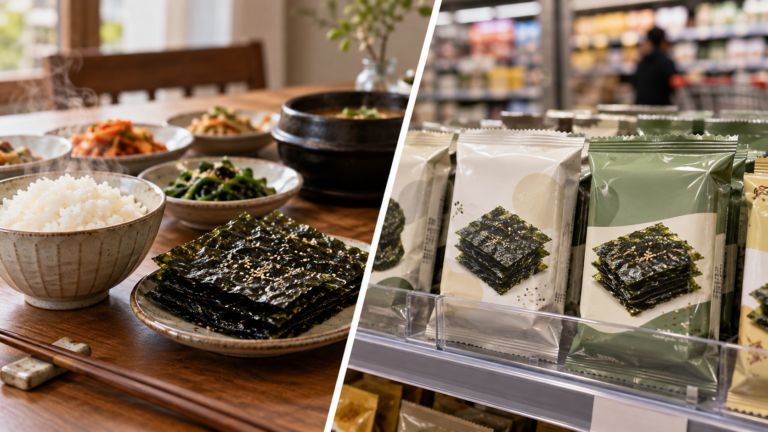
Vegan Korean Food: 8 Dishes to Try and Where to Eat in Seoul
Many Korean dishes can be made vegan, but the dish name alone rarely settles it. Fish stock, salted seafood, egg, dairy and honey can all sit inside a dish that looks like vegetables and rice. Ask about the broth, sauce and toppings, show the Korean phrases below, and consider a dedicated vegan restaurant when you want fewer questions to ask.
Vegan Korean food gives you plenty to look forward to: nutty sesame oil, chewy rice cakes, crisp pancakes, cold soybean noodles and tofu in different textures. What matters is how each dish is prepared. A vegetable-filled bowl can still contain fish stock, salted seafood or egg.
This guide covers eight dishes worth trying, the ingredients to check, and three Seoul restaurants plus a temple-food option. Start with what you want to eat, then choose a place that serves a suitable version.
Start hereWhat Are You Craving?
| If you want… | Try… |
|---|---|
| A filling bowl of rice and vegetables | Bibimbap |
| A portable meal between sights | Vegan kimbap |
| Something crisp to share | Potato pancake, or gamjajeon |
| Cold noodles in a creamy soybean broth | Kongguksu |
| Soft jelly with crunchy vegetables | Acorn jelly salad, or dotori-muk muchim |
| A mild dish or a warming stew | Tofu and soft tofu dishes |
| Springy noodles with sweet-savory seasoning | Vegan japchae |
| A spicy, chewy street-food snack | Vegan tteokbokki |
These are dishes to look for in vegan versions or after checking the preparation. The dish name alone does not establish whether it is vegan.
The dishesEight Korean Dishes to Try
1. Bibimbap (비빔밥)

Photo: Dmitry Pavlovsky / Unsplash
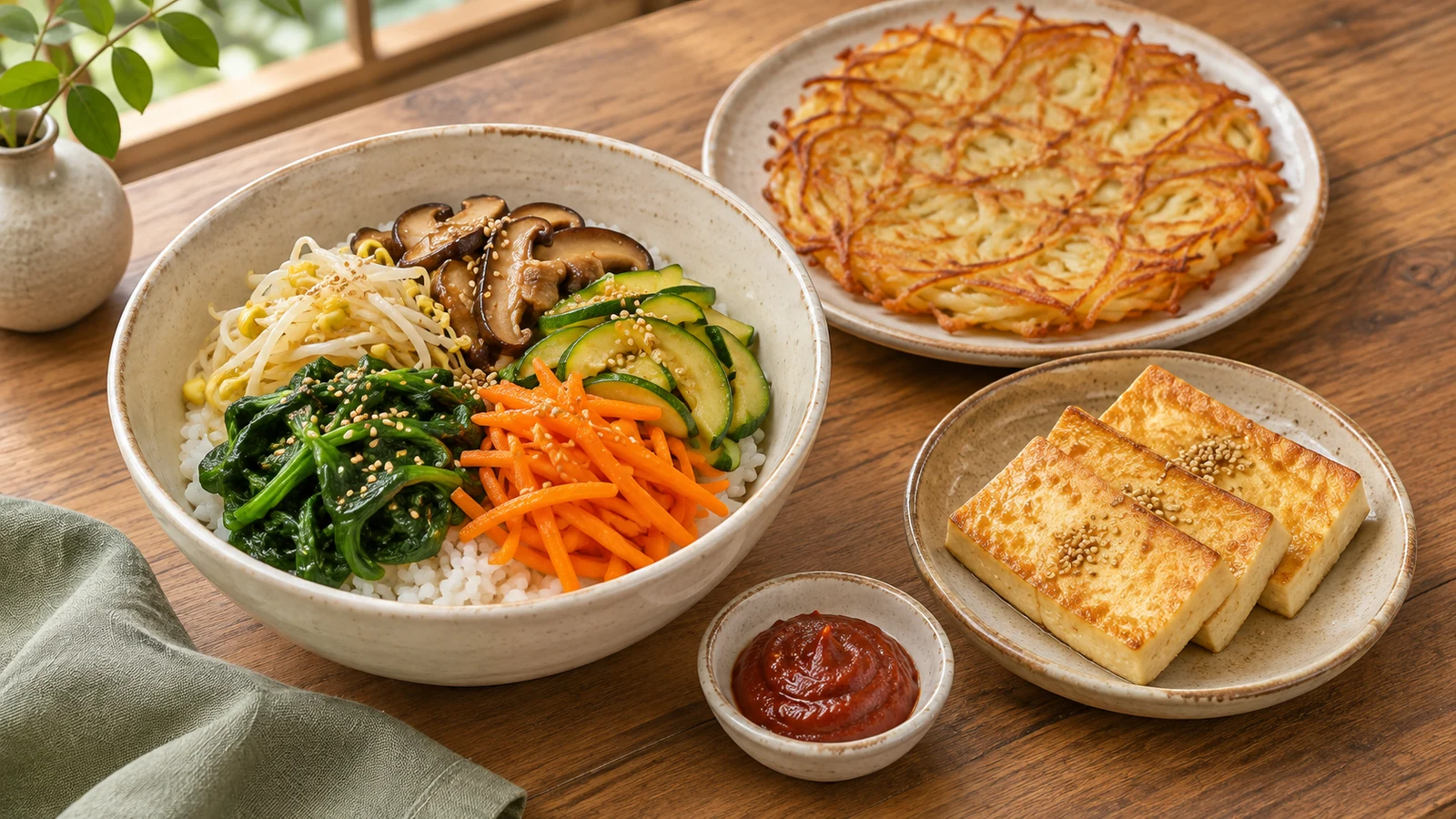
Rice, seasoned vegetables, sesame oil and a sauce come together in a bowl you mix yourself. Depending on the preparation, the toppings might include soft greens, crunchy sprouts and mushrooms. Gochujang adds heat; a soy-based sauce gives a different finish.
It is a useful starting point if you want a full rice-based meal with several textures.
Vegan check: Meat and egg are common toppings. Ask for both to be omitted, and check the vegetable seasonings and sauce. Leaving off the visible toppings is only part of the question.
2. Vegan kimbap (김밥)
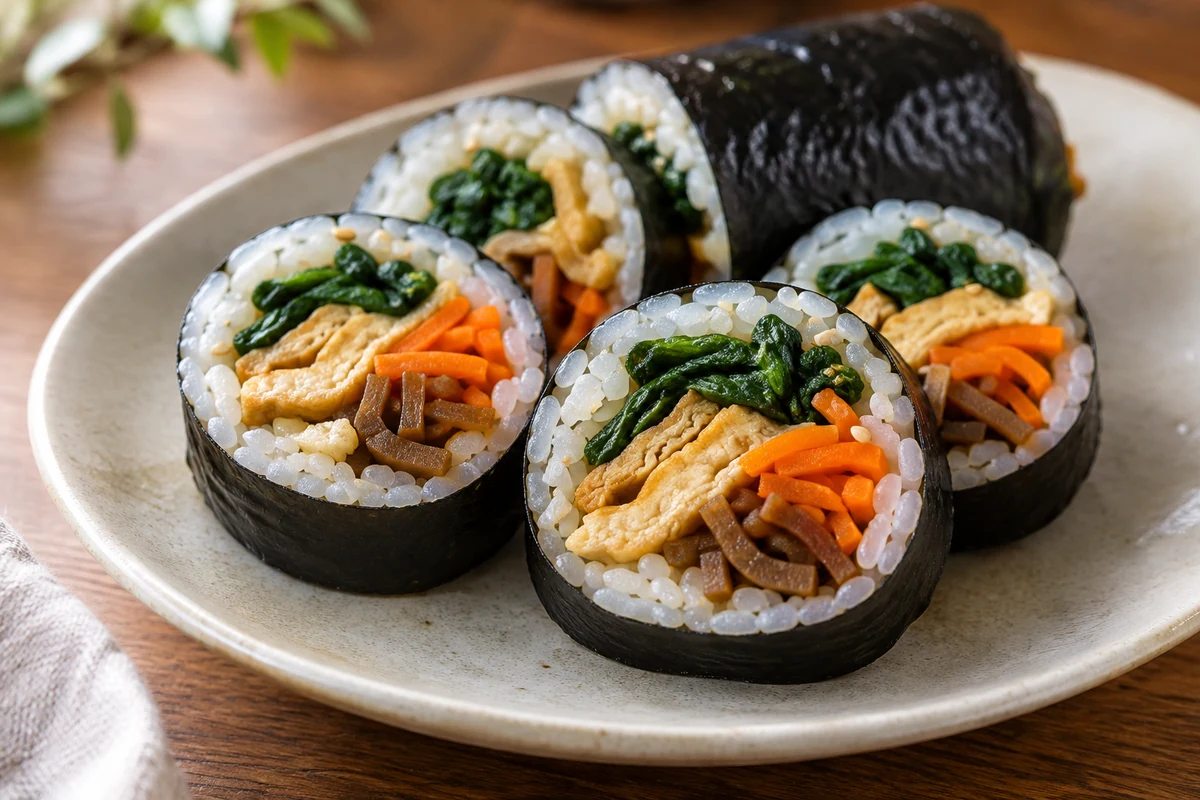
Rice and fillings are rolled in seaweed and sliced into rounds. The appeal is the balance: mild rice, nutty seasoning and a little crunch in each bite. It is also a convenient meal to take away between sightseeing stops.
Vegan check: “Vegetable kimbap” does not necessarily mean vegan. It may still include ham, egg or imitation crab. Look for a dedicated vegan version, including options with fried tofu, called yubu, or soy-based ham.
The Korea Tourism Organization’s vegetarian dining guide identifies meat and egg in bibimbap, and animal-derived fillings in vegetable kimbap, as ingredients to check.
3. Potato pancake: gamjajeon (감자전)
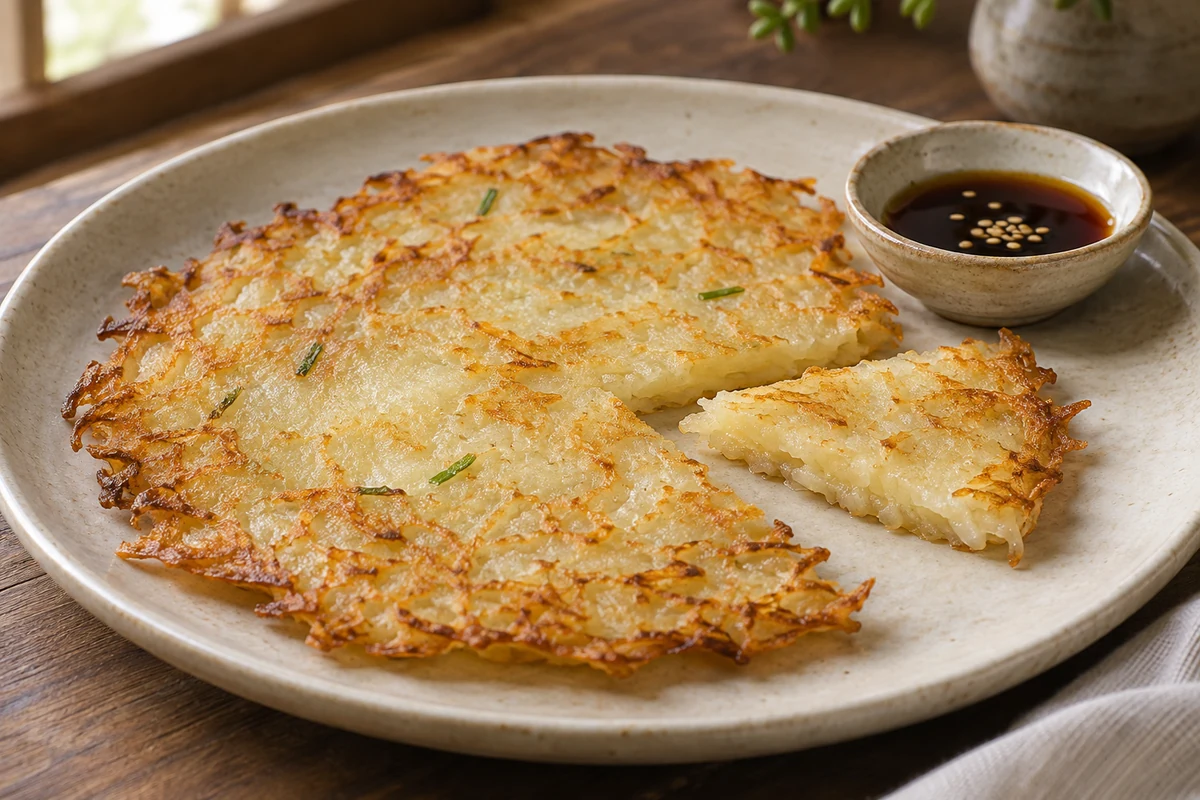
Grated potato is pan-fried into a pancake with crisp edges and a soft, slightly chewy center. Served hot with a dipping sauce, it is a good choice for sharing when you want something savory without a bowl of rice or noodles.
Vegan check: Egg is not essential to gamjajeon. Maangchi’s potato pancake recipe, for example, uses potatoes, chives, salt, water and vegetable oil, with a soy-based dipping sauce. Restaurant recipes vary, so confirm the batter, any additions and the sauce.
An egg-free potato pancake does not establish that every vegetable pancake on the same menu is egg-free.
4. Kongguksu (콩국수)

Photo: Patrick Kim / Unsplash
Cold noodles sit in a creamy soybean broth, usually with a simple vegetable garnish. The flavor is nutty and gentle, and the broth has more body than a clear noodle soup.
It is especially associated with summer. If this is the dish you want to try, check that the restaurant is serving it rather than assuming it is available throughout the year.
Vegan check: Ask about any egg garnish, and check that the noodles and broth contain no animal ingredients. Confirm the accompanying kimchi separately.
5. Acorn jelly salad: dotori-muk muchim (도토리묵무침)
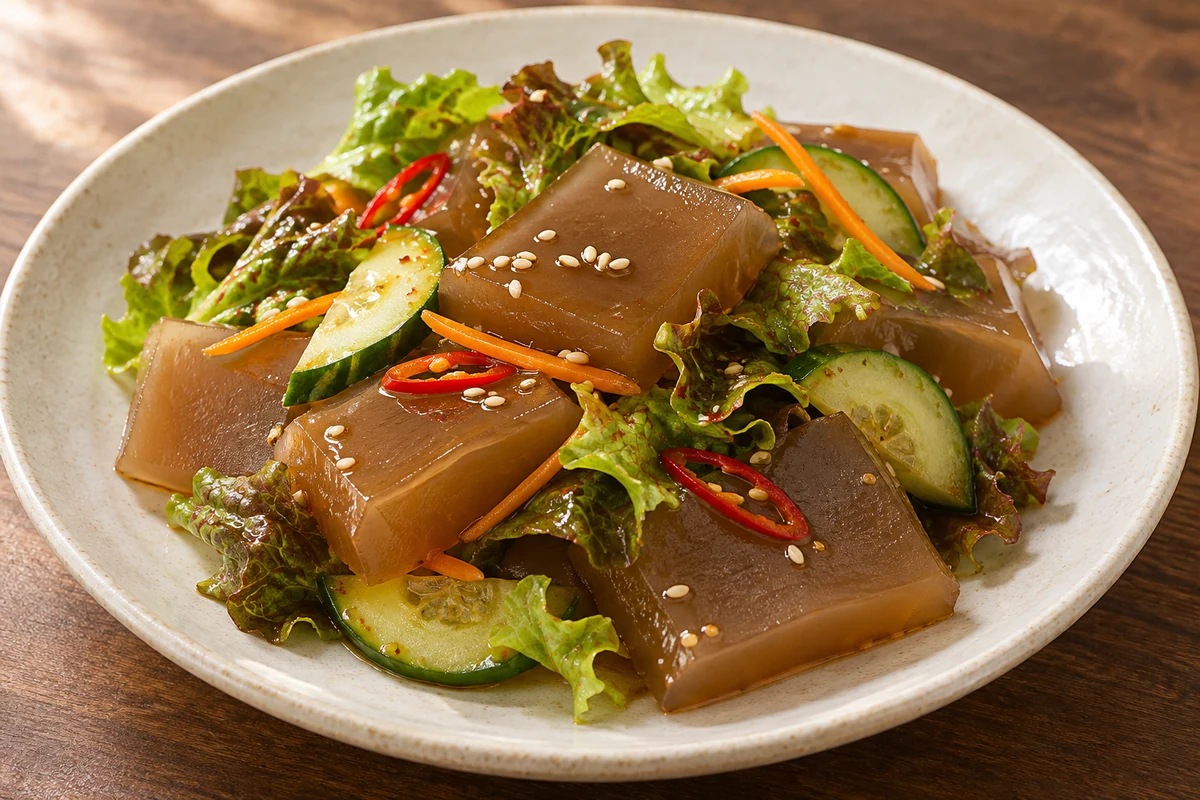
Soft, slightly bouncy pieces of acorn jelly are mixed with vegetables and dressing. The jelly’s mild, earthy taste leaves room for the crunch and seasoning around it.
Think of it as a side or a dish to share alongside something more substantial.
Vegan check: Ask about the seasoning. The acorn jelly itself tells you little about the finished salad’s dressing or any additions.
6. Tofu and soft tofu dishes (두부·순두부)
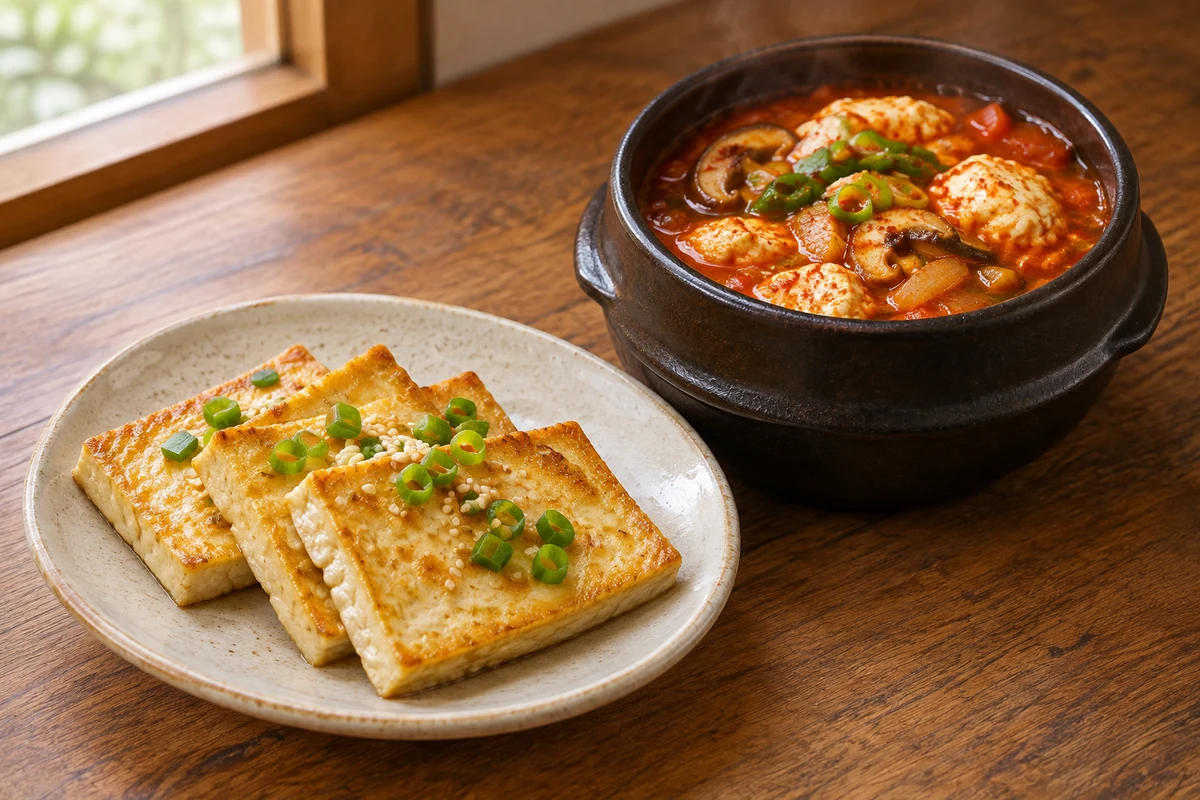
Korean tofu can arrive plain with a dipping sauce, pan-fried in slices, braised, or served in a bubbling stew. These preparations offer quite different meals: plain tofu is mild and delicate, while a spicy sundubu-jjigae can be a warming centerpiece.
Vegan check: Check the preparation rather than relying on the word “tofu.” For stews and braised dishes, ask about the broth, salted shrimp, other seafood, meat and egg. Plain tofu with a confirmed plant-based sauce is a simpler option.
The Korea Tourism Organization’s ingredient guidance specifically flags egg garnishes on kongguksu and salted shrimp in some tofu dishes.
7. Vegan japchae (잡채)
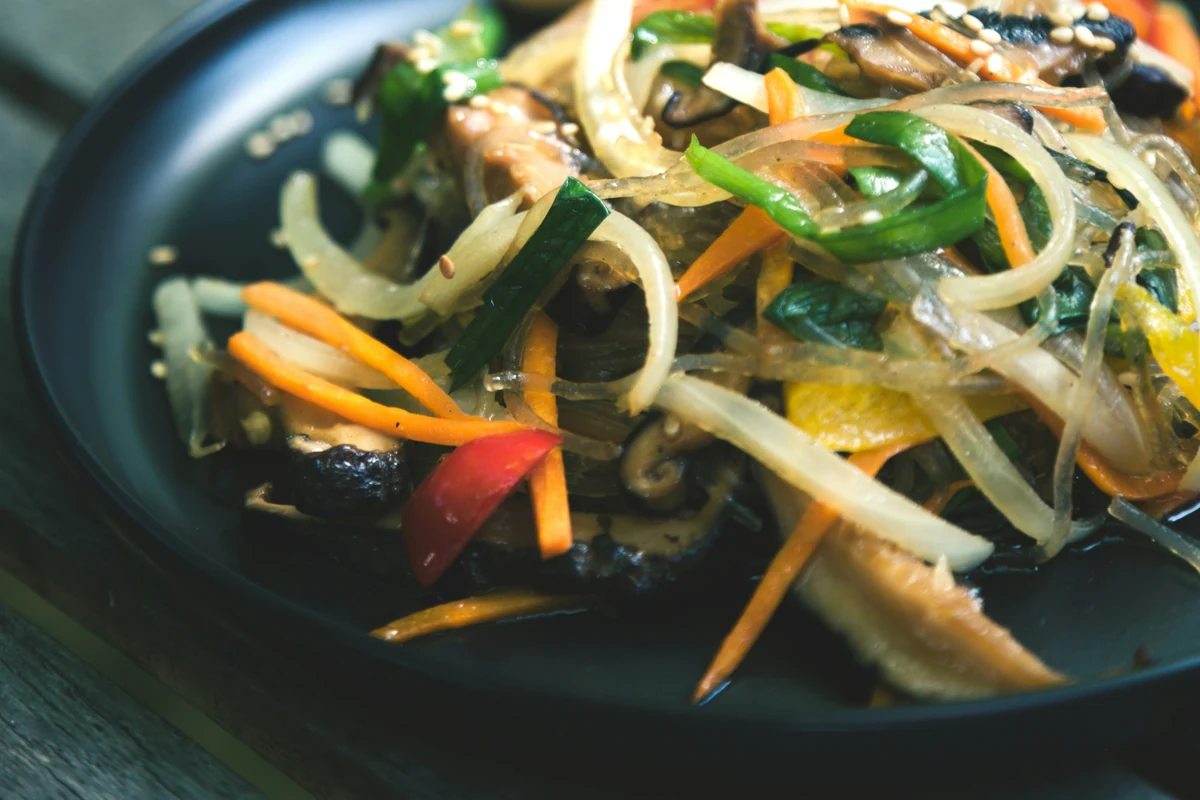
Photo: Ryan Kwok / Unsplash
Springy sweet potato starch noodles are mixed with vegetables and sweet-savory seasoning. Sesame oil gives the noodles their aroma, while the vegetables add contrasting textures.
It can be a good choice when you want noodles without a soup, or a sharing dish alongside rice.
Vegan check: The noodles do not make the whole dish vegan. Maangchi’s japchae recipe, for example, includes beef and egg. Look for a dedicated vegan version, or ask whether the dish can be prepared without animal ingredients. A batch already mixed with meat or egg cannot be changed by removing a garnish.
8. Vegan tteokbokki (떡볶이)
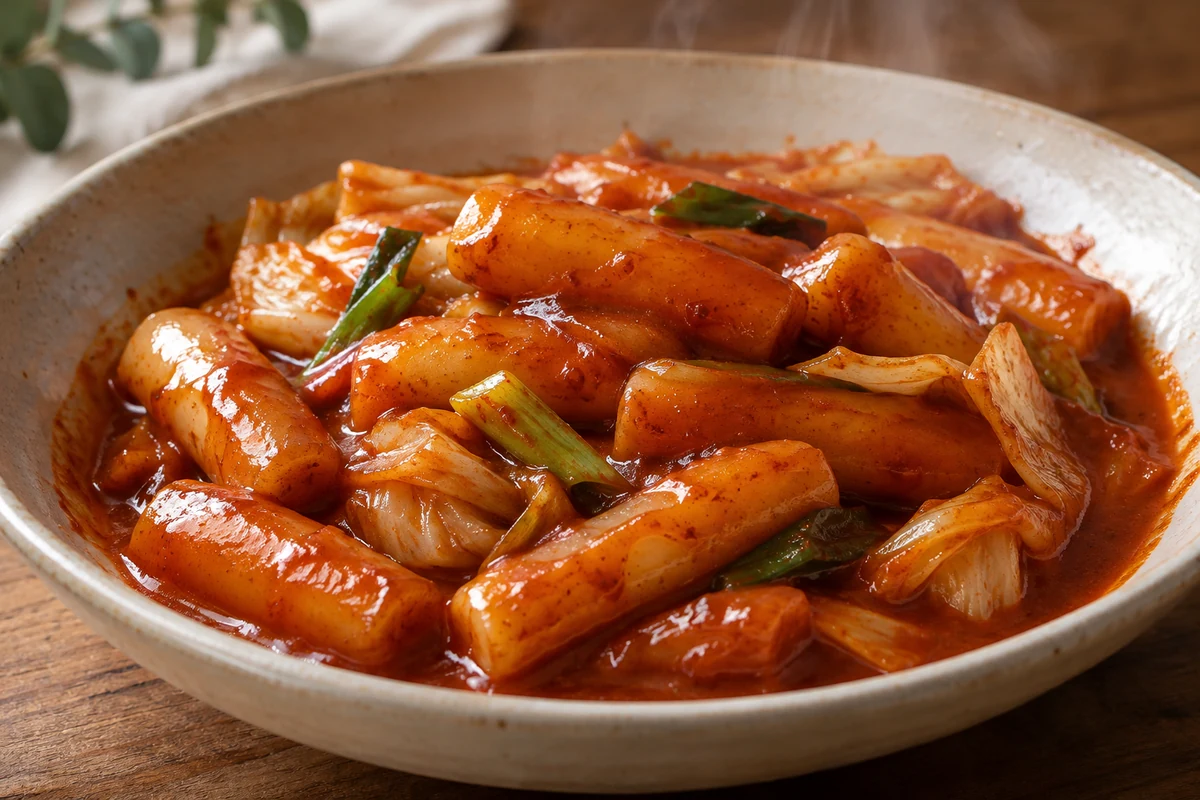
Chewy rice cakes are coated in a sweet, spicy red sauce. The springy texture and clinging sauce are what make this Korean street-food dish distinctive.
Vegan check: Ask about both the fish cake and the stock. Maangchi’s tteokbokki recipe, for example, starts with dried anchovies, with fish cake and boiled egg as optional additions. Leaving out those additions would not make that stock vegan.
At a vegan snack shop, this is an opportunity to try a version prepared with plant-based ingredients from the start.
What to checkBefore You Order
For vegan Korean food, the important questions extend beyond visible meat.
Broth and stock. Vegetable or tofu soups can contain fish or meat stock.
Fish sauce and salted seafood. Ask about kimchi, sauces and side dishes as well as the main.
Egg. Check toppings, fillings and batter.
Dairy and honey. Include both when explaining your diet, particularly for desserts and drinks.
The Vegan Society explains that honey harvesting does not fit its definition of veganism. Honey belongs on the ingredient checklist alongside dairy and eggs.
A topping may be easy to omit; a stock, sauce or filling prepared earlier may not be replaceable.
At an ordinary restaurant, first ask whether the dish can be prepared to suit your diet. If staff cannot confirm the ingredients, a dedicated vegan dish or restaurant is a more practical choice.
Jongno, SeoulWhere to Eat in Seoul
The foods above can be found across Korea. The restaurants below are a focused shortlist in Seoul’s Jongno district, around Insadong, Jogyesa and Seochon. They offer different kinds of meals rather than a citywide ranking.
Save the Korean names as well as the English ones: spellings vary across listings. For finding your way between stops, see the Google Maps and Naver Map guide.
Osegyehyang (오세계향), Insadong
Choose it for: A sit-down meal with a broad choice of dishes.
Osegyehyang is at 14-5 Insadong 12-gil, Jongno-gu, down an alley off Insadong’s main street. Its menu combines Korean and Korean-Chinese dishes. Public listings and diner reviews mention soft tofu dishes, bibimbap, black bean noodles and fried dumplings.
HappyCow lists it as vegan and links to the restaurant’s information site, which describes its food as plant-based. This makes it a useful place to explore several dishes without negotiating changes to an ordinary restaurant menu.
If you separately avoid garlic and onion, ask about the particular dish. Avoiding alliums is a different requirement from eating vegan.
Maru Jayeonsik Kimbap (마루자연식김밥), Insadong
Choose it for: Vegan kimbap and Korean snack-bar food.
This small shop is at 35-4 Insadong-gil, Jongno-gu. Public listings and reviews mention fried tofu kimbap, soy-ham kimbap, tteokbokki, fried dumplings and vegan fish cake. Kimbap is an obvious starting point if you want something portable; the other dishes offer a way to try vegan bunsik, or Korean snack-bar food.
HappyCow lists Maru as vegan. A November 2026 reviewer describes a few tables around the outside of the kitchen and notes that the weather can affect comfort. Consider that if you want a long sit-down meal in winter.
Check current opening days and hours before making a special trip; published schedules differ.
Maji (마지), Seochon
Choose it for: A set-style meal in a traditional Korean house.
Maji is at 19 Jahamun-ro 5-gil, Jongno-gu, in Seochon near Gyeongbokgung Palace. Public descriptions and diner reviews present a temple-style meal with rice and an assortment of small dishes, including reports of lotus-leaf rice.
The Korea Tourism Organization includes Maji among its recommended places to try temple food. That recommendation does not settle every vegan requirement.
Contact the restaurant before visiting to ask about honey and dairy, discuss the current set menu and arrange a reservation. Confirm opening days too: published schedules conflict.
What Individual Diners Noticed
These are K-Actually’s paraphrases of single Google Maps reviews seen on November 23, 2026. Each describes one visit. None is an overall rating, a consensus or a guarantee about the food.
One diner mentioned returning for jajangmyeon, mandu and sundubu.
A broad menu for a sit-down meal.
One diner preferred the tofu kimbap to the accompanying dumpling-and-rice-cake soup.
Start with a kimbap option; check seating and opening hours.
One diner liked the hanok setting and service but found the food bland for the price.
Choose it for the setting, and ask about dairy and honey.
The links open each restaurant’s Google Maps listing, not the individual review. Reviewer names are not shown.
Temple foodKorean Temple Food: What Vegans Should Check
Korean temple food, or sachal eumsik (사찰음식), draws on vegetables, grains, soy and fermented seasonings. It offers a way to explore a different strand of Korean cooking, with seasonal ingredients and preparations shaped by Buddhist practice.
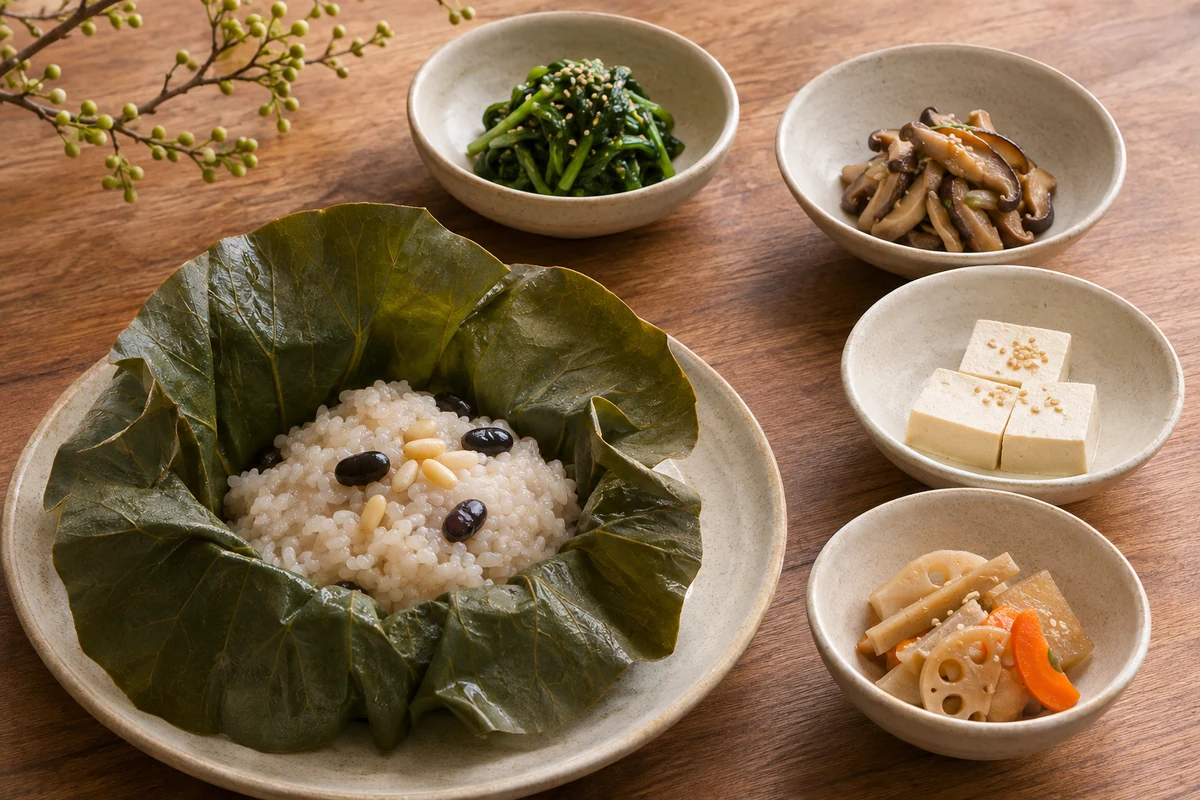
The official Korea Temple Food description excludes animal products with an exception for dairy. Ask about dairy and honey when choosing a restaurant or course.
Balwoo Gongyang (발우공양)
Choose it for: A multi-course temple-food experience, after confirming dietary needs.
Balwoo Gongyang is operated by the Cultural Corps of Korean Buddhism. It is across from Jogyesa Temple, on the fifth floor of the Templestay Information Center, 56 Ujeongguk-ro, Jongno-gu, as listed in the Korea Tourism Organization’s restaurant information.
A Korea Herald report describes its seasonal ingredients and records that it received a Michelin star for three consecutive years, 2017–2019.
Book ahead and ask whether the current course, including drinks and dessert, can be prepared without dairy, honey or other animal ingredients.
CompareWhich Place Fits Your Meal?
| Place | Good for | Check first |
|---|---|---|
| Osegyehyang | A sit-down meal with several dishes to choose from | Current menu; alliums if you separately avoid them |
| Maru Jayeonsik Kimbap | Kimbap, takeaway and Korean snack-bar food | Opening days, hours and seating |
| Maji | A set-style meal in a hanok | Opening days, reservation, honey and dairy |
| Balwoo Gongyang | A temple-food course | Reservation and whether the full course meets your vegan requirements |
On the mapFind the Four Places
All four are in Jongno. Each button opens a Google Maps search using the restaurant’s Korean name and address. Check the listing for current opening days and hours before you set out.
Show the screenKorean Phrases to Show the Staff
Show the Korean text on your phone. The romanization is a reading aid, but the written Korean is usually the clearest way to communicate.
| English | Korean | Romanization |
|---|---|---|
| I am vegan. | 저는 비건이에요. | Jeoneun bigeon-ieyo. |
| I do not eat meat, seafood, eggs, dairy or honey. | 고기, 해산물, 달걀, 유제품, 꿀은 먹지 않아요. | Gogi, haesanmul, dalgyal, yujepum, kkureun meokji anayo. |
| Does it contain anchovy broth, fish sauce or salted seafood? | 멸치 육수나 액젓, 젓갈이 들어가나요? | Myeolchi yuksuna aekjeot, jeotgari deureoganayo? |
| Does it contain honey or dairy? | 꿀이나 유제품이 들어가나요? | Kkurina yujepumi deureoganayo? |
| Can it be prepared without egg? | 달걀 없이 만들 수 있나요? | Dalgyal eopsi mandeul su innayo? |
| Which dishes can be prepared without animal ingredients? | 동물성 재료 없이 만들 수 있는 메뉴가 있나요? | Dongmulseong jaeryo eopsi mandeul su inneun menyuga innayo? |
Ask about the main dish, broth, sauce and side dishes. A request to leave something out works only if the kitchen can prepare the dish that way.
MethodAbout This Guide
This guide is based on public information and selected diner reviews, rather than firsthand restaurant visits. Restaurant listings and reviews describe particular menus and visits; they do not guarantee every ingredient in a future meal. Confirm current menus, dietary arrangements and opening days before you go.
Photographs are credited in their captions. The illustrations are AI-generated; they are not photographs of the restaurants or dishes served there.
Restaurant details checked November 23, 2026.
Does Google Maps Work in Korea in 2026? Google Maps vs Naver Map
Where to Stay in Seoul: Best Areas for First-Time Visitors (2026)
Dish guidance: Korea Tourism Organization vegetarian dining guide; Maangchi’s gamjajeon, tteokbokki and japchae recipes.
Veganism and honey: The Vegan Society.
Restaurants: Google Maps and HappyCow listings and diner reviews; Korea Tourism Organization restaurant information for Maji and Balwoo Gongyang; Korea Herald report on Balwoo Gongyang; official Korea Temple Food description.
Images: Unsplash photographers credited in captions; AI-generated illustrations by K-Actually.
Restaurant details, opening days and menus change. Confirm with each restaurant before you go.