What Is Traditional Korean Liquor, Actually?
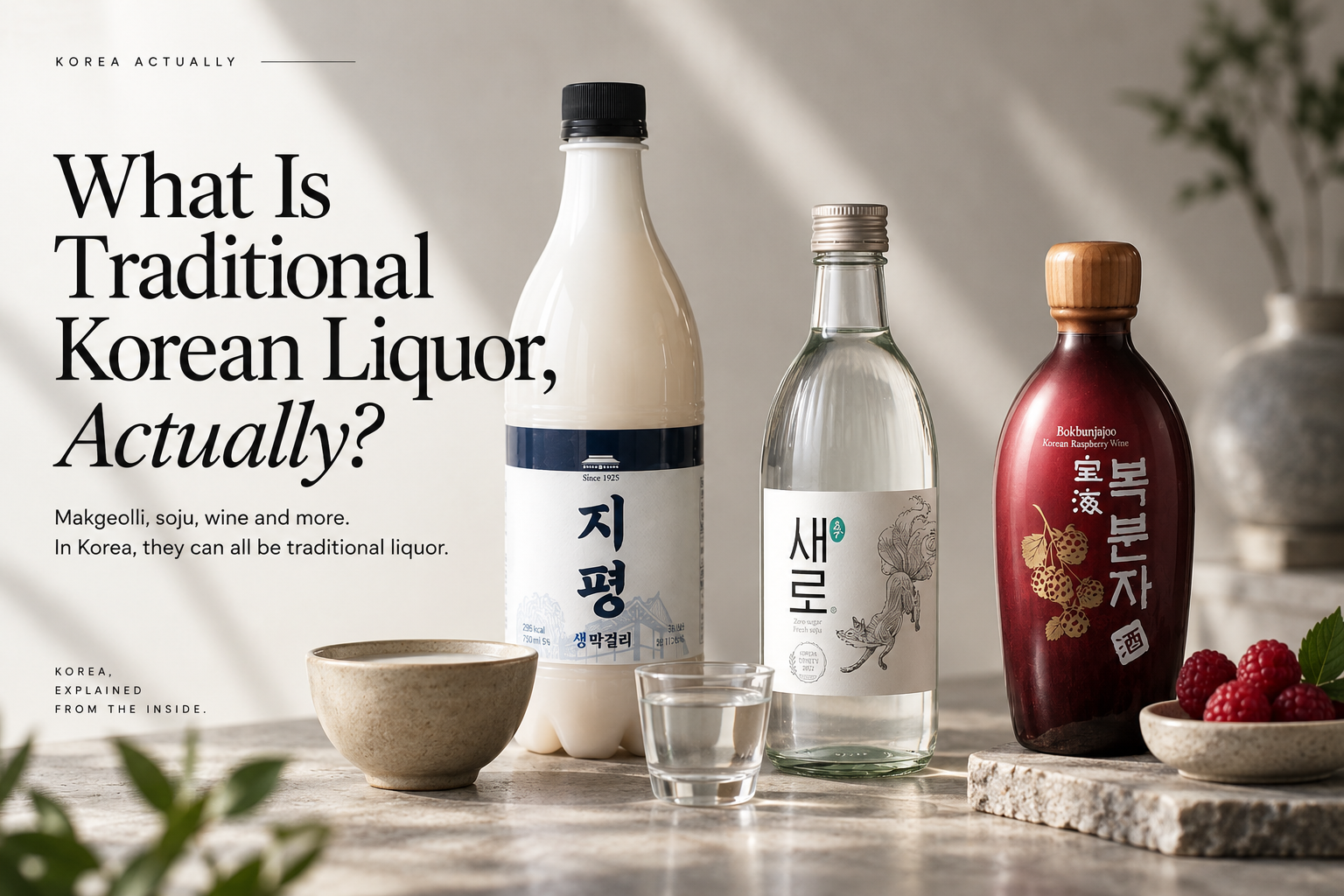
Makgeolli feels traditional.
So does a bottle of Korean distilled soju made from rice.
Strawberry wine probably feels less so.
But under Korean law, all three can potentially fall under the category of “traditional Korean liquor.”
That sounds strange only because two different questions are being mixed together.
One question is:
What kind of alcohol is this?
The other is:
Is it legally classified as jeontongju, or traditional liquor, in Korea?
They are not the same thing.
And once you separate them, Korea’s alcohol landscape starts making much more sense.
“Traditional Korean liquor” is not a type of alcohol
When English speakers hear “traditional Korean alcohol,” the phrase naturally suggests a style.
Something old.
Something made from rice.
Maybe makgeolli, yakju or distilled soju.
But Korea’s legal definition does not work simply by asking whether a drink follows an old Korean recipe.
There are three legal routes into the traditional-liquor system.
Two cover alcohol made by recognized intangible-heritage holders or designated Korean Food Masters.
The third is regional specialty liquor, or jiyeok teuksanju, and it’s the one that matters most for understanding the confusion.
Regional specialty liquor can be made by qualifying agricultural or fisheries businesses using ingredients they produce themselves or that are produced in the relevant local area, subject to the required recommendation and licensing process.
So the law is not simply asking:
“Is this an old Korean drink?”
It is also asking who makes it, where the ingredients come from, and under what licensing framework it is produced.
Alcohol type is a different system
Separately, Korean alcohol law classifies drinks by what kind of alcohol they are.
Fermented categories include takju, yakju, cheongju, beer and fruit wine.
Distilled categories include soju, whisky, brandy, general distilled spirits and liqueurs.
There is also an “other alcoholic beverages” category.
A bottle of makgeolli may be classified as takju.
A strawberry wine may be classified as fruit wine.
A Korean single malt such as Ki One is whisky.
Those labels tell you what kind of alcohol you are looking at.
They do not, by themselves, tell you whether it is legally traditional Korean liquor.
A strawberry wine can legally be traditional liquor
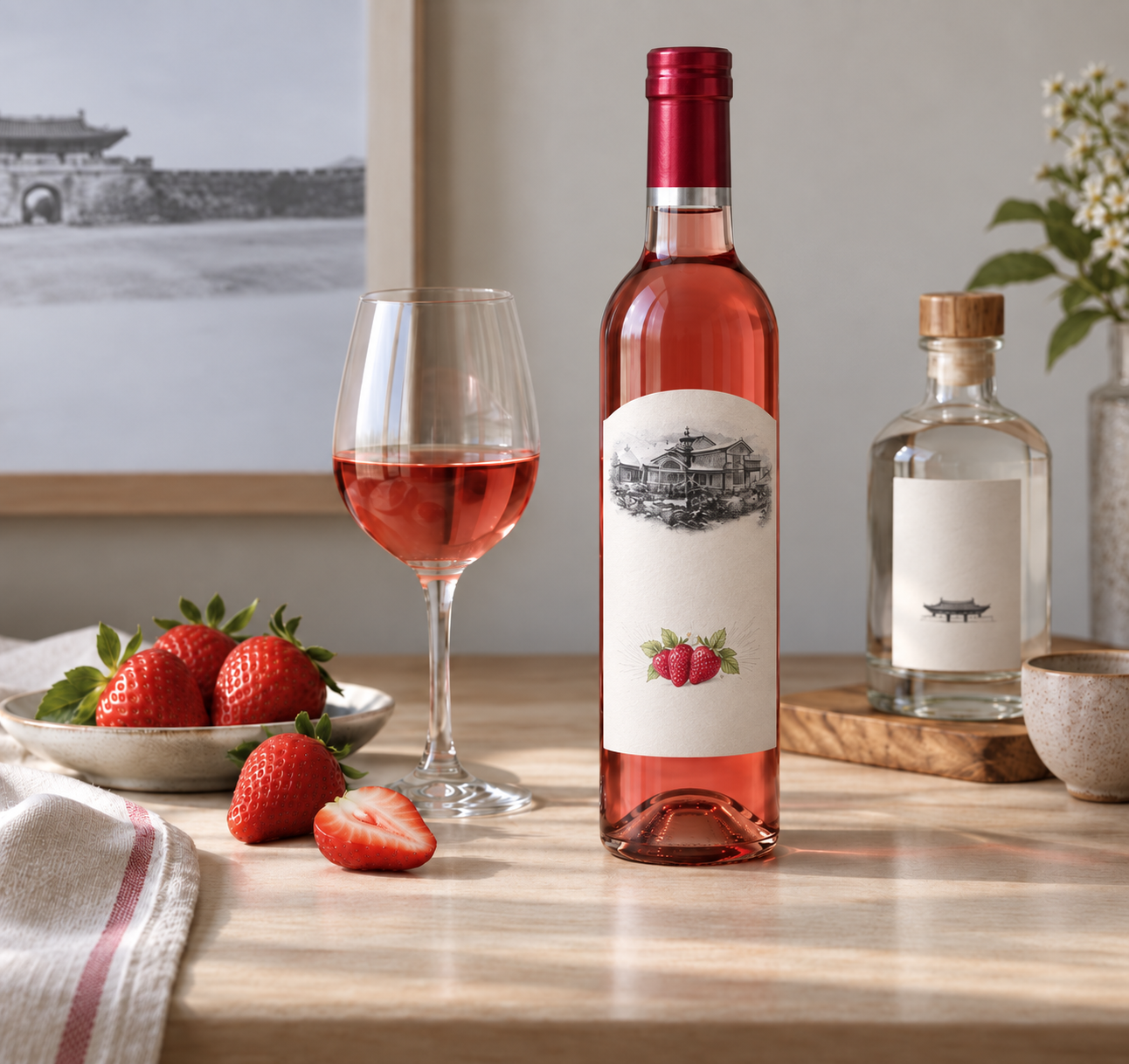
Here’s where it gets easier to see.
Haemieupseong Strawberry Wine is produced in Seosan, South Chungcheong Province.
Government liquor-license data lists Agricultural Corporation Haemieupseong Strawberry Wine Co. as holding a fruit-wine manufacturing license designated as regional specialty liquor.
The same company also appears in the data with a general distilled-spirit license under the regional specialty liquor system.
Strawberry wine is probably not what most foreign visitors imagine when they hear the words “traditional Korean alcohol.”
But legally, that is not a problem.
“Fruit wine” tells us what type of alcohol it is.
“Regional specialty liquor” tells us something different about how it qualifies within Korea’s traditional-liquor system.
A product can therefore be both fruit wine and traditional Korean liquor.
The reverse is also possible
Now turn the logic around.
Makgeolli feels unquestionably traditional.
Distilled soju has centuries of history in Korea.
But simply producing a takju or a distilled soju does not automatically make the bottle legal jeontongju.
A modern alcohol company can make a drink inspired by traditional Korean brewing or distilling methods without necessarily qualifying through the legal traditional-liquor framework.
This is why saying “makgeolli is traditional liquor” can mean two different things.
Culturally, the statement makes perfect sense.
Legally, you would still need to know who made that particular bottle and under which qualification or license.
The same applies to distilled soju.
If you want to understand how modern distilled soju developed separately from Korea’s familiar green-bottle diluted soju, we explain that history in our guide to Korean distilled soju.
Why makgeolli makes this especially confusing
Makgeolli sits at the center of almost every English-language discussion of Korean traditional alcohol.
And culturally, that makes sense.
It is one of Korea’s oldest and most recognizable forms of alcohol.
But makgeolli itself is generally classified under takju, a category based on the drink itself.
Whether a particular bottle also falls under the legal traditional-liquor framework is a separate matter.
That distinction becomes more important as makgeolli changes.
Today, the category includes everything from inexpensive mass-market bottles to small-batch breweries experimenting with rice, nuruk, fermentation, aging and premium positioning.
Our guide to makgeolli explains what actually defines the drink itself.
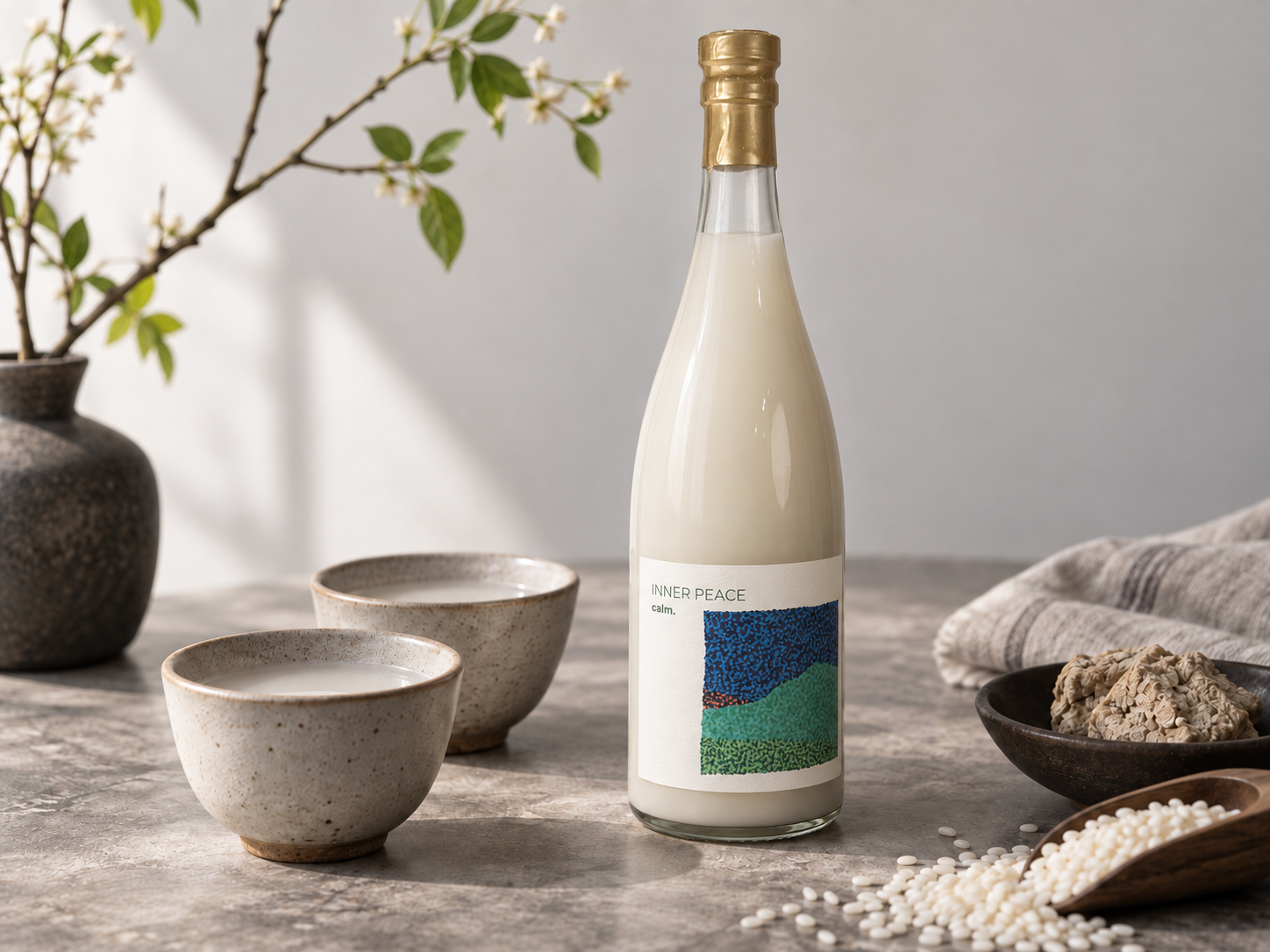
A brewery such as Bewater Brew shows a different side of the story: how contemporary Korean makers are reinterpreting rice alcohol rather than simply reproducing an old template.
Which is why “traditional” makes a risky shortcut.
English makes the problem worse
There is another layer of confusion.
There is no perfect English expression for all the ways Koreans use words such as jeontongju, uri-sul and Korean alcohol more broadly.
“Traditional Korean liquor” sounds as though every bottle belongs to a historic style.
“Korean rice wine” is much narrower, and it can be misleading for drinks that are not wine in the conventional sense, or are not made from rice at all.
“Korean spirits” usually implies distilled alcohol in English, which excludes fermented drinks such as makgeolli.
And “traditional liquor” can sound like a cultural description even when the Korean term is being used in a specific legal or administrative sense.
That means an English article may use “traditional Korean alcohol” in a perfectly understandable cultural sense while referring to products that do not all share the same legal status.
The problem begins when cultural language is treated as though it were an official classification.
So what should you actually look for?
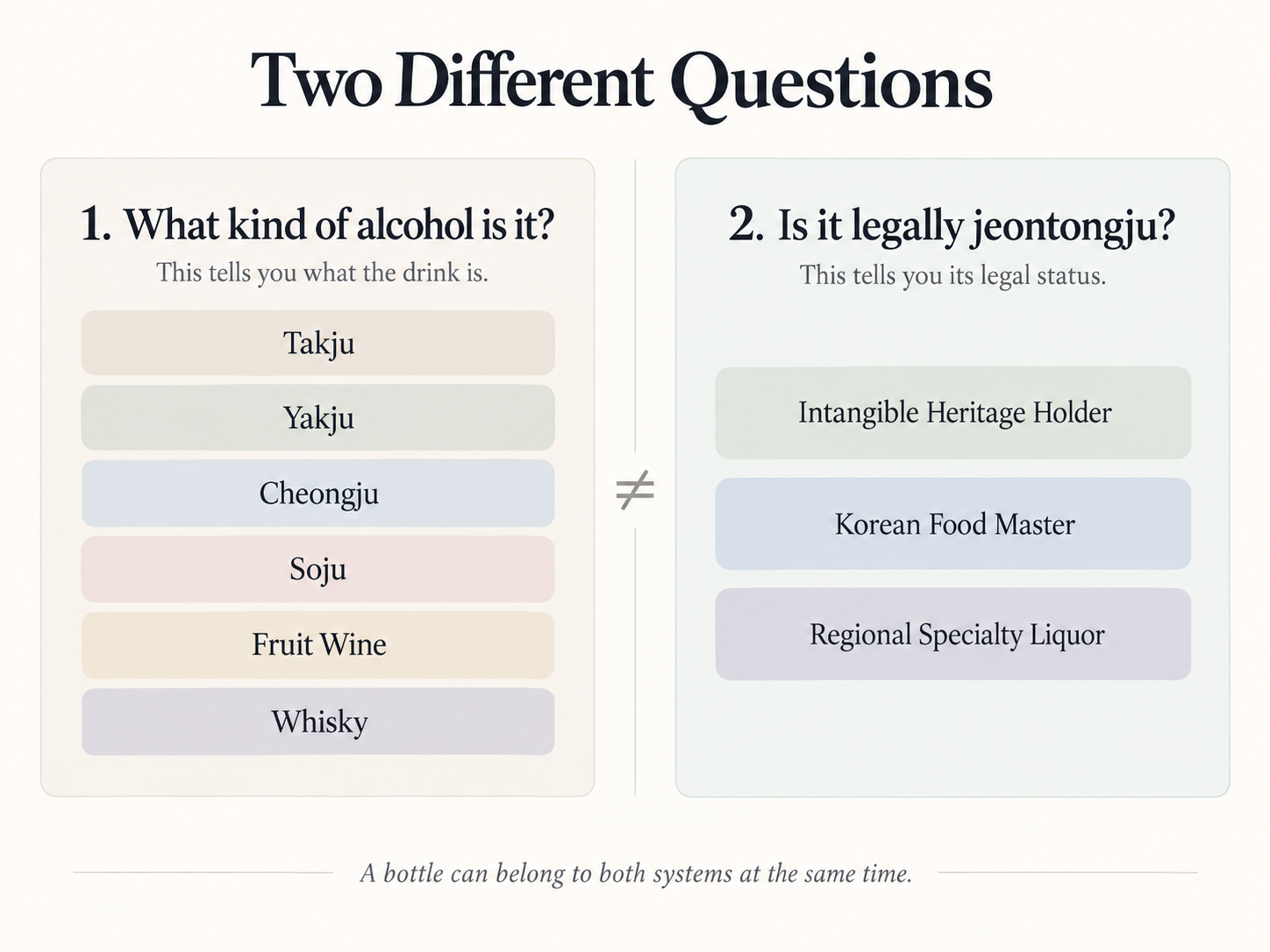
The easiest way to understand a Korean bottle is to ask two separate questions.
1. What kind of alcohol is it?
Is it takju?
Yakju?
Cheongju?
Soju?
Fruit wine?
Whisky?
Another distilled spirit?
This tells you what the drink is.
2. Is it legally classified within Korea’s traditional-liquor system?
That requires different information.
Who makes it?
Does the producer qualify through an intangible-heritage or Food Master designation?
Is it produced as regional specialty liquor under the relevant agricultural and licensing requirements?
This tells you something about its legal status, not necessarily what it tastes like, how old the recipe is, or how “traditional” it feels.
Once those two questions are separated, many apparent contradictions disappear.
A strawberry wine can be traditional Korean liquor.
A makgeolli can feel deeply traditional without its name alone telling you whether that particular product has legal traditional-liquor status.
And a whisky can be unmistakably Korean without needing to be called traditional Korean alcohol at all.
Why this distinction matters now
Korean alcohol is becoming harder to explain with a simple old-versus-new divide.
Makgeolli producers are experimenting with ingredients, fermentation, aging and presentation, while distillers are building new expressions of Korean spirits alongside older traditions.
The legal definitions still matter.
But they are only one part of the story.
The next question is what happens when one of Korea’s oldest drinks starts being redesigned for people far beyond Korea.
That is where makgeolli’s globalization story begins.