How Yangyang Became Korea’s Surf Capital — and What Its Success Is Changing
Yangyang surfing has become one of the best-known beach scenes in Korea.
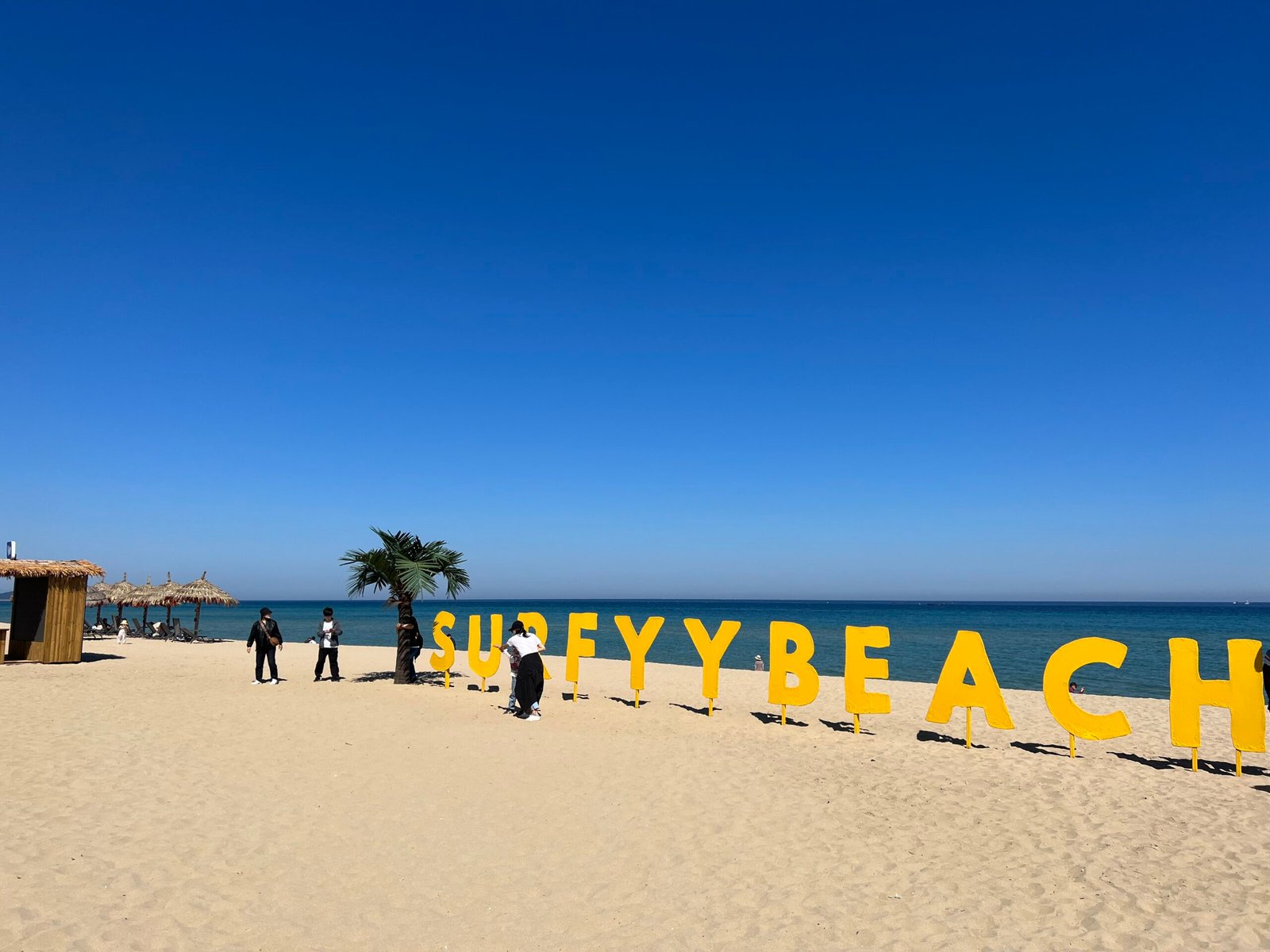
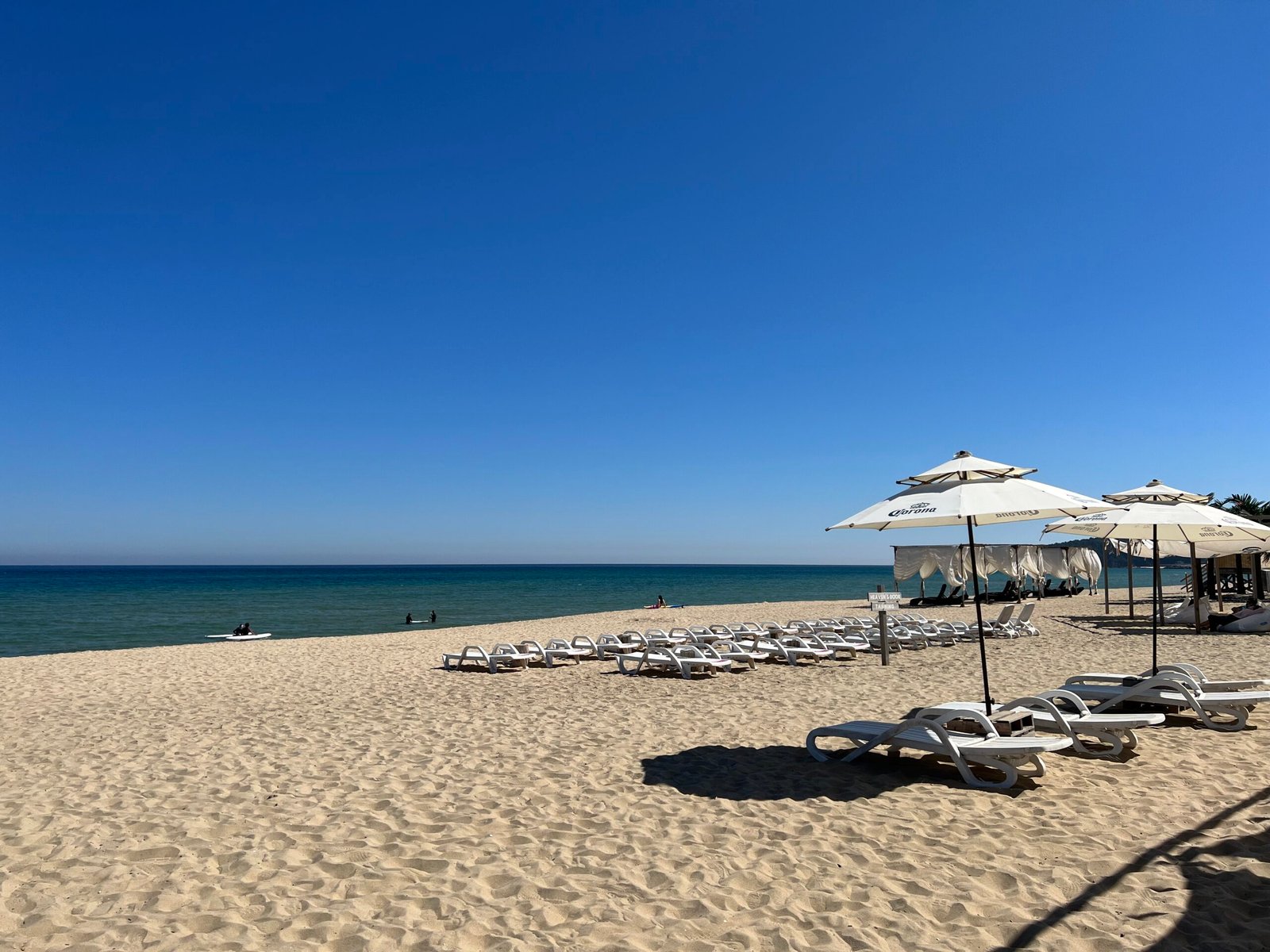
Its beaches are lined with surf shops, guesthouses, cafés and bars. In summer, the area around Jukdo and Ingu can feel less like a quiet stretch of Korea’s east coast and more like a youth-oriented beach town built around surfing.
But that image is relatively new.
Yangyang’s surf culture was built gradually, before the crowds, major developments and nightlife arrived. And that order matters, because the same success that made Yangyang famous is now changing the place that early surfers helped create.
Yangyang Wasn’t Always Korea’s Surf Town
Yangyang’s surf scene began taking shape well before it became a nationally recognized destination.
By the mid-2010s, surf businesses were already operating along beaches such as Jukdo and Gisamun. A 2021 Hankook Ilbo report, citing Yangyang County, said the number of surf shops had already passed 40 in 2014 and was approaching 90 by 2020.
That is an important distinction.
The Seoul–Yangyang Expressway did not create surfing in Yangyang. It accelerated something that was already there.
The Clearest Turning Point Was Access
One of the clearest turning points came in 2017, when the Seoul–Yangyang Expressway fully opened.
A Yangyang County official told Hankook Ilbo that the number of surfers visiting the area rose sharply after the expressway opened. The same report said Yangyang recorded around 500,000 surf tourists in 2020, while county analysis using KT mobility data found that surf tourism had grown by an average of about 20% a year from 2018 through 2020.
The effect was simple: Yangyang became much easier to reach from the Seoul metropolitan area.
The expressway was not the beginning of the surf scene. It was an acceleration point.
A small scene and a network of surf businesses were already in place. Better road access suddenly connected them to the country’s largest population center.
How Yangyang Surfing Expanded Into a Lifestyle Destination
Transport alone, however, does not explain what Yangyang became.
As surfing grew in Korea, it increasingly overlapped with a broader youth leisure culture.
A 2019 report by Hyundai Maritime noted that there was no single agreed explanation for Korea’s surfing boom, but pointed to several factors repeatedly mentioned by people in the industry: easier access, guesthouse and club culture, and growing participation by women.
The same report described visitors who were interested not only in catching waves but also in the social experience around the beach: guesthouses, parties, food and nightlife.
That is a useful way to understand how Yangyang surfing grew beyond the sport itself. Accommodation, cafés, restaurants, guesthouses and nightlife increasingly became part of the same trip.
By 2021, a researcher at the Gangwon Research Institute was describing surfing as a leisure product that had taken root in Yangyang through a combination of higher disposable income and improved transport links to the Seoul metropolitan area.
Then COVID-19 and Property Investment Added Another Layer
Yangyang was already growing when the COVID-19 pandemic created another surge in domestic travel.
In a 2024 Hankook Ilbo/POSTECH ISDS interview, Surf Lab founder Kim Jin-su recalled that problems became more visible as domestic tourism jumped after overseas travel was restricted. A companion Hankook Ilbo analysis from the same reporting project stated that Yangyang’s 2021 land-price growth rate ranked first nationwide.
More visitors meant more commercial interest. But the transformation of Jukdo and Ingu was not simply the result of surfing becoming popular.
According to the Ministry of Land, Infrastructure and Transport’s official 2022 land-price data, as reported by Kyunghyang Shinmun on November 26, 2023, Yangyang County recorded a land-price increase of 3.935% in 2022. That was the highest rate in Gangwon Province and close to Seoul’s Seocho District, which recorded 3.982%. A decade earlier, Yangyang’s land-price growth had been less than half the Gangwon provincial average.
A local real estate agent, Roh Seung-beop, head of the Yangyang chapter of the Korea Association of Realtors, told the newspaper that land near Ingu Beach was approaching KRW 50 million per pyeong (about 3.3 square meters), with some listings said to be asking more than KRW 70 million. He described the current market as “nothing but a bubble.”
Rent increases are supported by a separate example. A surf-shop operator at Jukdo Beach told the newspaper that the rent he faced had roughly doubled compared with three years earlier, and risen about twentyfold compared with when he first considered opening a shop a decade earlier.
The same investigation documented a wave of serviced-residence developments around Ingu and Jukdo, most built after 2020. The report said these developments helped push up nearby land prices and rents. Separately, it also found that after interest rates rose, several of those units struggled to sell and were being offered at discounts of roughly KRW 10–12 million below their original listing price.
Those are two different facts about the same development cycle, and both matter: one explains part of why prices climbed, the other shows that the investment surge has not been trouble-free.
Surf tourism created attention. Domestic travel demand added momentum. Property development and investment added another layer of pressure.
The clearest property and rent examples found in reporting are concentrated around Jukdo and Ingu beaches, so it would be a mistake to assume every part of Yangyang has changed in exactly the same way.
The People Who Helped Build the Scene Are Now Watching It Change
This is where Yangyang’s story becomes more complicated than a simple tourism success story.
The 2024 Hankook Ilbo/POSTECH ISDS feature spoke with people in three very different positions: a surf-business owner, a Yangyang County official dealing with overtourism complaints, and the head of a local youth cooperative.
Their perspectives were not identical. But all three described tensions created by the area’s rapid growth.
A Surf-Business Owner Sees the Original Industry Being Squeezed
Kim Jin-su, who settled in Yangyang in 2014 and runs a surf school and guesthouse business, described the surf industry as increasingly difficult.
He said the number of surfing businesses had grown to around 100 over roughly a decade. That is his estimate from the interview, not an official Yangyang County business count.
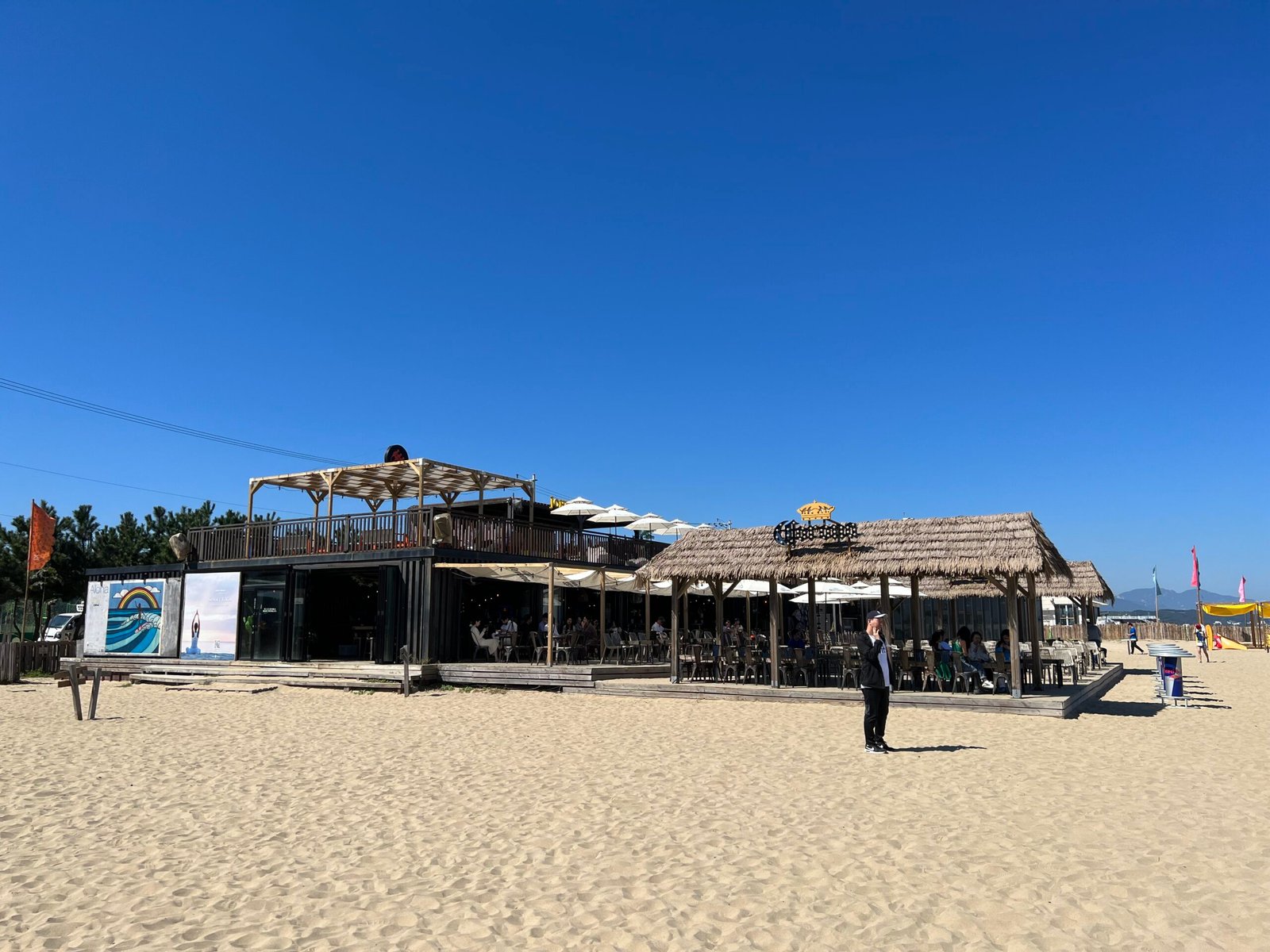
More importantly, he argued that rising property costs were changing which businesses could afford to remain near the beach. According to Kim, surf shops based mainly on equipment rental and lessons were increasingly competing with cafés, bars and nightlife-oriented businesses that could support higher rents.
His concern was not that people had stopped coming to Yangyang. Quite the opposite. The crowds had grown large enough to change the economics of the beach itself.
The Local Government Is Dealing With Overtourism Complaints
The same feature interviewed Choi Hyun-jong, a Yangyang County official whose work included handling complaints related to overtourism.
That matters because it moves the issue beyond a disagreement inside the surf community. Residents were also experiencing the consequences of concentrated tourism, and the pressure had become something the local administration had to deal with directly.
A Local Youth Organizer Worries About What the Beaches Could Lose
Kim Seok-gi, head of the Yangyang Youth Cooperative, expressed the issue differently. He worried that beaches shaped by surfers and a more nature-oriented community could increasingly be defined by entertainment and nightlife instead.
His concern was essentially about identity: if the qualities that made the beaches attractive are replaced by the businesses that arrived because the area became attractive, what remains of the original appeal?
The three interviewees are not making the same argument. But taken together, their perspectives show that the tension is visible from several sides: the surf industry, local administration and a local youth organization.
Yangyang Is Still Popular, Possibly More Than Ever
None of this means people have stopped visiting Yangyang.
In fact, recent government data shows just how large Yangyang’s temporary population can become. According to Statistics Korea’s results for the third quarter of 2025, Yangyang had the highest ratio of stay population to registered population among Korea’s designated population-decline areas in July, August and September 2025. In August, its stay population was 27 times its registered population.
That statistic does not tell us why those people came, and it certainly does not mean they were all surfers.
What it does show is that Yangyang’s challenge is not a lack of attention. The county has become extremely successful at attracting people who do not live there year-round.
The Problem Is Not That Surfing Failed
Yangyang’s dilemma is not that its surf culture failed. It is that the culture succeeded strongly enough to change the economics and identity of the place around it.
A relatively small surf community helped make these beaches interesting. Better access brought more people. Surfing became part of a wider lifestyle trip. COVID-era domestic tourism increased demand, while property development and investment raised the economic stakes around some of the most popular beaches.
Now some of the people who helped build the scene are asking what happens when the value they created attracts businesses and capital that no longer depend on surfing itself.
That does not mean Yangyang is “ruined.” The available evidence does not support such a simple conclusion. The more useful question is what happens next: can a place that became famous because of a particular community keep the character that made people want to visit it in the first place?
The Harder Question: Who Actually Gets to Stay?
There is a second, less visible gap behind Yangyang’s surf-town image.
The same Hankook Ilbo/POSTECH ISDS analysis found that young residents make up only about 15% of Yangyang’s population, more than 5 percentage points lower than neighboring Gangneung and Sokcho. Residents aged 65 and older make up about 34% of the population, well above both the national average of roughly 18% and the roughly 24% figure in nearby areas.
The contrast is striking. Yangyang is widely associated with young surfers and a youthful beach scene, yet the share of young residents is lower than in neighboring Gangneung and Sokcho.
The same reporting is even more striking on a second point. After a period of growth, Yangyang’s registered population began declining again in 2023. The report connects this to residents’ complaints about overtourism and a drop-off in family visitors, but it does not establish nightlife or commercialization as the direct cause of the population decline, and neither should this article.
What can be said with more confidence is narrower. Yangyang has become very good at attracting people who do not live there year-round. Whether it has become equally good at giving young people a reason to settle there is a different question.
Yangyang has already shown that a small local scene can reshape the image of an entire destination.
It succeeded at building a tourism culture closely associated with young people. The harder question is whether it has succeeded at getting young people to stay.
Sources: Hankook Ilbo / POSTECH ISDS interview, February 6, 2024; Hankook Ilbo / POSTECH ISDS analysis, February 6, 2024; Hankook Ilbo, June 8, 2021; Hyundai Maritime, July 8, 2019; Kyunghyang Shinmun, November 26, 2023; Statistics Korea, Q3 2025 stay-population results.
For another look at how Koreans actually travel domestically, see our guide to whether Gangneung is worth visiting.