What Does It Take to Build a Korean Whisky?
Ki One began distilling in Namyangju in 2020, at a time when Korean-made single malt whisky was still a novelty. Today, the distillery describes itself as Korea’s first single malt whisky producer and frames its work around building a distinctly Korean whisky identity (Ki One Distillery).
But there is an awkward question at the center of its story.
In a 2023 interview, founder Bryan Do said the distillery was still using Scottish barley and malt, a choice he attributed to flavor and cost (Nongmin Shinmun, 2023).
So if much of the raw material came from Scotland, what exactly made the whisky Korean?
Is a whisky’s identity determined by where its barley grows? Or by where it is fermented, distilled, matured, and ultimately shaped?
Ki One has spent the years since 2020 working through that question. Not with one fixed definition, but through the place, maturation, casks, ingredients, and eventually even the cultural references surrounding the whisky.
The result is less a finished answer than an experiment still in progress.
Place: Making Scotch-style whisky in a very different place
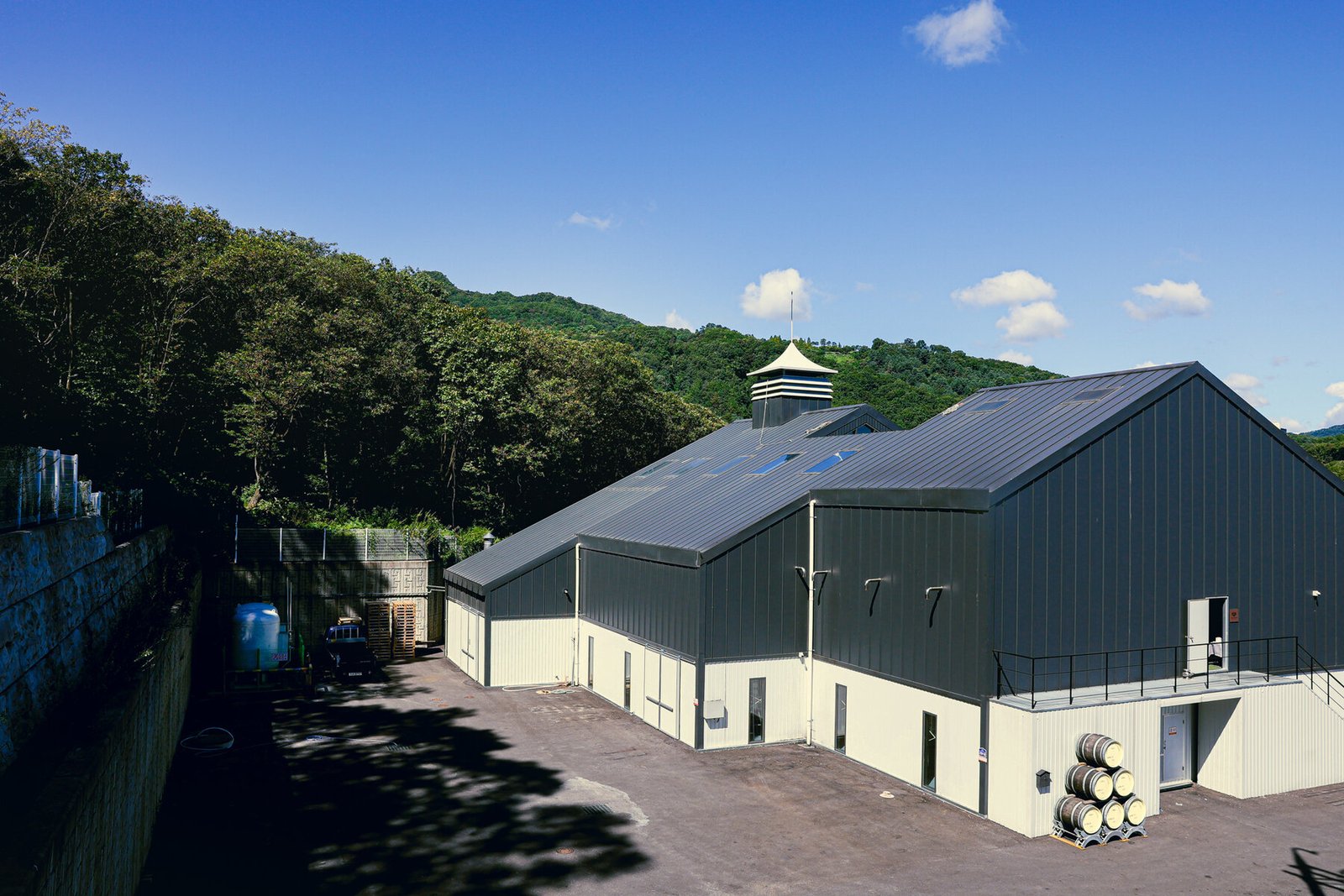
Ki One Distillery sits in Namyangju, east of Seoul, near the foot of Baekbongsan.
The location was not accidental. The team deliberately looked for a place with large seasonal temperature swings, something Korea has in abundance. A profile of the distillery noted that it specifically sought out an area with a wide annual temperature range (heyPOP).
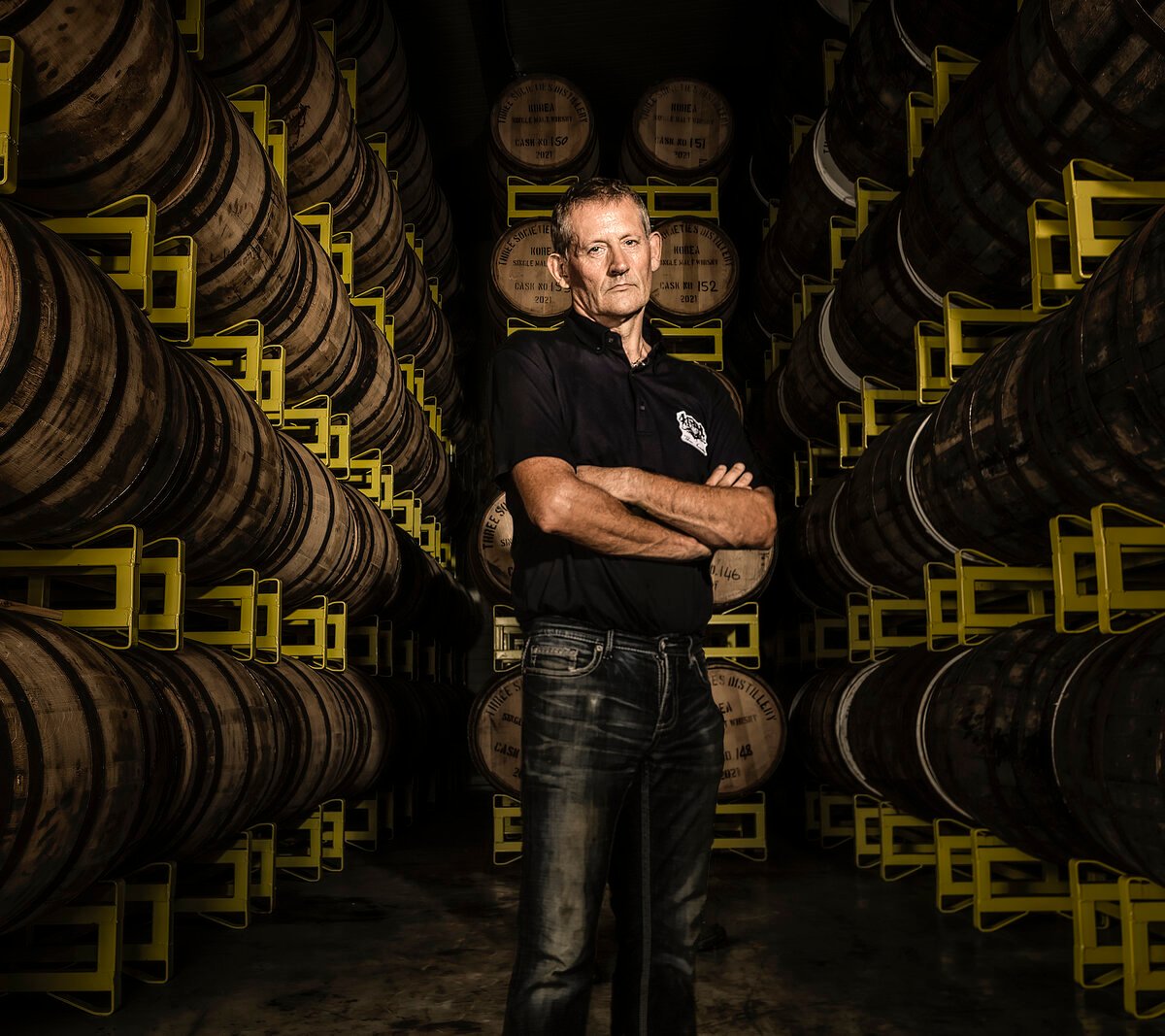
Master distiller Andrew Shand brought a long Scotch whisky background with him. Born in Scotland, he began his whisky career at The Glenlivet in 1980 and later worked in Japan and the United States before joining the Korean project (heyPOP).
It is a telling detail. Ki One did not set out to invent an entirely new way of making whisky. Its starting point was established single malt production, moved into a Korean environment.
Ki One describes its approach as using traditional whisky-making methods while allowing Korea’s climate and local conditions to shape the result (Ki One Distillery).
Some of the differences appear before the spirit even reaches a barrel.
Do has said that while many distilleries ferment for around 60 hours, Ki One typically extends fermentation to between 80 and 120 hours. He compared some of the deeper, spicier flavors that emerge during longer fermentation to the character of gochujang (Edaily, 2025).
He has made a similar argument about distillation cuts. According to Do, Ki One selects roughly 10 to 15 percent of the distillate for maturation, compared with the 15 to 25 percent range he says is common elsewhere, keeping a narrower portion for aroma and flavor (Edaily, 2025).
The choices are deliberate. Do has shaped fermentation and distillation with flavor as the priority, even when that means longer fermentation and a narrower cut.
At least in its early years, Ki One did not define “Korean” simply by the nationality of its ingredients. It placed more emphasis on what happened to those ingredients once they arrived in Korea.
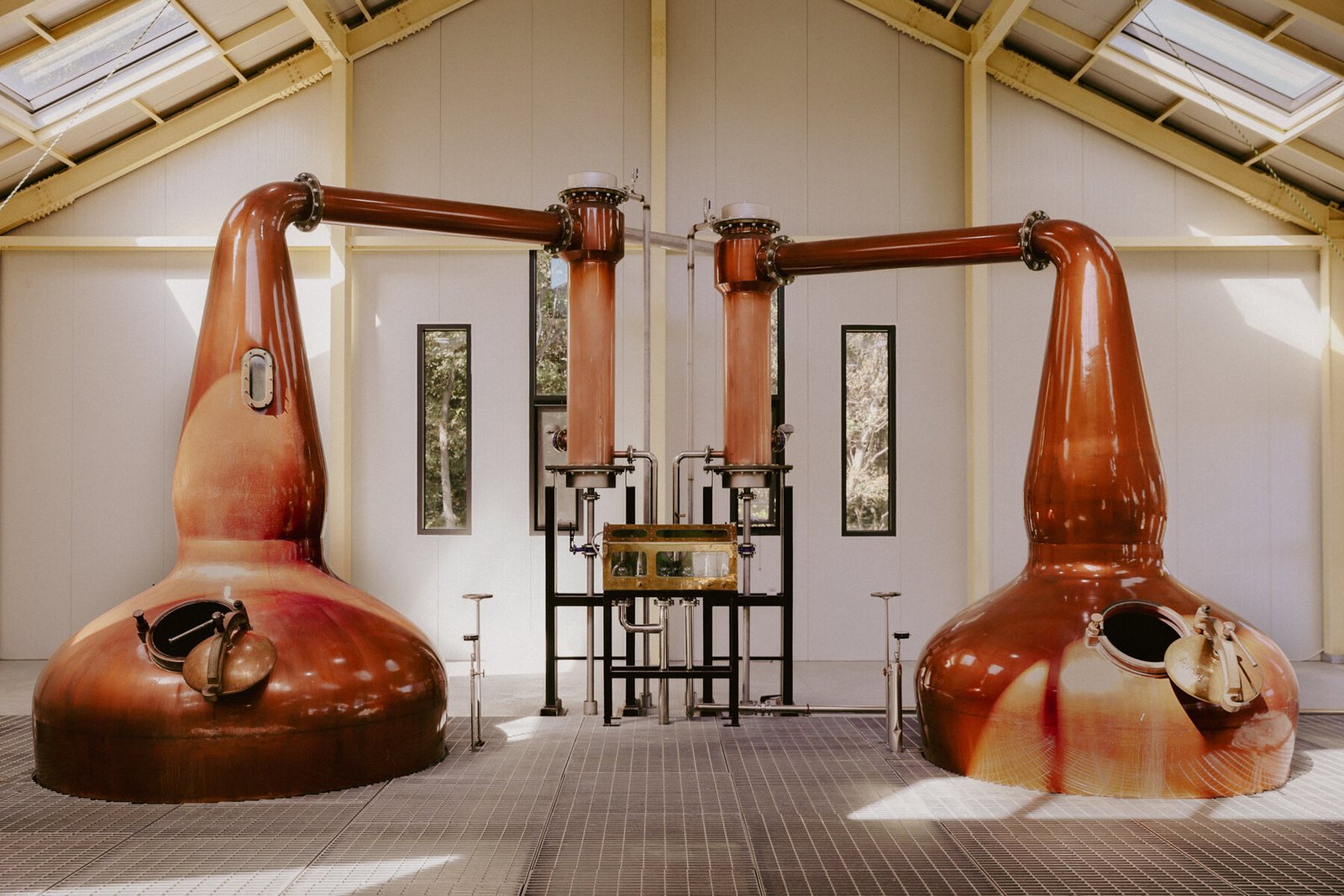
Maturation: What Korea’s climate does to whisky
The role of place becomes even clearer once the spirit goes into a cask.
Namyangju can climb above 30°C in summer and fall to around -20°C in winter. Ki One sees those swings as one of its biggest differences from Scotland (Asia Economy, 2025).
As temperatures rise and fall, the spirit’s interaction with the oak changes. Warmer conditions can push liquid further into the wood, while cooler periods reverse part of that movement. Repeated cycles can intensify the interaction between spirit and cask.
Shand has argued that this can make maturation characteristics appear much sooner in Namyangju. In a 2025 interview, he compared one year of maturation there with roughly three to five years in Scotland (Asia Economy, 2025).
Ki One has been building its case through repeated maturation experiments, different cask programs, and increasingly older releases.
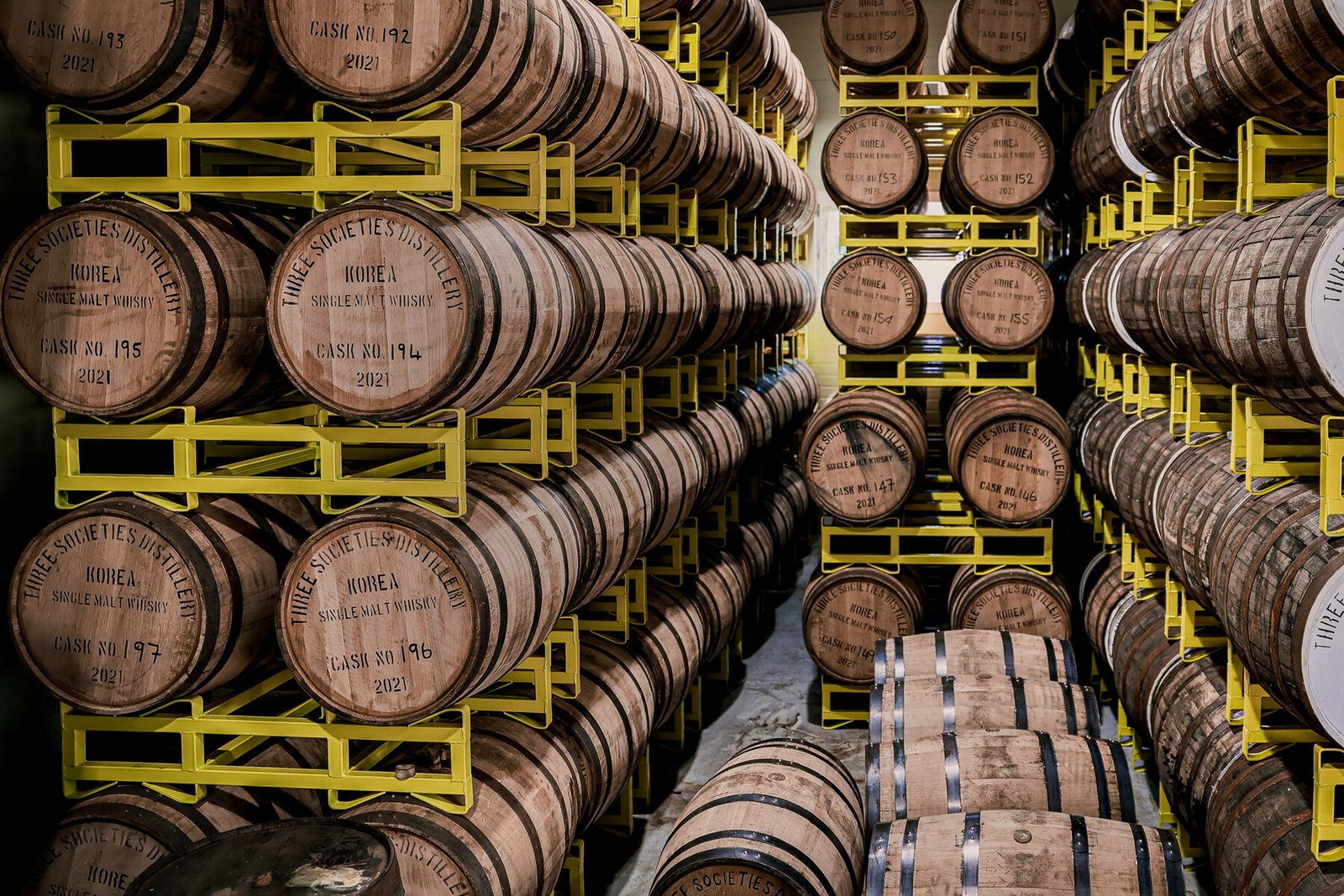
The early Society Collection was one of the first ways Ki One could show that progression over time. The Tiger Edition was bottled in September 2021, followed by the Unicorn Edition in April 2022. Using similar new-oak maturation while extending the time in cask gave drinkers a direct look at how the spirit changed with additional aging (Ki One Archive; Three Societies archive).
The Unicorn Edition was around 21 months old when bottled and received Gold at the 2022 San Francisco World Spirits Competition (Three Societies Awards). For Ki One, that result was an early sign that a relatively young Korean single malt could already show enough depth and character to perform well in international judging.
For a distillery trying to convince drinkers that age statements alone do not tell the whole story in Korea, the result was useful evidence that young Korean whisky could be taken seriously.
Building credibility in a difficult market
Making whisky in Korea also came with a less romantic problem.
Korean distilled spirits are subject to a 72 percent liquor tax, with education tax and VAT added on top. That creates a heavy tax burden for locally produced whisky and leaves a young domestic distillery with little room to compete simply on price (Sejung Ilbo).
At the same time, Ki One entered international competitions and accumulated awards.
These were two different problems. High taxation limited domestic price competitiveness, while international judging addressed credibility.
A Korean single malt had to persuade drinkers not only that it existed, but that it deserved to be taken seriously.
House style: From experiments to bottles you can buy again
The evolution of Ki One’s product range shows how the distillery moved from experimentation toward something more repeatable.
The Society Collection came first.
Then came the Batch Series, which expanded the range of cask and malt experiments. Ki One’s official archive lists releases using virgin American oak, bourbon casks, Oloroso sherry, port, PX sherry, peated malt, smoked malt, and other variations (Ki One Archive).
Those experiments eventually fed into the permanent core range.
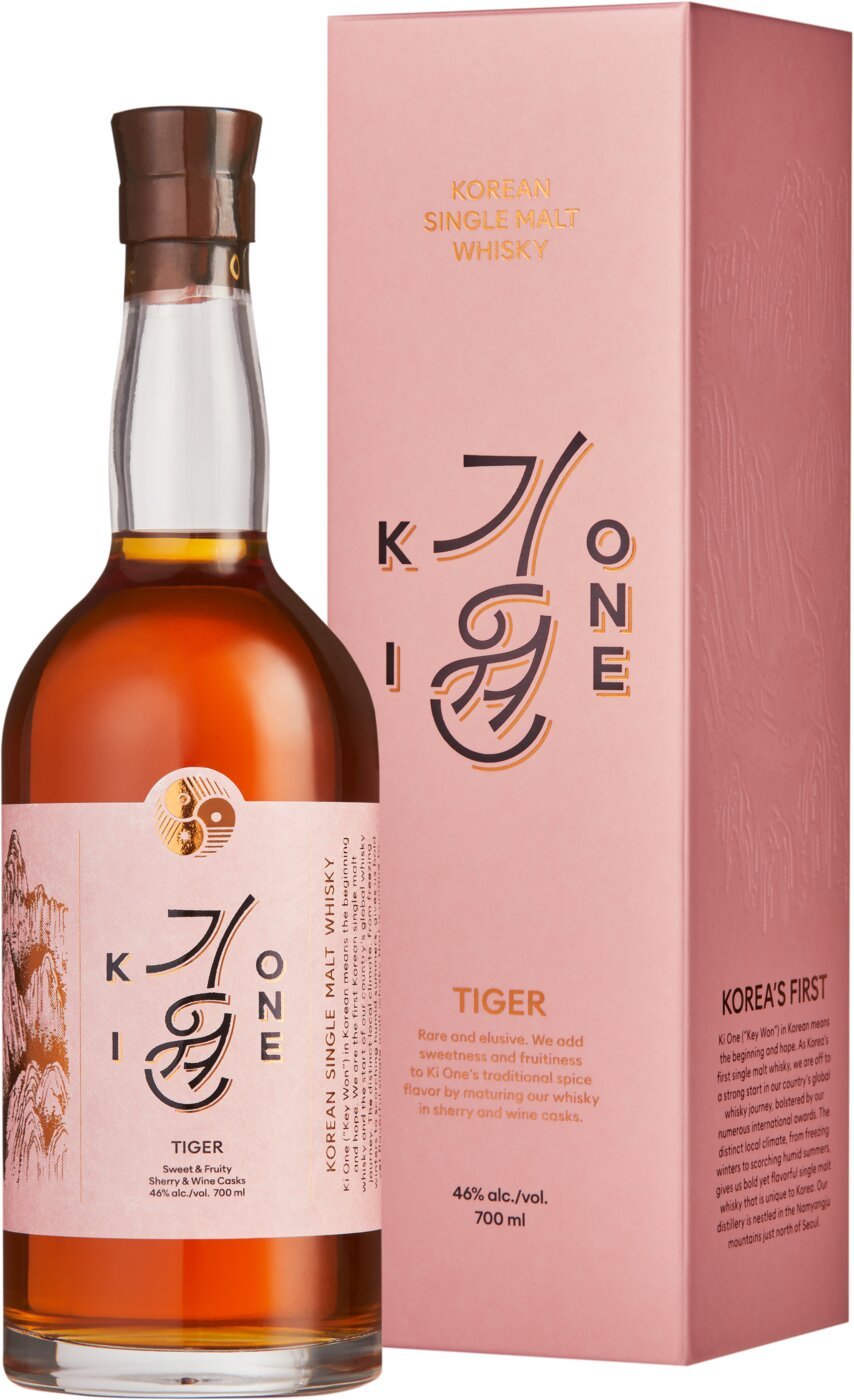
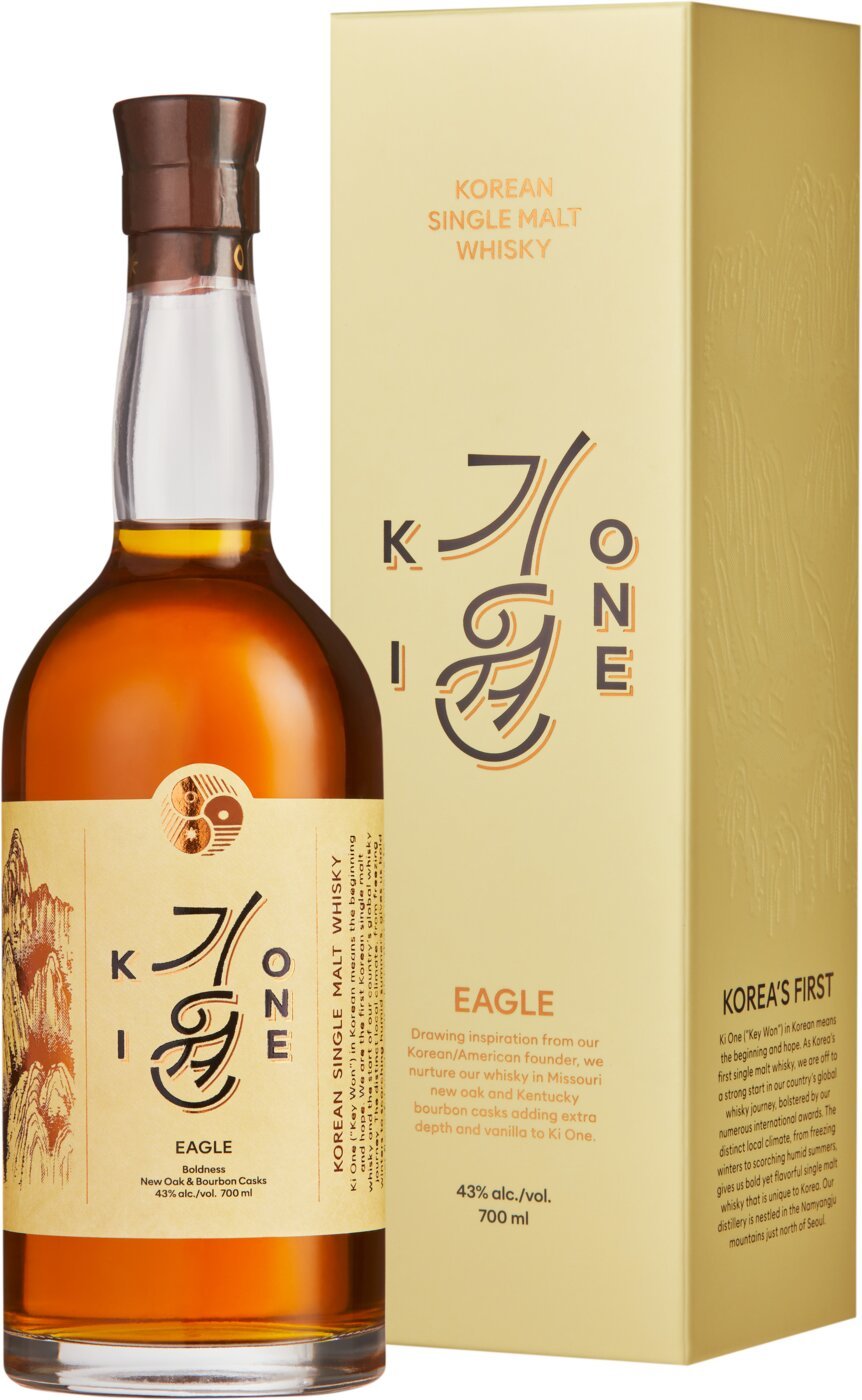
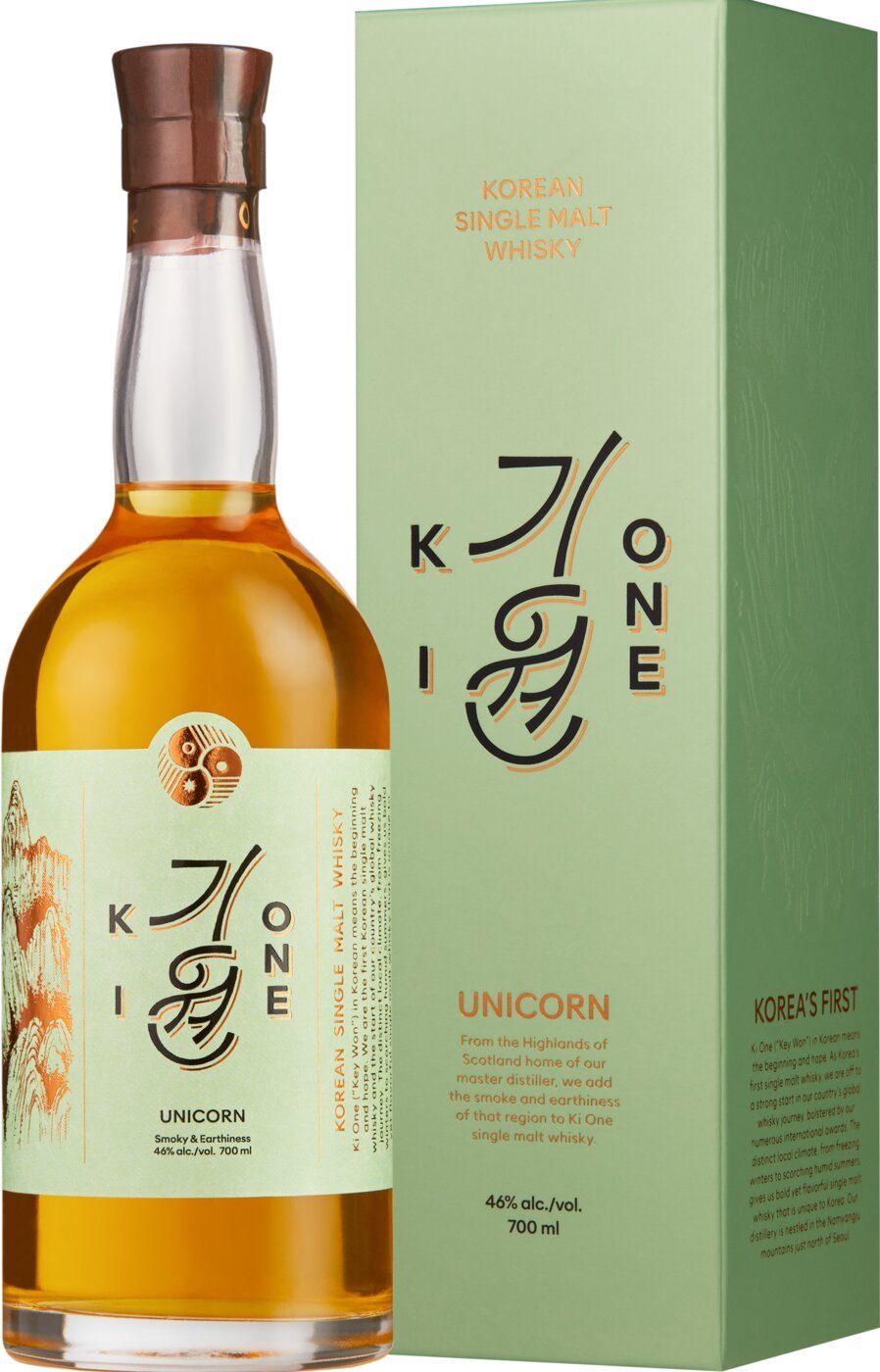
Ki One’s current product pages explicitly connect the three animals to the three societies behind the distillery (Ki One Tiger; Ki One Eagle; Ki One Unicorn).
The symbols connect back to the distillery’s original name, Three Societies: Korea, the United States, and Scotland represented the different backgrounds that came together at the beginning of the project.
The company later consolidated the brand around the Korean name Ki One, or 기원. It’s a wordplay: pronounced the same way, 기원 can mean either “origin” or “wish,” and the distillery uses the name to invoke both at once. (Ki One Distillery).
The shift can be read as more than a cosmetic rebrand.
Three Societies emphasized the people and cultures that came together to create the whisky. Ki One increasingly emphasizes the whisky they are trying to create in Korea.
The question had changed from “Can we make single malt here?” to something closer to “What should a repeatable Ki One style actually be?”
Beyond place: Making more of the whisky Korean
Up to this point, much of Ki One’s Korean identity came from where the whisky was made and matured.
More recently, the distillery has pushed the question further.
Can more of the whisky itself become Korean too?
In 2023, Do said Ki One was still using Scottish barley and malt. At the same time, he had begun cultivating barley locally in Korea, with the longer-term goal of using domestically grown grain (Nongmin Shinmun, 2023).
The story has moved on since then.
Ki One’s current official archive now lists two “Korean Batch” releases, Ddeokgal and Shingal, described as using Korean malt and Korean oak casks (Ki One Archive).
That is a meaningful step beyond simply growing barley as an experiment. It shows that Korean malt and Korean oak have already made their way into actual Ki One releases.
It does not mean the regular core range has switched entirely to Korean grain or Korean oak. The archive presents Ddeokgal and Shingal as specific Korean Batch releases, separate from the main core lineup.
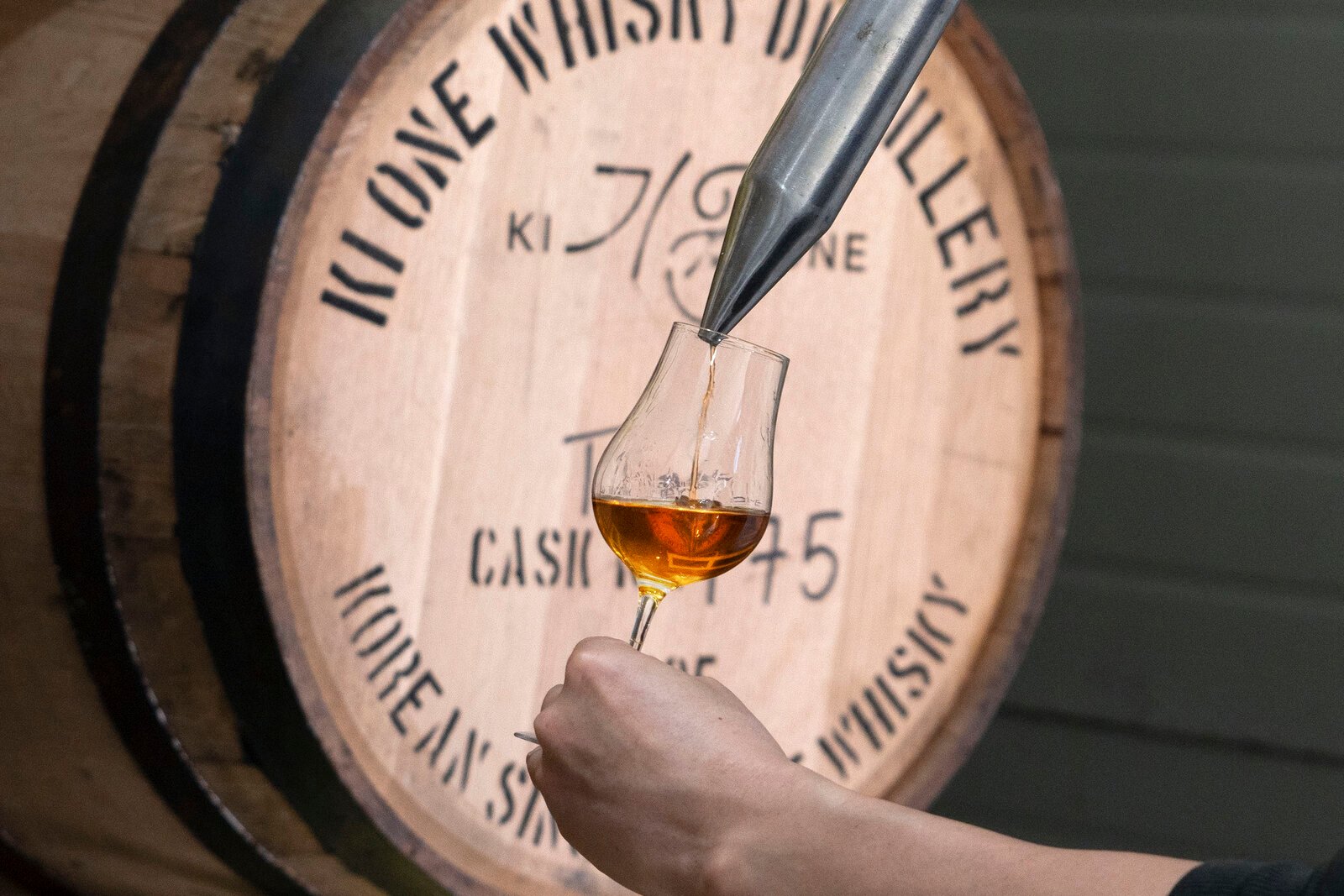
The distillery has also explored connections with traditional Korean alcohol. In materials provided directly to K-Actually, Ki One shows whisky maturing in a cask that previously held bokbunja-ju, a traditional Korean fruit wine made from bokbunja, the Korean black raspberry. A 2023 Nongmin Shinmun profile also reported that the distillery was preparing to mature whisky in casks that had held Korean traditional alcohol, including bokbunja-ju (Nongmin Shinmun, 2023).
These experiments now form a clearer progression.
Ki One began with imported malt and a Korean place of production. Then came climate-driven maturation, multiple cask programs, locally grown barley, Korean malt, Korean oak, and casks connected to Korean traditional alcohol.
The next question almost asks itself.
Could those strands eventually come together in a regular Cask Strength release built almost entirely, or even entirely, around Korean-grown grain and Korean oak?
Ki One already sells Cask Strength expressions, and its archive shows that Korean malt and Korean oak have also reached bottled releases. What has not yet appeared publicly is a regular core Cask Strength expression that brings all of those Korean-material experiments together in one product (Ki One Archive; Ki One Signature).
The possibility is no longer purely hypothetical because the individual pieces already exist.
No single release brings all of those elements together yet.
Korean whisky is still being defined
Ki One repeatedly talks about creating a Korean whisky identity. But its own materials do not reduce that identity to one flavor note or one fixed recipe.
Instead, the direction keeps expanding: from making whisky in Korea, to allowing Korean climate to shape it, and now to putting Korean malt, Korean oak, and elements of Korean drinking culture into actual releases.
Perhaps that is the more useful answer to the question we started with.
A Korean whisky does not necessarily become Korean because every raw material was grown in Korea. Simply distilling imported malt inside the country’s borders does not settle the question either.
In Ki One’s case, the identity appears to be emerging from the combination of place, climate, production choices, and a growing effort to bring Korean materials and drinking culture into the whisky itself.
There is still no single flavor profile that defines Korean whisky in the way drinkers might immediately imagine Scotch or bourbon.
And perhaps there does not need to be one yet.
For now, the more interesting story is watching that identity take shape.
“Korean whisky is less a finished style than a category still being built.”
The same question is playing out elsewhere in Korean spirits. Distilled soju is also being reshaped by new choices in rice, fermentation, distillation and oak aging. Whisky itself sits entirely outside Korea’s legal traditional-liquor framework — a distinction explained in our guide to what traditional Korean liquor actually means.