A Bojagi Is Never Just One Thing
How The Bojagi with Seasons turns Korean heritage into everyday fabric
A Cloth That Changes With What It Holds
Unfolded, a bojagi is a single piece of cloth. Nothing more.
Wrap it around a small box and it becomes a package. Drape it over a tray and it becomes a cover. Tie it by the corners and it becomes a carrying bag. What it holds decides what it is. It never settles into one shape for long.
That is why the founder of The Bojagi with Seasons hopes people will not use bojagi only as bojagi.
What Is Bojagi, and Why Is It Not the Same as Jogakbo?
Outside Korea, bojagi is often assumed to mean Korean patchwork. The word brings to mind colorful squares stitched together from fabric scraps, the kind often seen in exhibitions and craft books abroad. That image is real, but it belongs to jogakbo, a patchwork form of bojagi, not to the object as a whole.
A bojagi is a multipurpose square cloth used for wrapping, carrying, covering, and storing. It appears in everyday life as well as ceremony, and has been made from materials including cotton, ramie, hemp, and silk. Some were plain. Others were pieced, embroidered, painted, resist-dyed, or decorated with gold leaf.
What defines a bojagi is not one material or technique. It is the openness of its use. One cloth can take on many functions, then return to being a square when the knot comes undone. This is where The Bojagi with Seasons begins.
That distinction matters because patchwork has become the most recognizable image of bojagi abroad. It is visually distinctive and easy to exhibit as textile art. But starting with jogakbo alone can make the larger object look more specialized than it was. Bojagi was useful precisely because it did not arrive with a permanent shape or a single assigned purpose.
The Gap a Fashion Designer Noticed
The founder trained in fashion and worked as both a designer and merchandiser at a fashion company. She encountered bojagi during maternity leave, but what she saw at the time did not fit what she wanted to make.
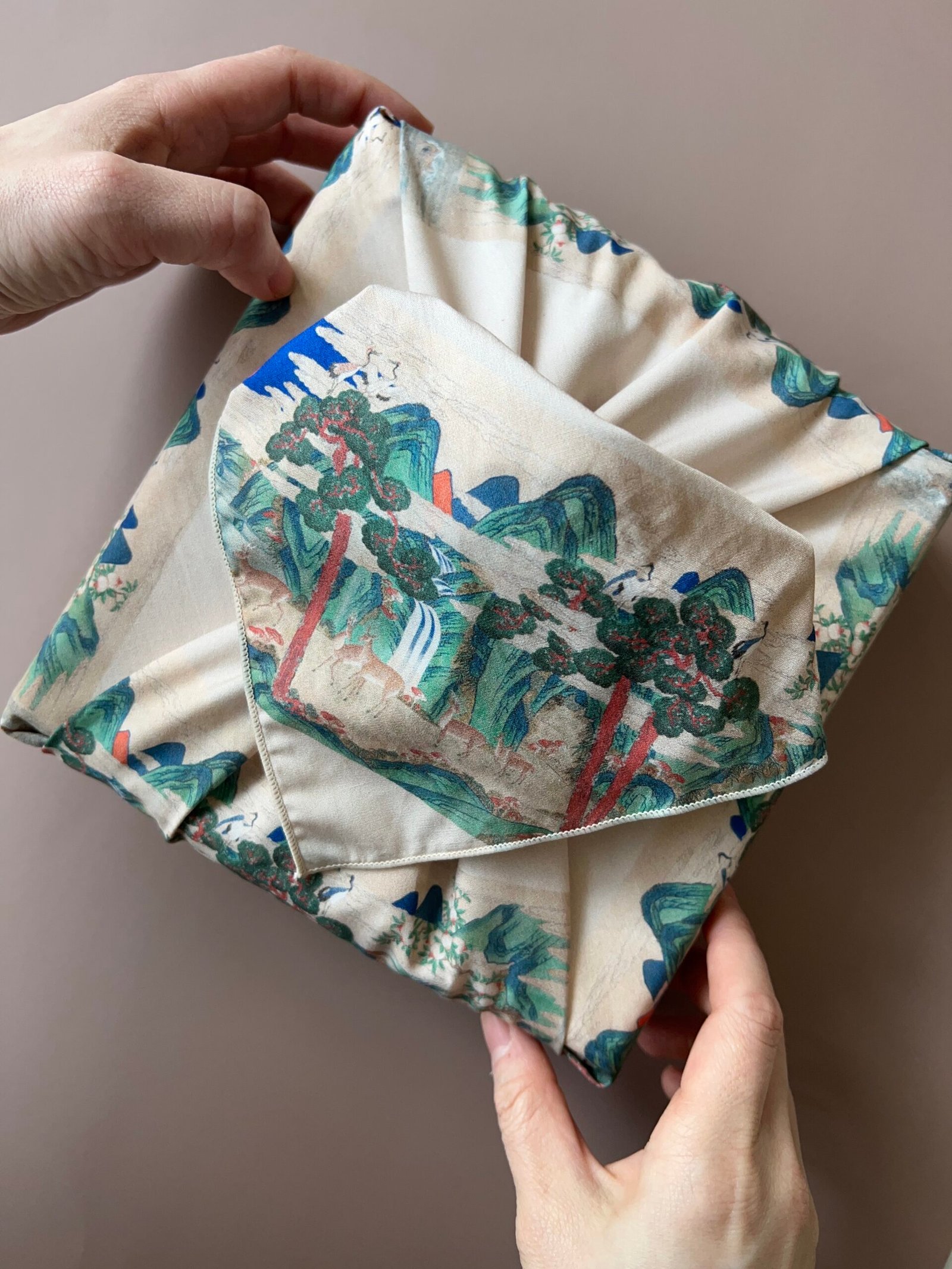
The market she encountered centered largely on fabrics associated with traditional hanbok, and the range of materials felt narrow. From a fashion background, the possibilities looked broader. She saw room for different fibers, contemporary textile production, and Korean cultural images redrawn as patterns rather than placed on a product unchanged.
Decorated bojagi are not new. Korean wrapping cloths have long carried embroidery, auspicious symbols, painted details, and other imagery. The new part here is not the existence of decoration. It is how the source image is selected, simplified, reorganized, and printed for present-day use.
Her process begins close to the source. She first tries to understand and redraw the original object or image, then removes details until the parts that carry its identity remain. The simplification comes after observation. It is not a decorative motif chosen first and given a heritage explanation later.
The business has operated since 2021.
Designed Flat, Imagined in Three Dimensions
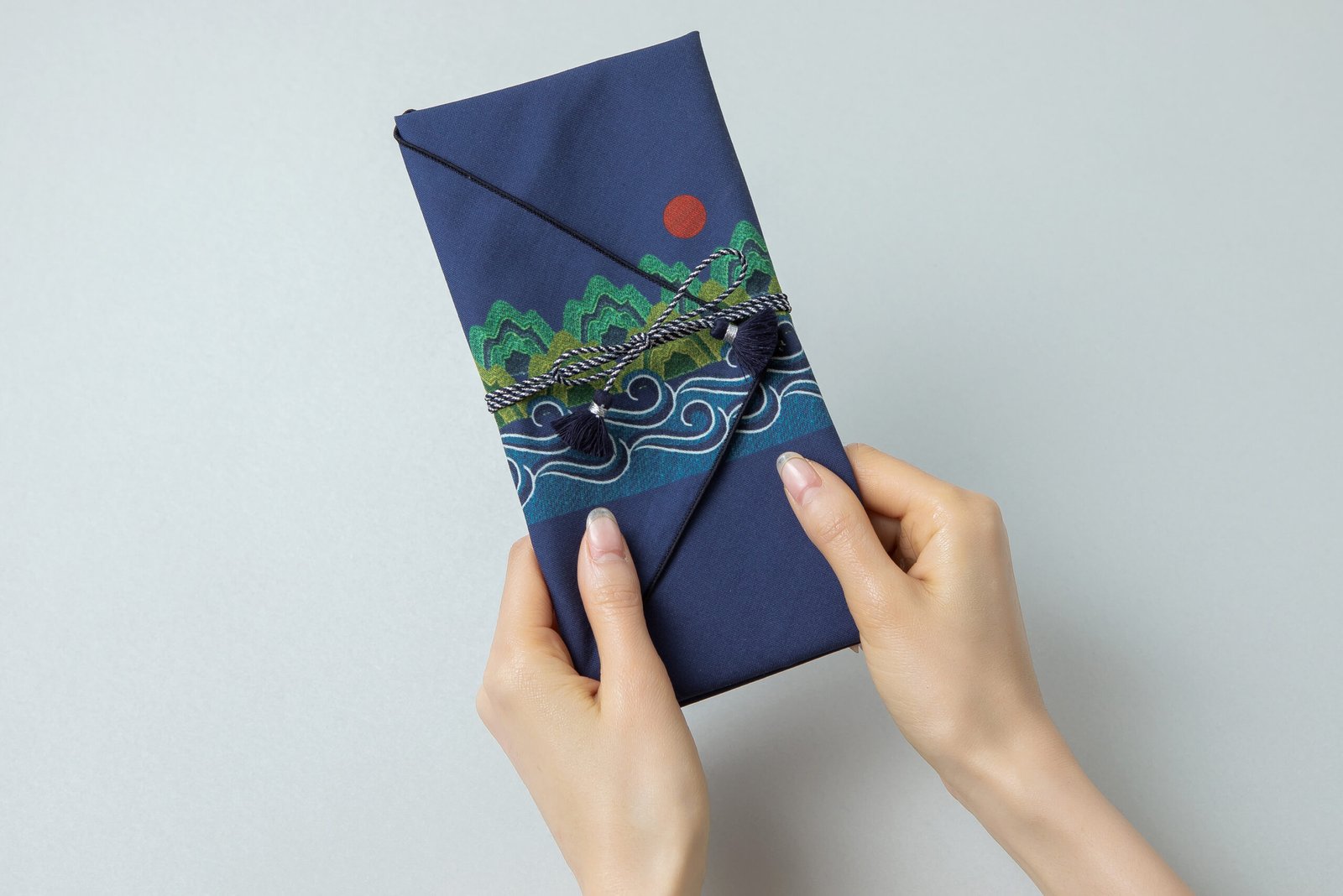
The clearest example is Ilwol Sansu-bo (일월산수보), the brand’s first design and a reinterpretation of Ilwol Obongdo (일월오봉도). The royal screen was placed behind the Joseon king’s throne, where it served as a symbol of royal authority. The question was how to move that image onto cloth without turning the result into a printed poster.
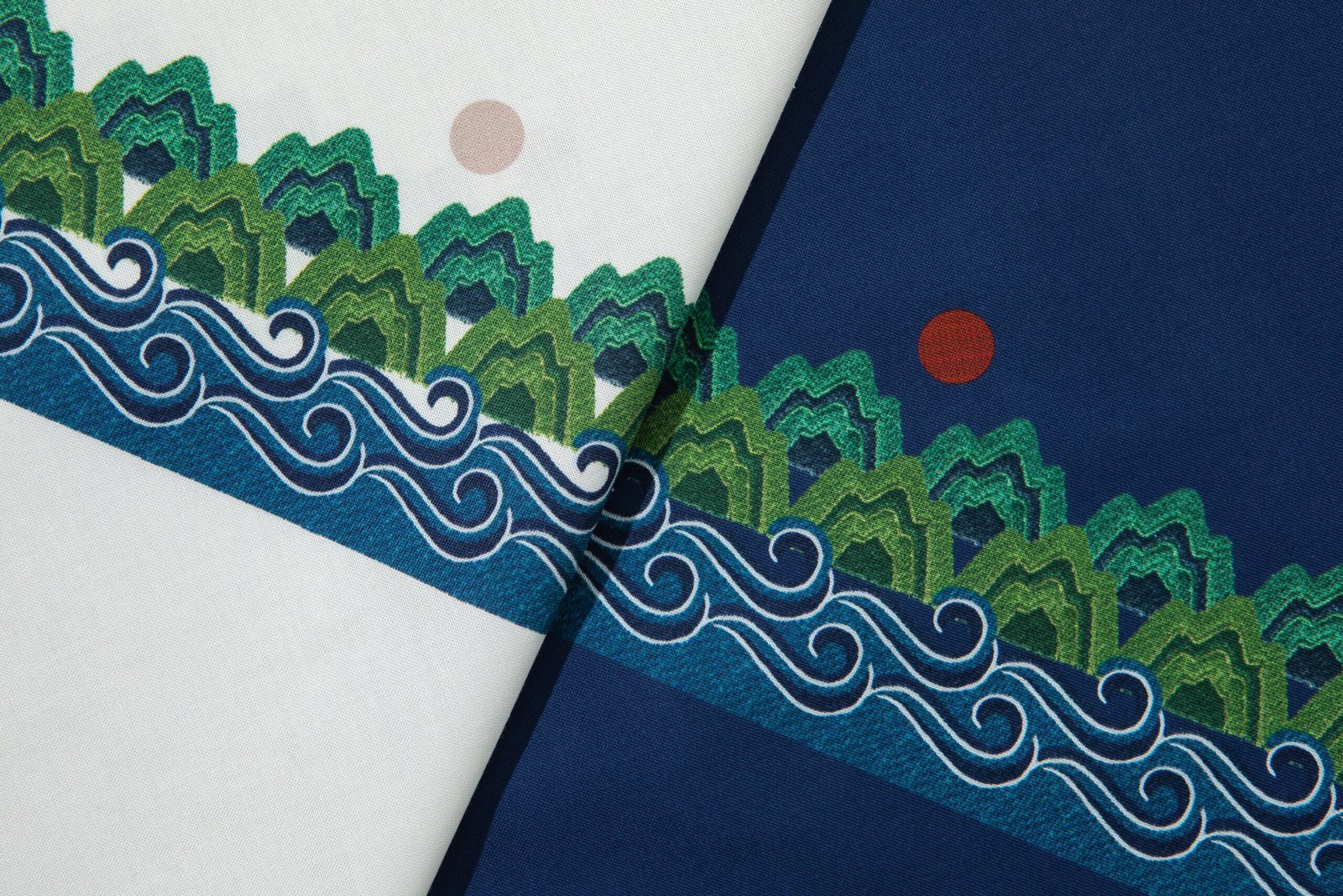
Rather than reproduce the entire painting, the designer kept four elements: mountains, waves, the sun, and the moon. The mountains and waves became repeating structures. The sun and moon remained as visual anchors, appearing once rather than repeating.
But the design was not planned only as a flat square. The placement began with a different question: where should each element appear once the cloth is wrapped around an object? Mountains and waves were arranged diagonally or in a circle so the pattern would still read across folds and around volume.
In that sense, the finished form came first. The flat graphic was designed backward from it.
The reversal matters. The cloth is not designed flat and then tested around an object. Its eventual folds help determine where the pattern begins. The brand has used the same idea in its scarf work, considering both the open design and which motifs remain visible after the fabric is tied.
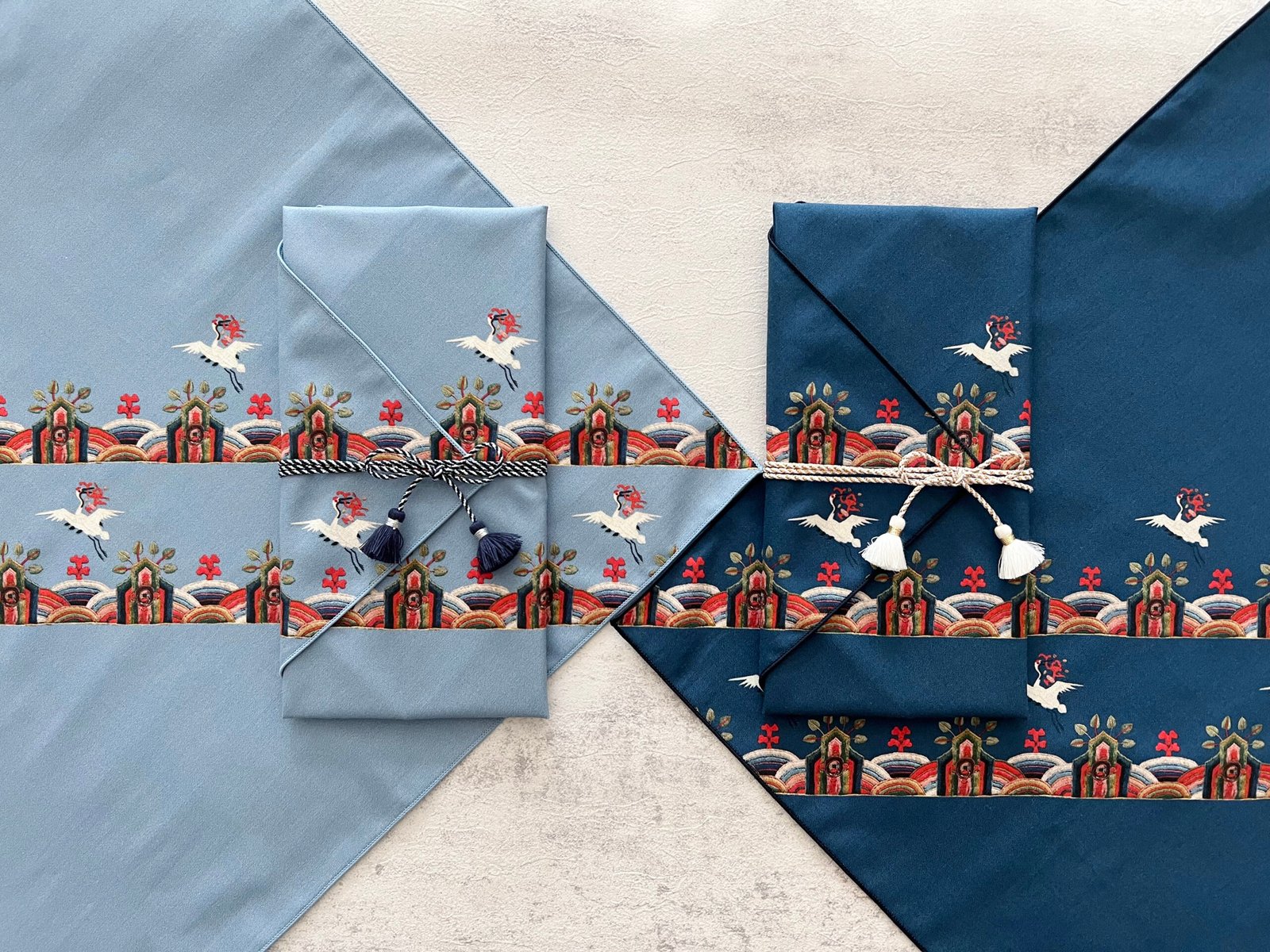
That approach can be seen in the finished Ilwol Sansu-bo. Laid open, the mountain and wave bands establish the structure. Wrapped around a rectangular object, those bands cross the front as a landscape while the sun or moon stays visible above them. The cloth changes shape, but the source image does not disappear into the folds.
Heritage Made to Be Washed and Used
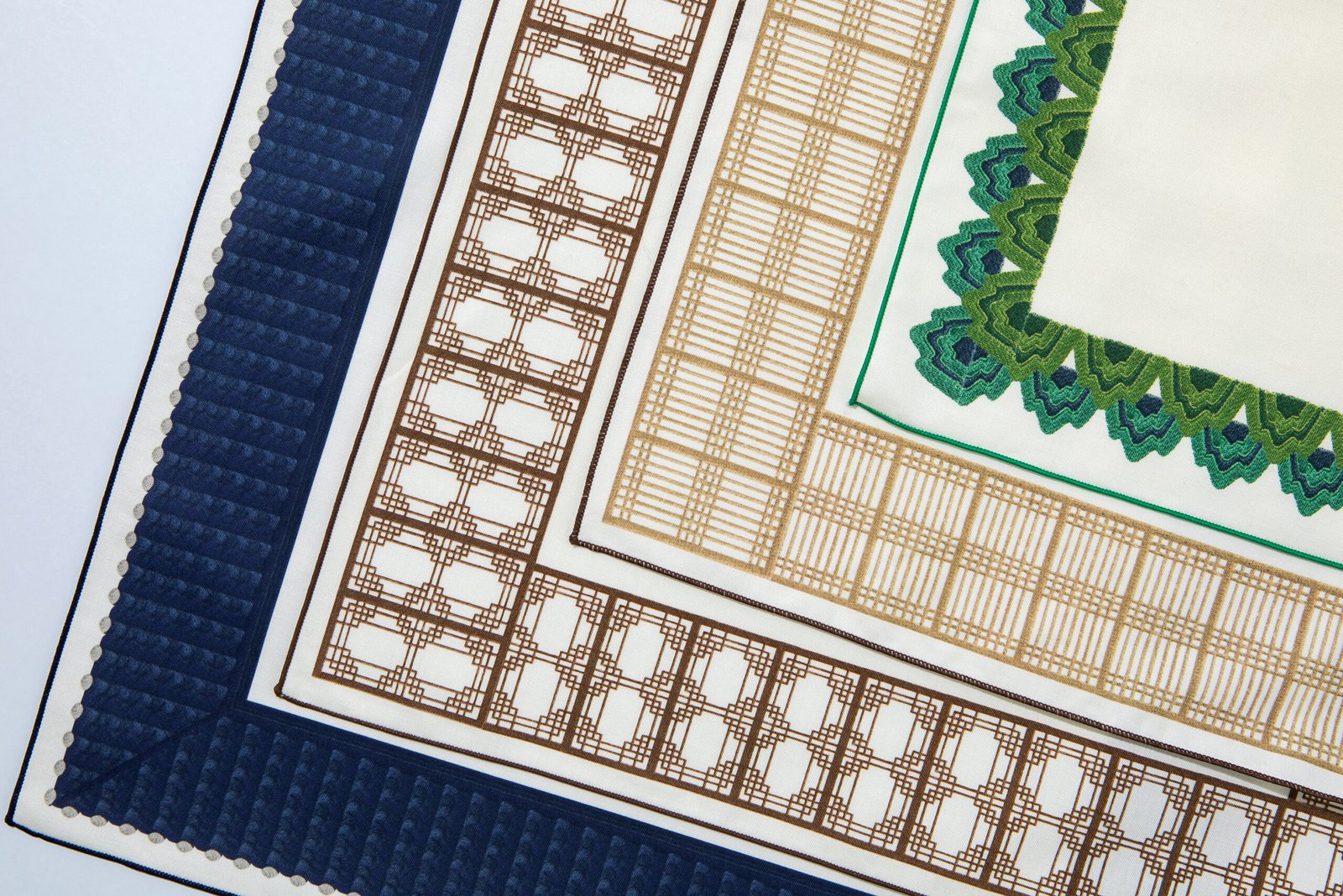
Most of the brand’s bojagi are made in cotton. The choice is practical. Cotton can be washed and returned to use after the wrapping comes undone. The aim is not to make a cloth reserved for special occasions, but one that can be wrapped, unfolded, washed, and used again.
Digital printing is adjusted across the range. The same design does not receive the same color treatment on every fabric. Thin, lighter cottons take a more restrained, lyrical palette. Denser fabrics can carry deeper, richer color. The founder adjusts the palette according to how each fabric receives it, so the printed result stays close to what she intended.
Her role and the production partners’ roles are separate. The founder develops the designs and cuts the fabric. Printing and sewing are handled by production partners in South Korea.
The User Decides What It Becomes Next
The founder has one request for the people who buy her work.
I hope people will not use bojagi only as bojagi.
The sentence sounds like a paradox coming from the person who makes them. It is not. It is the working principle of the brand.
A bojagi that arrives around a gift can later wrap something else, become part of a table setting, or remain visible in a room. The designer sets the pattern and preserves its connection to the source image. The user decides what the cloth becomes next.
This is why the traditional openness of bojagi matters to the brand and not only as historical background. Korean wrapping cloths were never built around one fixed shape. The Bojagi with Seasons carries that quality forward by leaving the next use open.
The same openness also lets the cloth move between private and commercial settings. It can be personal gift wrapping, an interior textile, or packaging chosen by another brand. In each case, the printed square stays the same while its role changes around the object and the person using it.
The brand can suggest possibilities, but it does not prescribe the result. The last decision belongs to the person who takes the cloth home.
The Same Language Moves to Something Else
The product range expanded through customer requests rather than a fixed plan.
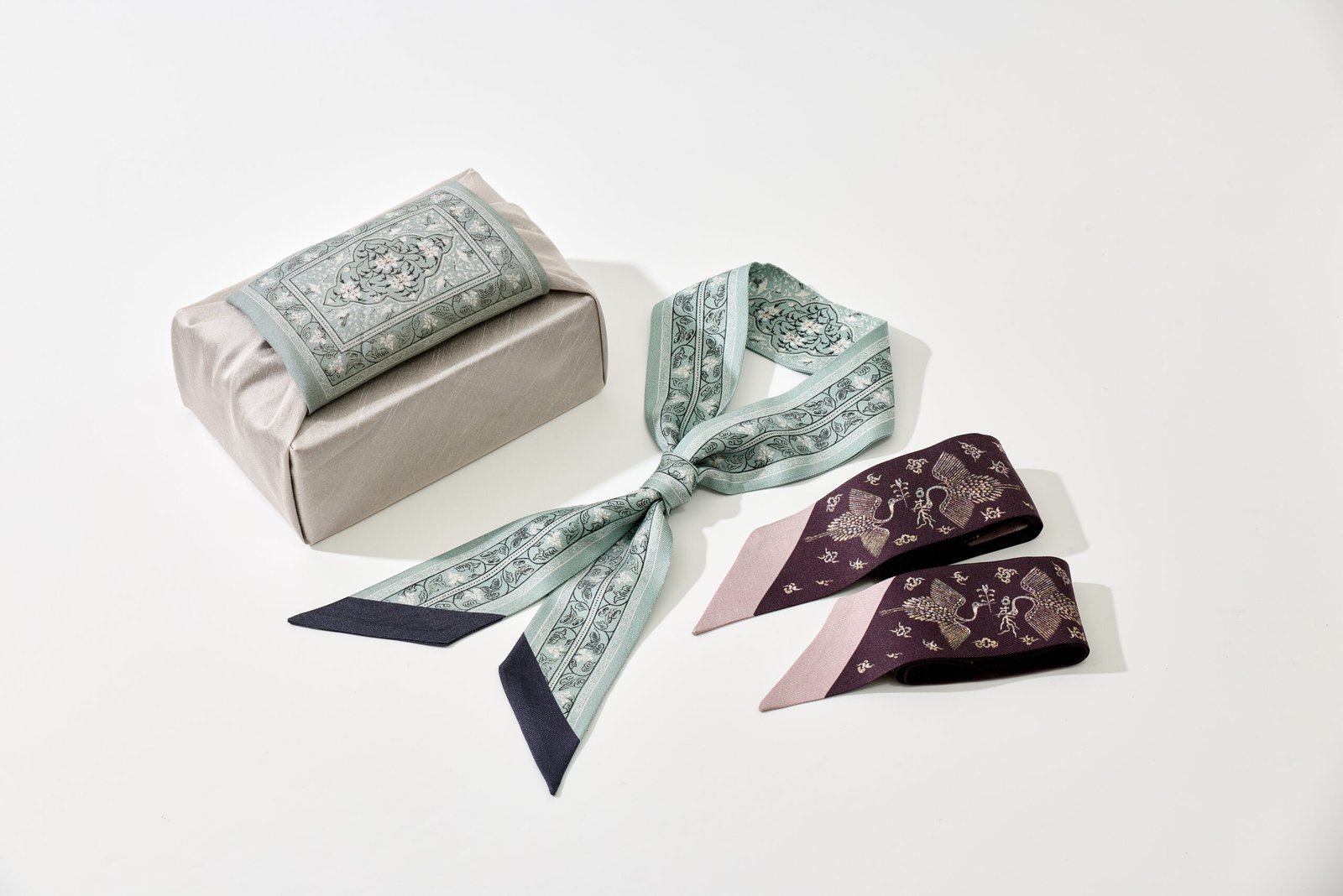
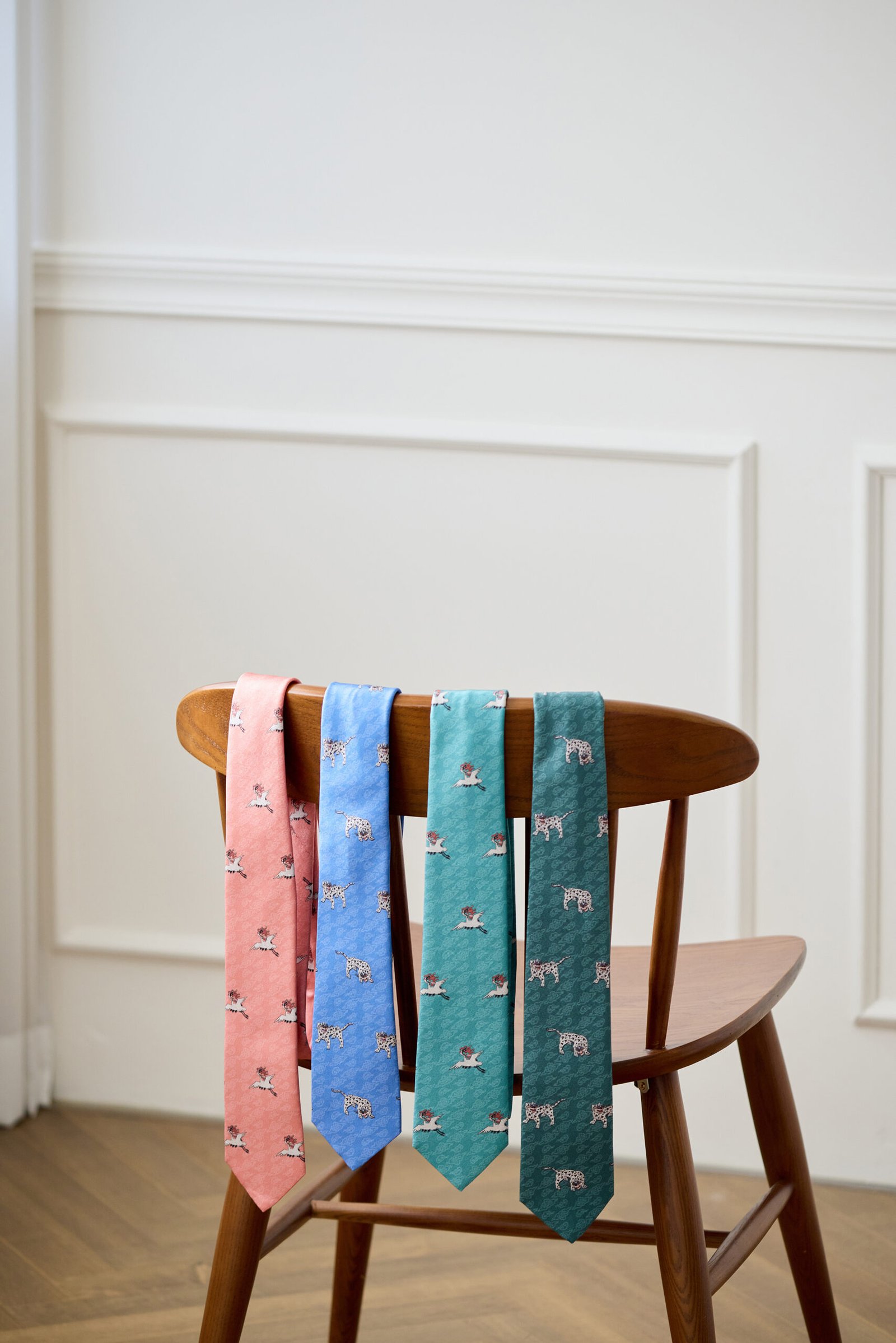
Some customers wanted to own a bojagi but were unsure how they would use one. The brand responded with scarves, placing the same approach to Korean cultural imagery onto something that could be worn. Then customers who bought the scarves as gifts began asking for an option for men. That request led to neckties.
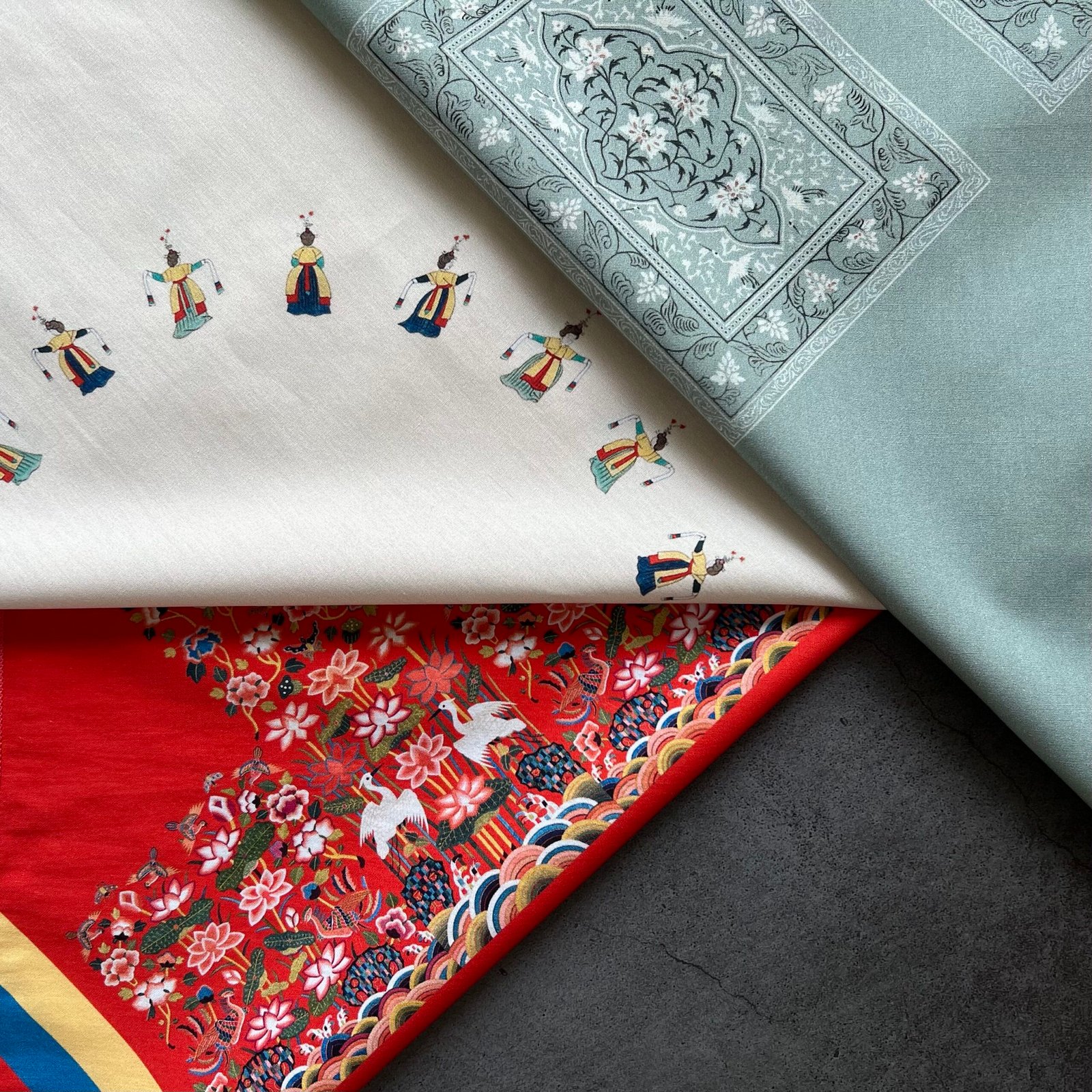
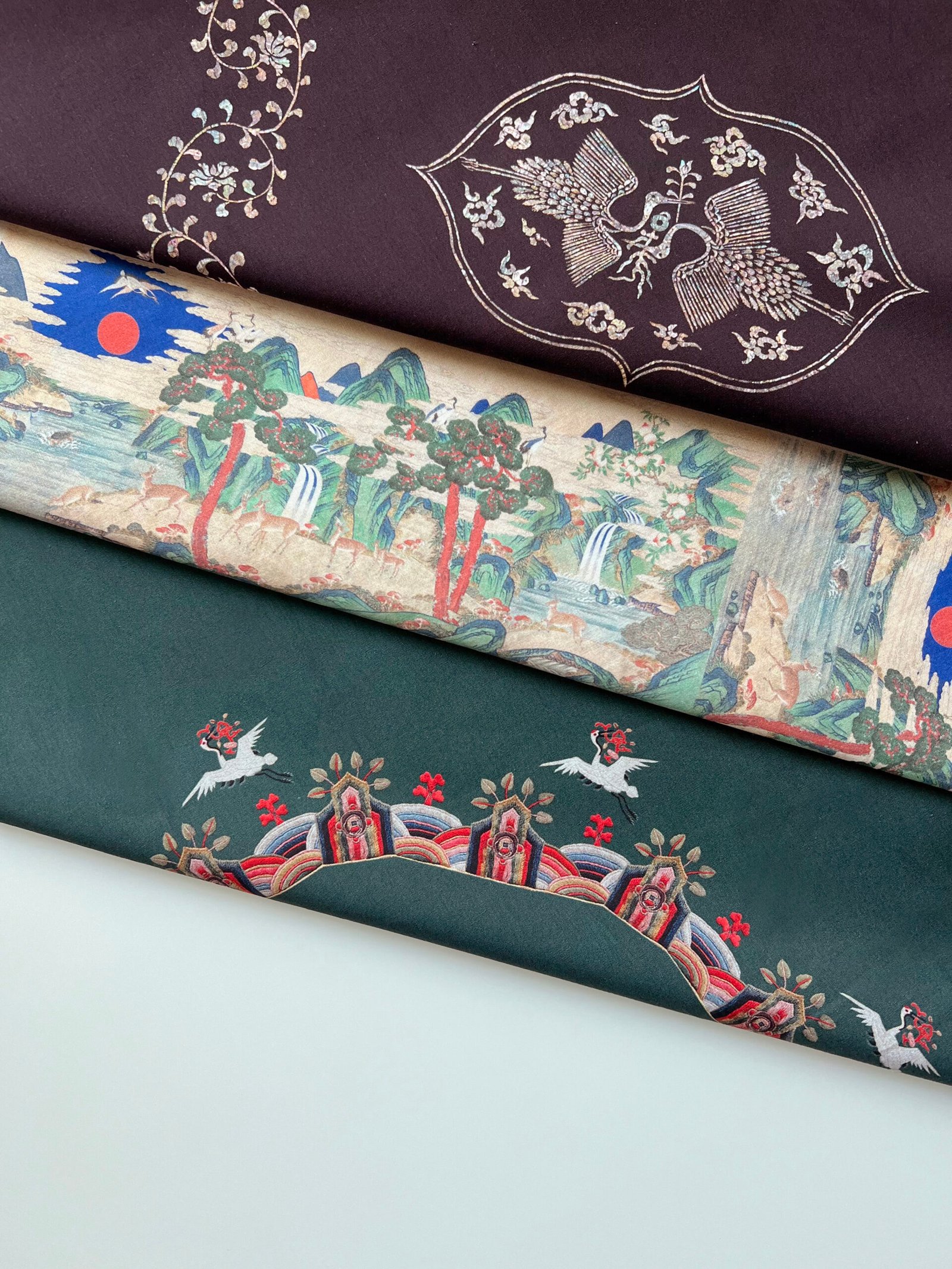
The tie designs draw from hyungbae (흉배), the embroidered rank badges worn on the robes of Joseon officials. Crane and tiger motifs associated with those badges now appear on modern silk ties. Other heritage motifs move onto narrow silk scarves. The object has changed, but the design language still begins with a Korean source.
This is not an attempt to reproduce historical dress. The motifs have been reduced in scale, repeated, and adjusted to work on accessories worn with contemporary clothing. The source remains recognizable, but the product no longer asks the user to dress historically in order to carry it.
The founder describes the direction ahead as a K-Fabric project rather than a bojagi label. The center of gravity remains cloth, but the square is no longer its boundary.
A New Audience in Vancouver
Until recently, the brand’s overseas reach ran mainly through Idus Global, the international service of a Korean handmade-goods platform. A new physical setting is now being prepared in Canada.
The Bojagi with Seasons is one of the Korean brands taking part in KSPACE Vancouver, which is preparing for a soft opening around Chuseok at the time of writing. KSPACE Vancouver is planned as a combination of retail, gallery, cafe, and community space rather than a conventional Korean-goods store. Its stated aim is to introduce Korean brands and creators to customers in Canada, observe the local response, and use that information to explore distribution and business partnerships. The intended audience is not limited to Korean residents. The space is also trying to reach the wider mix of communities that make up Vancouver.
The brand’s cloths are expected to be displayed and sold there, with no fixed end date set. The move raises a fitting question for a brand built around open use: what will someone in Vancouver decide this square of fabric should become? This is where the same principle meets a new audience in a physical space outside Korea.
The Meaning Stays. The Form Keeps Changing.
The founder does not treat tradition as something that must remain in one fixed form. The aim is to keep a connection to the source while allowing the object to move.
A royal screen becomes a repeating pattern. A wrapping cloth becomes a scarf, then a necktie. A cloth used once around a gift returns in another form.
If those changes make someone curious enough to look back at the original painting or object, the connection has not been lost. It has traveled one step further.
The founder sees that continuation as part of tradition itself. A contemporary interpretation can be passed on, changed again, and eventually become part of what the next person understands as Korean culture. The meaning does not survive because every form remains untouched. It survives because someone finds a reason to use it again.
That is what The Bojagi with Seasons is designing. Not one final use, but a way for a heritage object to keep changing shape.