The Comb That Lost Its Job
A traditional Korean bamboo comb once used to catch lice eggs is still made by hand in Damyang. The workshop lets the use change and protects the method.
The finest-toothed comb in the Jukhyang Chambit workshop has teeth about 0.35 millimeters thick, separated by gaps of about 0.1 millimeters. It was made to catch lice eggs.
That is no longer the main comb customers choose.
The comb is still made by hand in Damyang, from bamboo grown in the same area.
That makes the chambit (참빗), the traditional Korean fine-tooth comb, useful for a question that reaches beyond combs. When the original job of a tool fades, what can keep the tool alive? Ko Jae-hyeon, who makes combs at the workshop alongside his father, answers it this way. The use can change with the times. The way it is made has to be protected.
Details about the workshop’s materials, production and customers come from Ko Jae-hyeon’s written interview responses and a follow-up message, received in October 2026, unless another source is linked.

The combA comb for the second pass
A chambit has far more teeth than the wide-toothed eollebit, and they sit much closer together. In traditional hair care, the eollebit came first to arrange the hair. The chambit followed to bring it into finer order and remove dust and dandruff (Encyclopedia of Korean Culture).
Households traditionally kept two kinds of chambit. The eojungso (어중소) was for dressing the hair neatly before it was tied into a jjokmeori (쪽머리, a low bun) or a sangtu (상투, a topknot). Its teeth are about 0.5 millimeters thick, with gaps of about 0.3 millimeters. The sseoulchi (써울치) was the finer comb made for hygiene and for removing lice and their eggs. Its teeth are about 0.35 millimeters thick, with gaps of about 0.1 millimeters.
The two look alike, but the bamboo, thickness and size differ, because each was made for its job. Of the two, the eojungso was the more widely used in daily life, and it is the one customers mainly choose today. A standard comb contains roughly 100 to 110 bamboo teeth.


The pastWhy the comb mattered
Before it became a heritage object, the chambit was an everyday tool. Used after the wider-toothed eollebit, its fine teeth brought the hair into order and removed dust and dandruff. A comb could also carry camellia oil through the hair, while the workshop’s finest sseoulchi was used in ordinary homes to remove lice eggs. Its value was practical precision: closely set bamboo teeth performed work that a wider comb could not.
That practical object belonged to a wider southern bamboo culture. The Encyclopedia of Korean Culture records bamboo-comb makers attached to the Ministry of Works during the Joseon period, as well as a provincial maker in Jeolla. It also describes comb making as side work in the bamboo-growing Yeongnam and Honam regions. Damyang belongs to that Honam landscape. Jukhyang’s significance is therefore not that it reproduces an old-looking object, but that local bamboo, hand judgment and the complete making process remain connected in one place.
The materialBamboo from Damyang
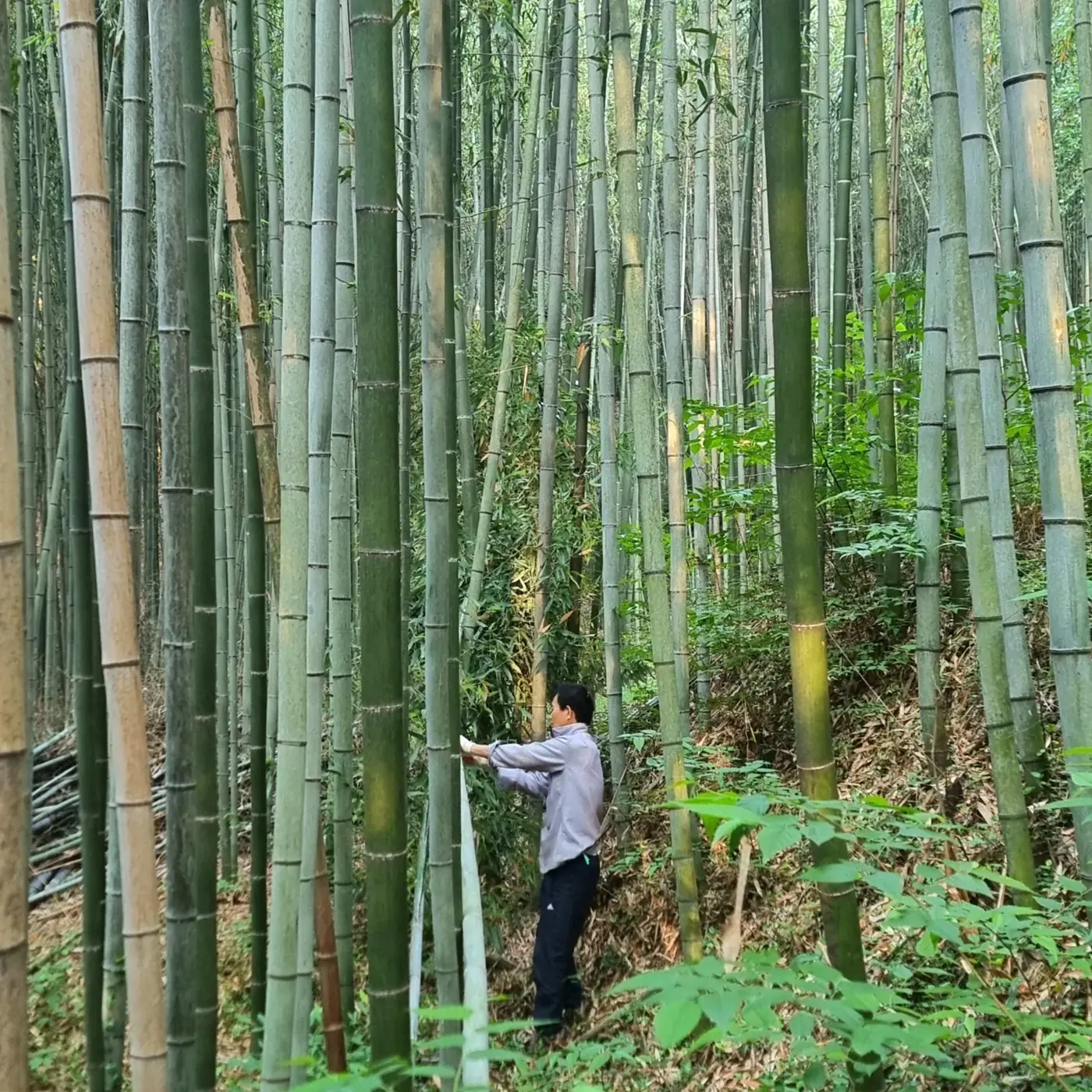
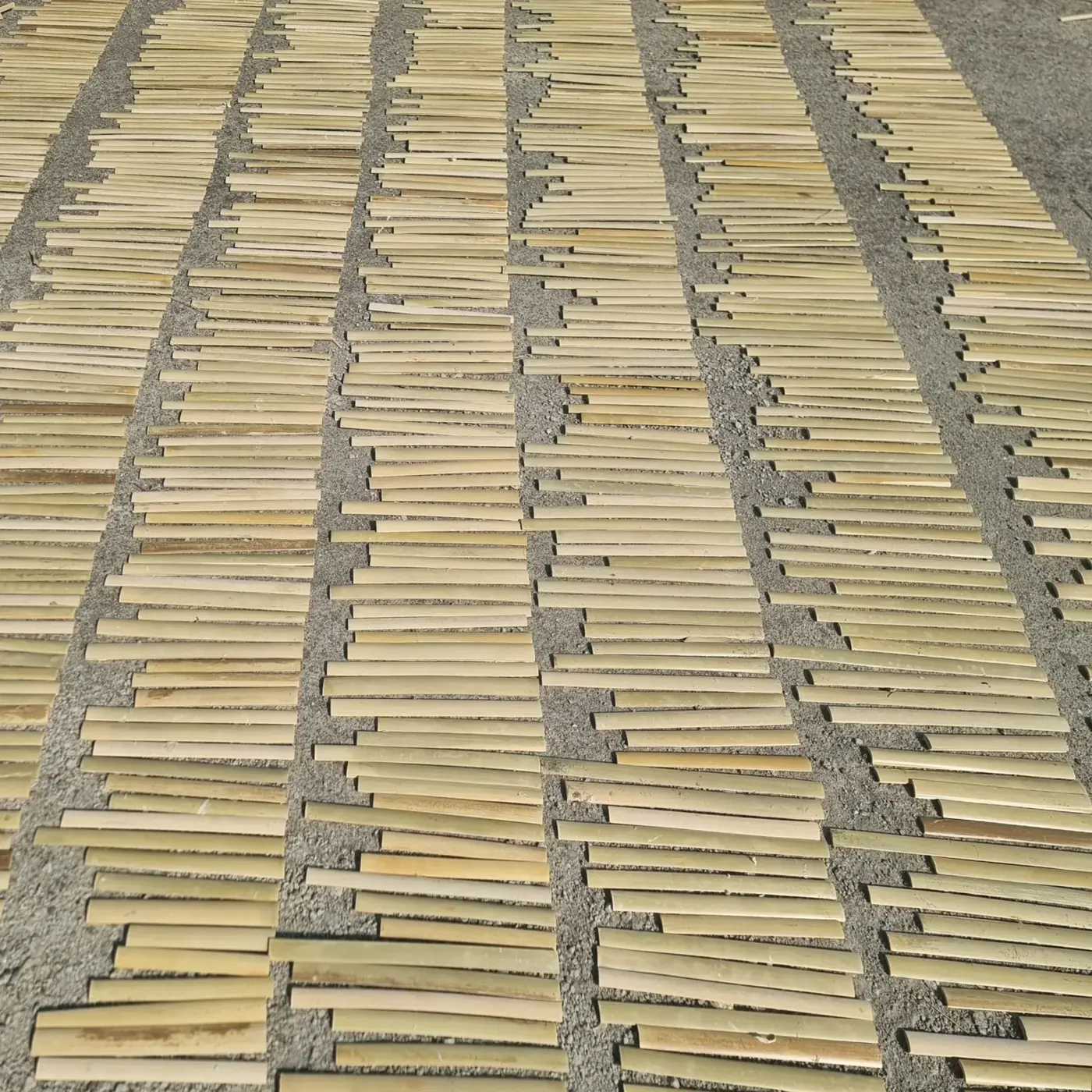
Jukhyang’s main material is three-year-old wangdae (왕대) bamboo grown in Damyang. The age is a production choice. Younger bamboo is not yet hard enough. Older bamboo can lose some of the spring needed once the material is cut into fine teeth.
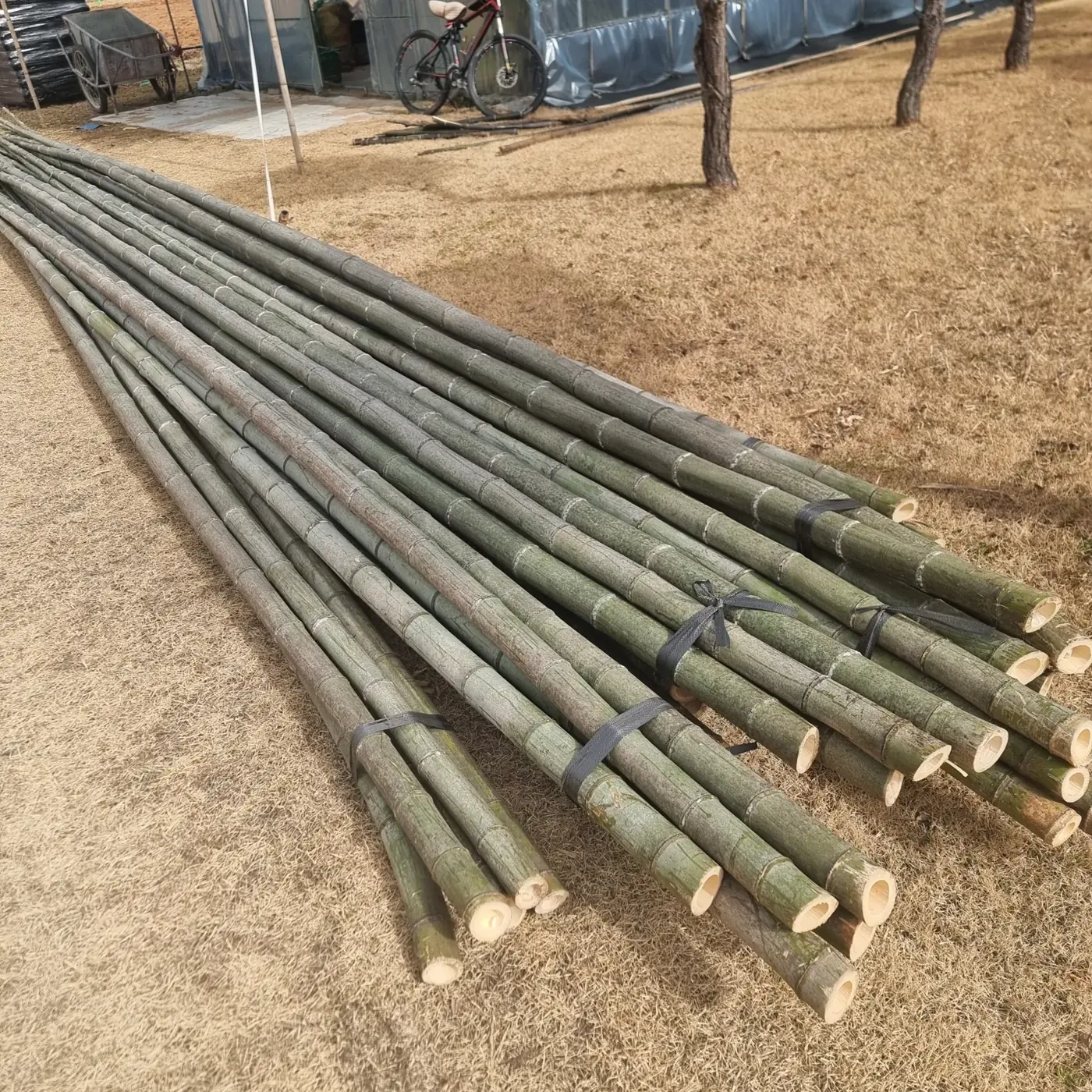
The bamboo is normally cut in winter, from December through February. Growth has stopped, and the material is more stable for drying and storage. Pest and mold damage is also lower during this period.
Season and age lead to one practical test: how the finished tooth behaves. A tooth without enough strength can break. One without enough spring does not respond as intended in use. The makers select bamboo for the strength and flexibility it retains after it becomes a tooth.
The makingOne maker, about sixty steps
The workshop counts about sixty steps in a basic comb. That number depends on where one operation ends and the next begins. Each main stage includes smaller rounds of trimming and checking.
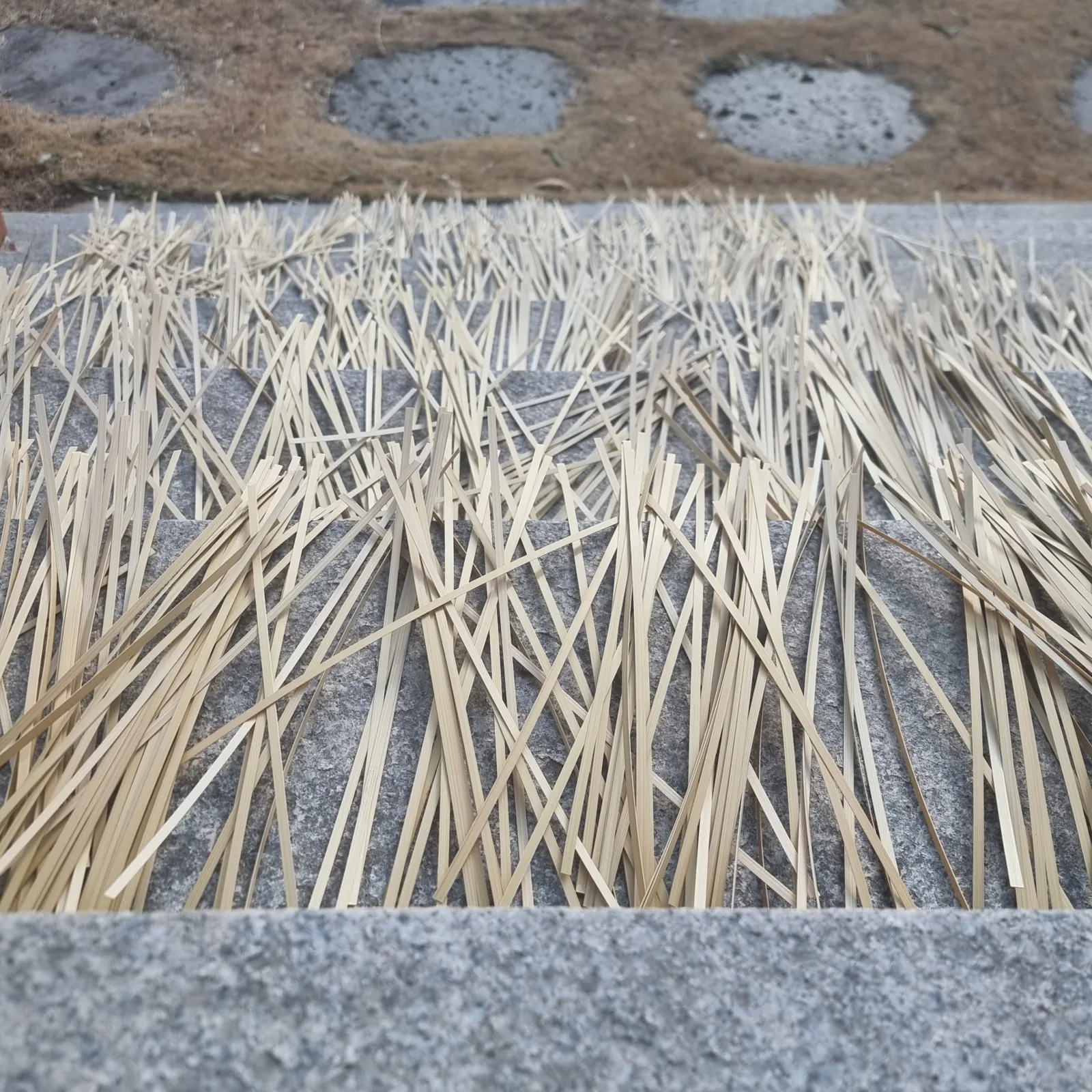
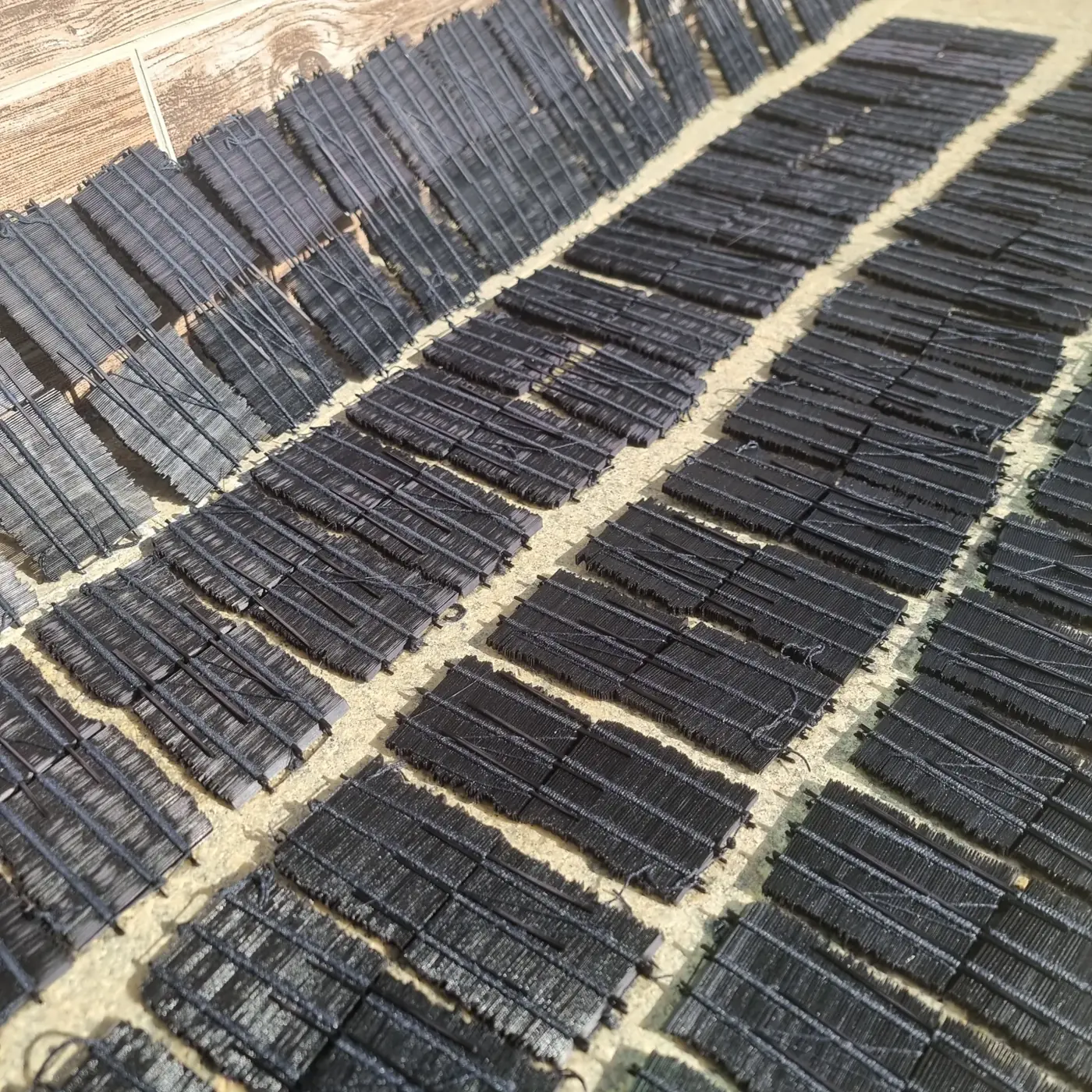
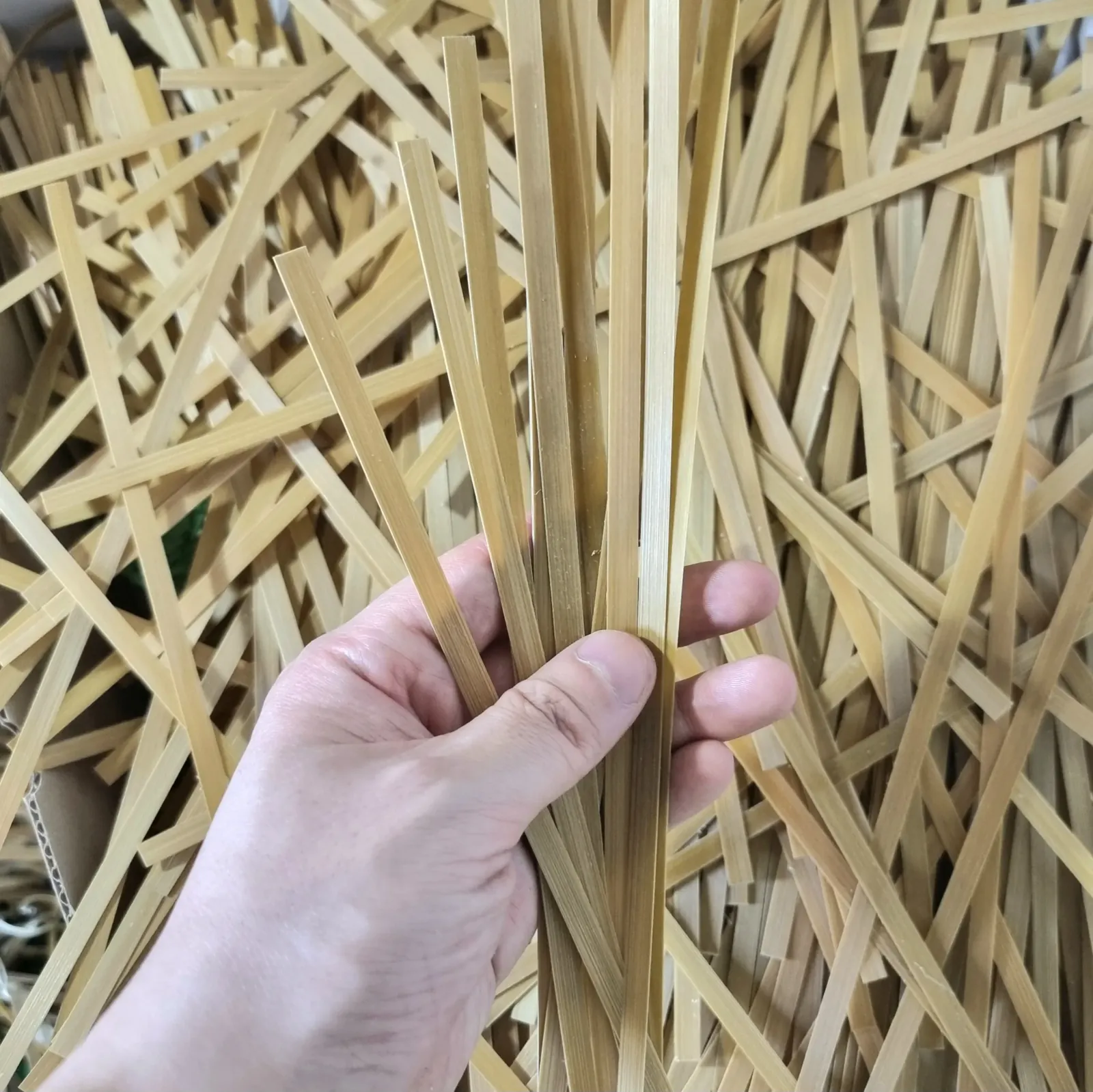
The sequence begins with cutting and splitting the bamboo. The teeth are shaped, while the central spine, or deungdae, and the end pieces, or maegi, are prepared separately. The teeth are dyed and woven together. The spine is attached with agyo, a traditional animal glue. The maker then trims the teeth at a 45-degree angle and finishes the comb with sesame and camellia oils.
There is no divided production line for the comb. Ko Gwang-rok and his son Ko Jae-hyeon each make a comb on their own, from the preparation of the bamboo to the final oil finish. Bamboo processing, tooth-making, assembly and finishing are completed in the Damyang workshop without outsourced production.
The skillThe skill is in the teeth
The most demanding stage is shaping the teeth. Bamboo is not uniform. Two strips can differ in grain and resistance, so a measurement cannot tell the maker how much pressure to apply or which edge needs more work.
A beginner can leave the teeth uneven, shave them too thin or break them. Experience allows the maker to read the material by touch. The difficult balance is to make each tooth thin and consistent while keeping enough strength and flexibility for use.
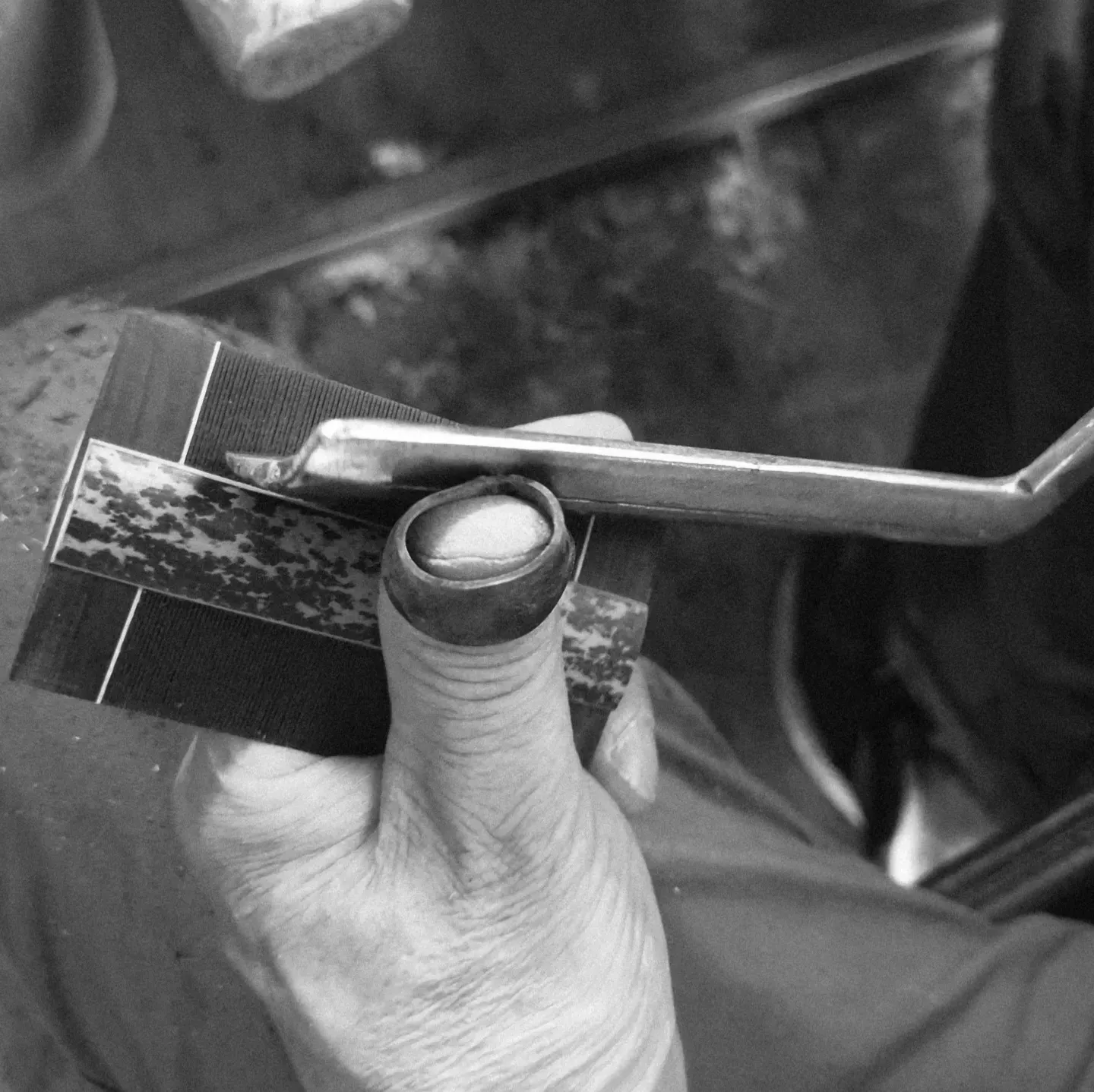
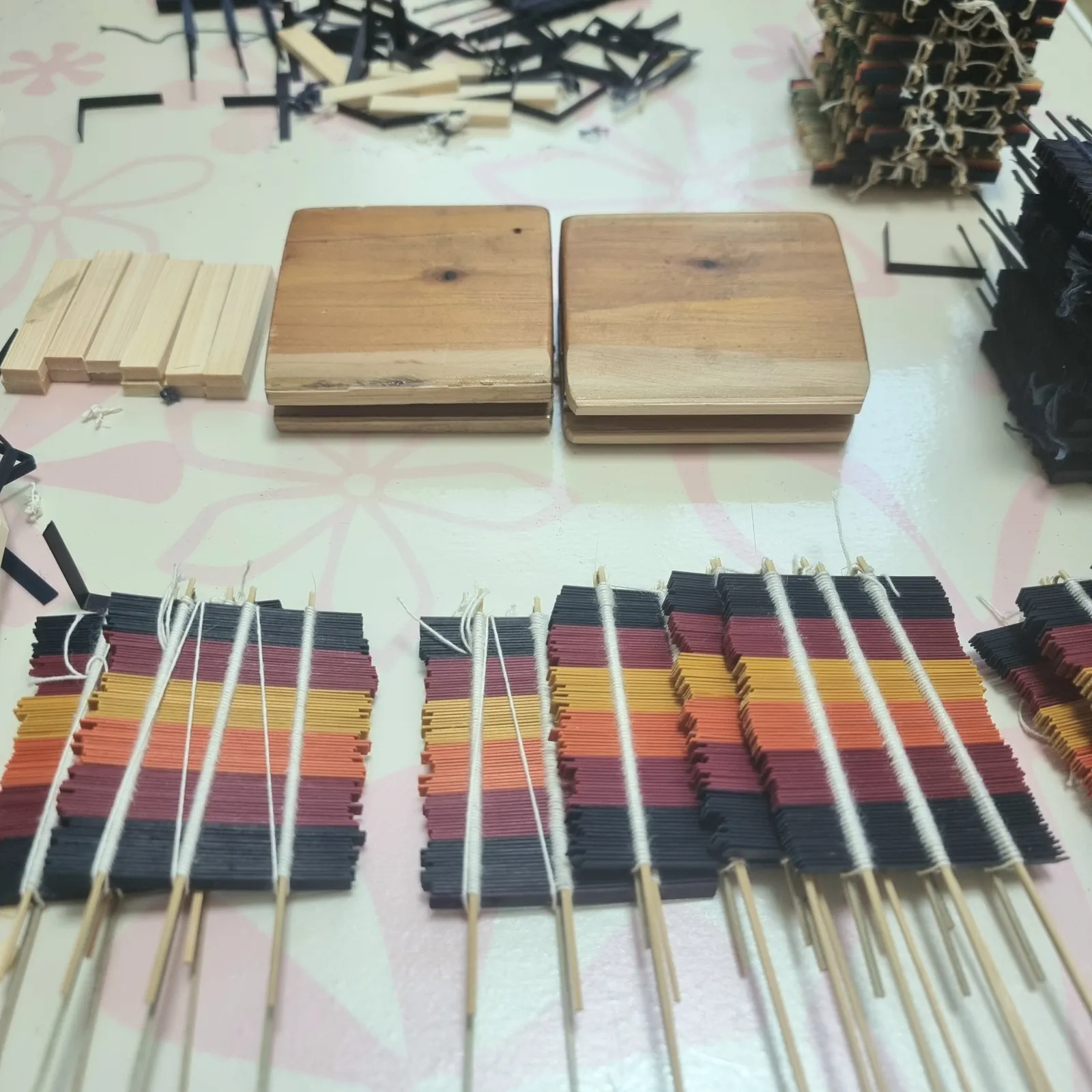
This knowledge is learned beside another maker and through repetition. In this family it came from Ko Haeng-ju, who passed the craft down to his son and grandson. The learner handles bamboo, watches how it reacts and gradually develops a feel for thickness, resistance and spring.
What gets handed down is more than the order of sixty steps. It is the judgment needed inside each one.
The titlesA regional intangible heritage
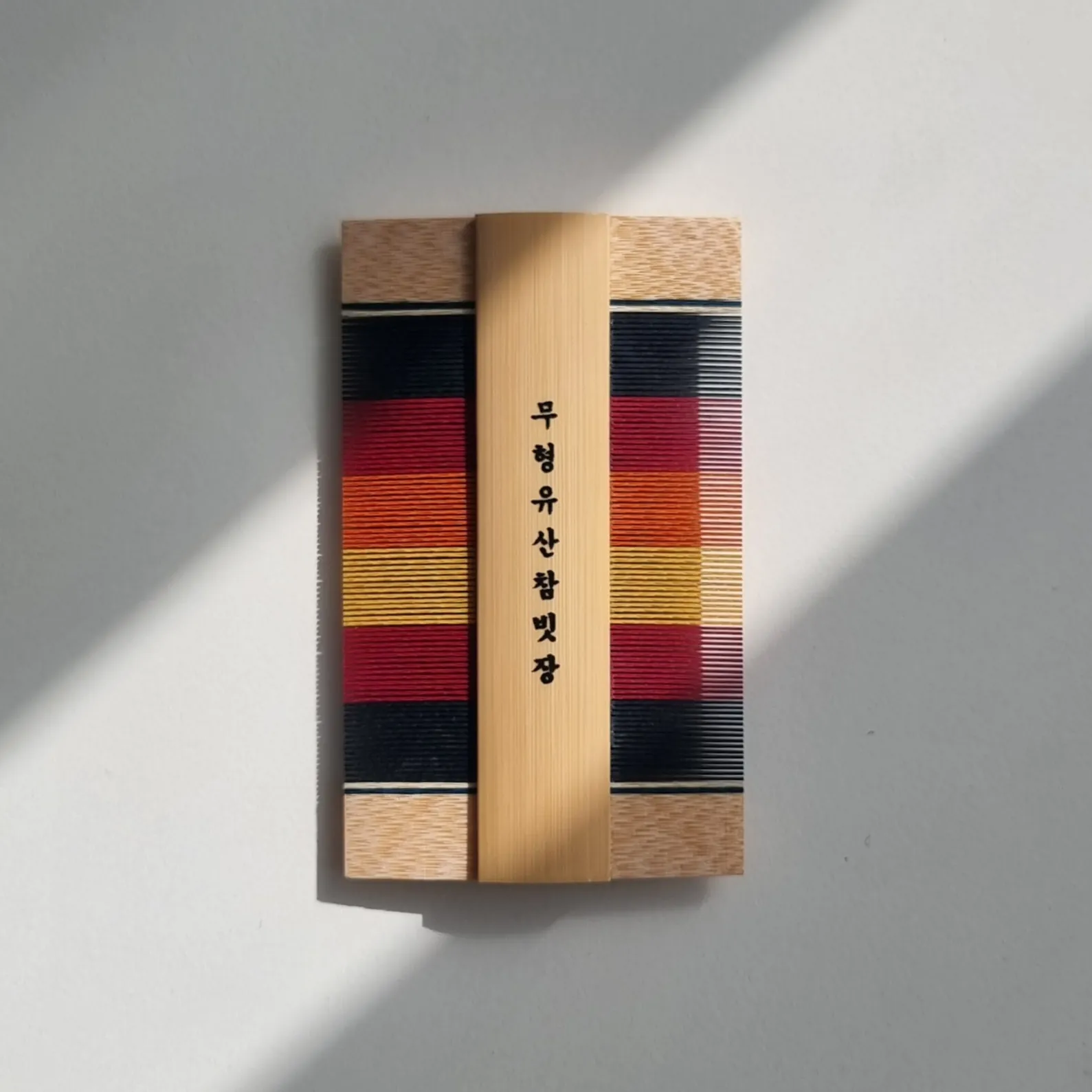
Chambit-making, or chambitjang (참빗장), received regional intangible heritage designation in 1986. It remains a regional designation rather than a national one (Korea Heritage Service).
Korea’s heritage designations protect a body of knowledge and the people who hold it, not a single old object. Jukhyang’s workshop shows how the structure works across three generations. Ko Haeng-ju is the designated holder (boyuja, 보유자). He passed the craft on and, because of his age, no longer makes combs himself. Ko Gwang-rok is the jeonseung gyoyuksa (전승교육사), officially recognized to conduct transmission training. Ko Jae-hyeon is an isuja (이수자), certified as having completed the heritage transmission training.
That structure matters because the old pattern of everyday demand has changed. The Encyclopedia describes a craft that once ran through farm households across the bamboo-growing south. What a heritage designation can protect is the part sales alone may not preserve: choosing the bamboo, cutting each tooth by feel, and assembling and finishing the comb through inherited methods. Passing that knowledge through three generations in a Damyang workshop is how it remains a living practice rather than a preserved object.
The useWhat changed
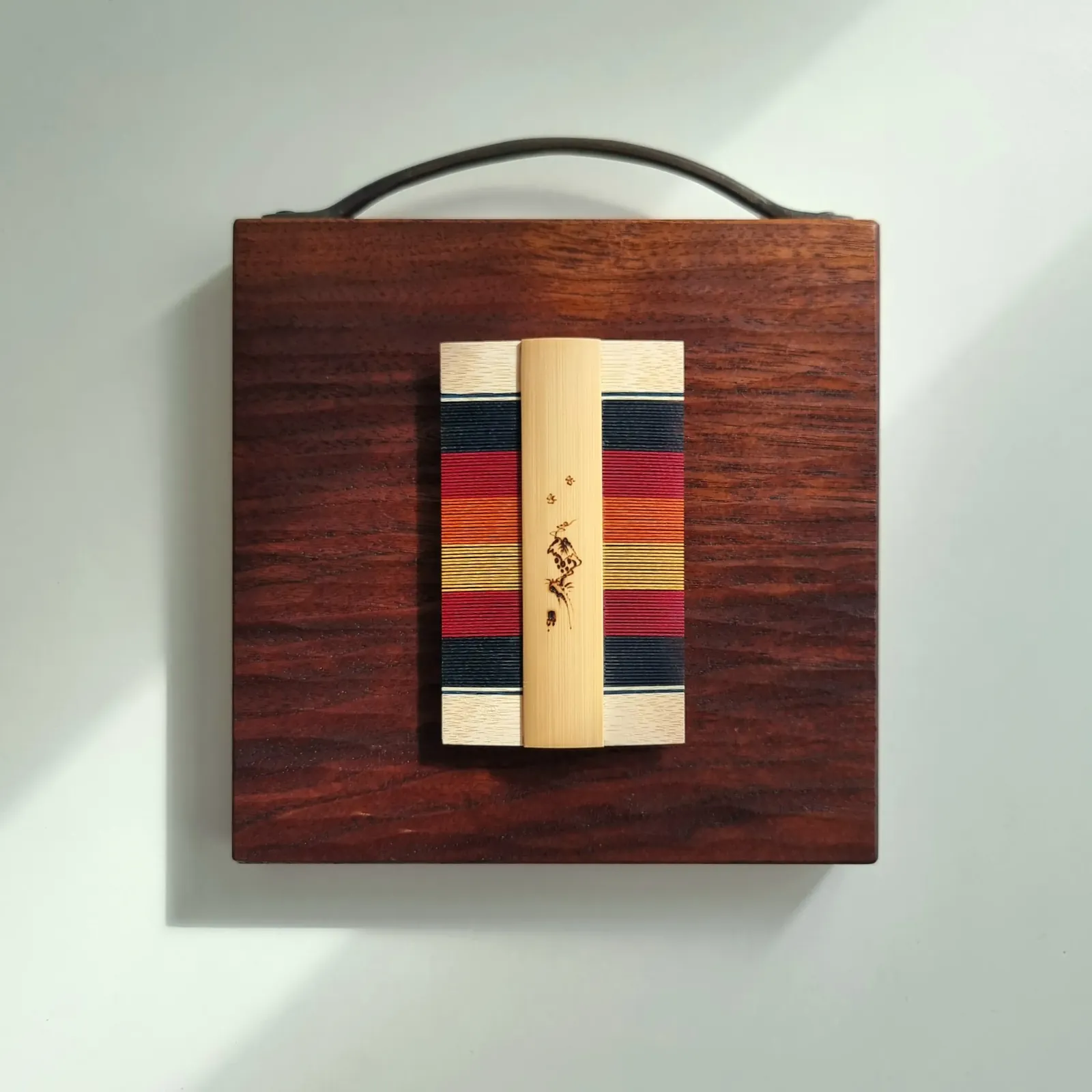
The comb’s everyday job has shifted. Customers now buy it for hair care, as a gift, for grooming a pet or as an interior object. Foreign customers who find Jukhyang through social media often value the combination of Korean craft and practical use.
The workshop has also extended its work into key rings, cultural products, interior pieces and collaborations with other brands. These give the technique somewhere to go beyond the comb’s earlier role.
The methodWhat does not
The workshop draws its line at the production method. It continues to use traditional materials and processes, including agyo, dyeing, drying, and sesame and camellia oil finishes. Faster materials and methods are available, but the workshop keeps the process it received.
The use can change with the times, but the way it is made must be protected.Ko Jae-hyeon, from his written interview (translated from Korean)
Ko Jae-hyeon says the standard he works by is that a comb’s use can change with the times, but the way it is made has to be protected. A new use gives the comb another place in daily life. A new method, in his view, would take away the comb’s particular value and the skill of the people who make it.
Asked what he hopes remains a hundred years from now, he describes a person still reading the bamboo, shaping each tooth and completing the comb by hand, and people still using it with care. If that is true in 2126, he says, the craft is being passed on well. The comb can serve any use by then. What matters is that someone still knows how to make it.

The smallest gap in this story is 0.1 millimeters. Ko Jae-hyeon’s hope for 2126 is that a person will still know how to create that gap by hand.
◆
The workshopWhere to find the workshop
Jukhyang Chambit sells mainly through its Naver Smart Store. Its website is not updated often, so the workshop points readers to its Instagram and Threads account, Instagram and Threads (@chambit_craft), for current work. Overseas customers sometimes order individually after finding the workshop on social media.
Jukhyang Chambit maker facts
- Workshop
- Jukhyang Chambit (죽향참빗)
- Location
- Damyang, South Korea
- Primary material
- Three-year-old wangdae bamboo grown in Damyang
- Production method
- One maker completes one comb from start to finish; about sixty steps by the workshop’s count
- Makers
- Ko Gwang-rok and Ko Jae-hyeon
- Core in-house work
- Bamboo processing, tooth-making, assembly and finishing, without outsourced production
- Teeth per comb
- Approximately 100 to 110
- Main combs in this article
- Eojungso: about 0.5 mm teeth and 0.3 mm gaps. Sseoulchi: about 0.35 mm teeth and 0.1 mm gaps
- Current uses
- Hair care, gifts, pet grooming and interior display
- Heritage
- Chambitjang, regional intangible heritage designation, 1986. Holder: Ko Haeng-ju. Jeonseung gyoyuksa: Ko Gwang-rok. Isuja: Ko Jae-hyeon
- Where to buy and follow
- Naver Smart Store; Instagram and Threads (@chambit_craft); chambit.kr
- Overseas orders
- Handled individually. Ask the workshop through Instagram or Threads (@chambit_craft) about shipping and payment.
- Information current as of
- October 2026
- Source basis
- Material, production, present-day use and heritage titles come from Ko Jae-hyeon’s October 2026 written interview responses and a follow-up message. Historical context comes from the Encyclopedia of Korean Culture
Read nextA Bojagi Is Never Just One Thing
Sources
- Written interview responses provided by Ko Jae-hyeon of Jukhyang Chambit, received October 2026
- Encyclopedia of Korean Culture, Chambit
- Encyclopedia of Korean Culture, Chambit artisan
- Korea Heritage Service, Chambitjang
- Jukhyang Chambit official website
- Photographs: Jukhyang Chambit