Can Korean Alcohol Be Meditative? Inside BeWater Brew.
Mention Korean alcohol to most people outside Korea, and a few familiar images come to mind. Green-bottle soju. Makgeolli. Maybe, more recently, Korea’s revival of traditional and craft drinks.
But beyond those familiar bottles, some producers are asking a different kind of question.
Does Korean alcohol have to be about getting drunk? Does it always have to sit alongside a meal? Could a glass of alcohol become a different kind of experience altogether?
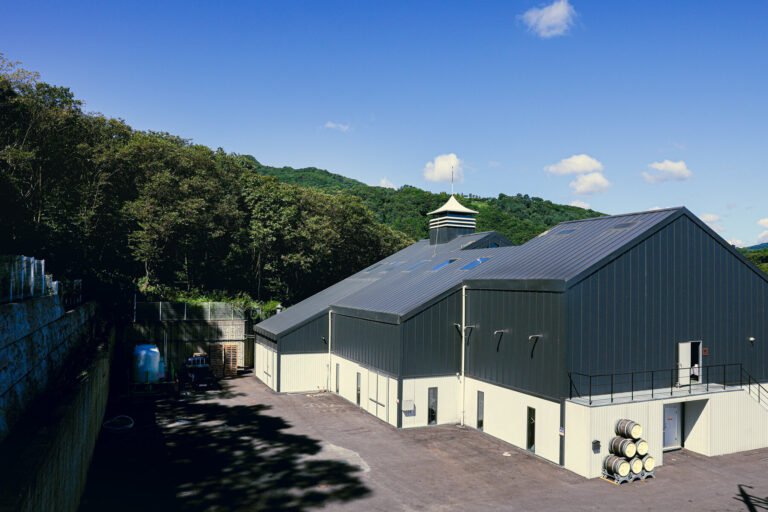
BeWater Brew, a small Korean craft makgeolli brewery in Sangju, North Gyeongsang Province, has an unusual answer.
It connects drinking with meditation, using organic rice, herbs, aroma, and texture to turn that idea into something you can actually pour into a glass.
BeWater Brew’s story is less about introducing one more Korean brewery than about seeing how widely Korean alcohol is being reimagined today.
A Brewery Built Around Water
Sangsunjujo operates under the name BeWater Brew, a reference to the Taoist idea of sangseonyaksu (上善若水), often translated as “the highest good is like water.”
Its philosophy is hard to miss.
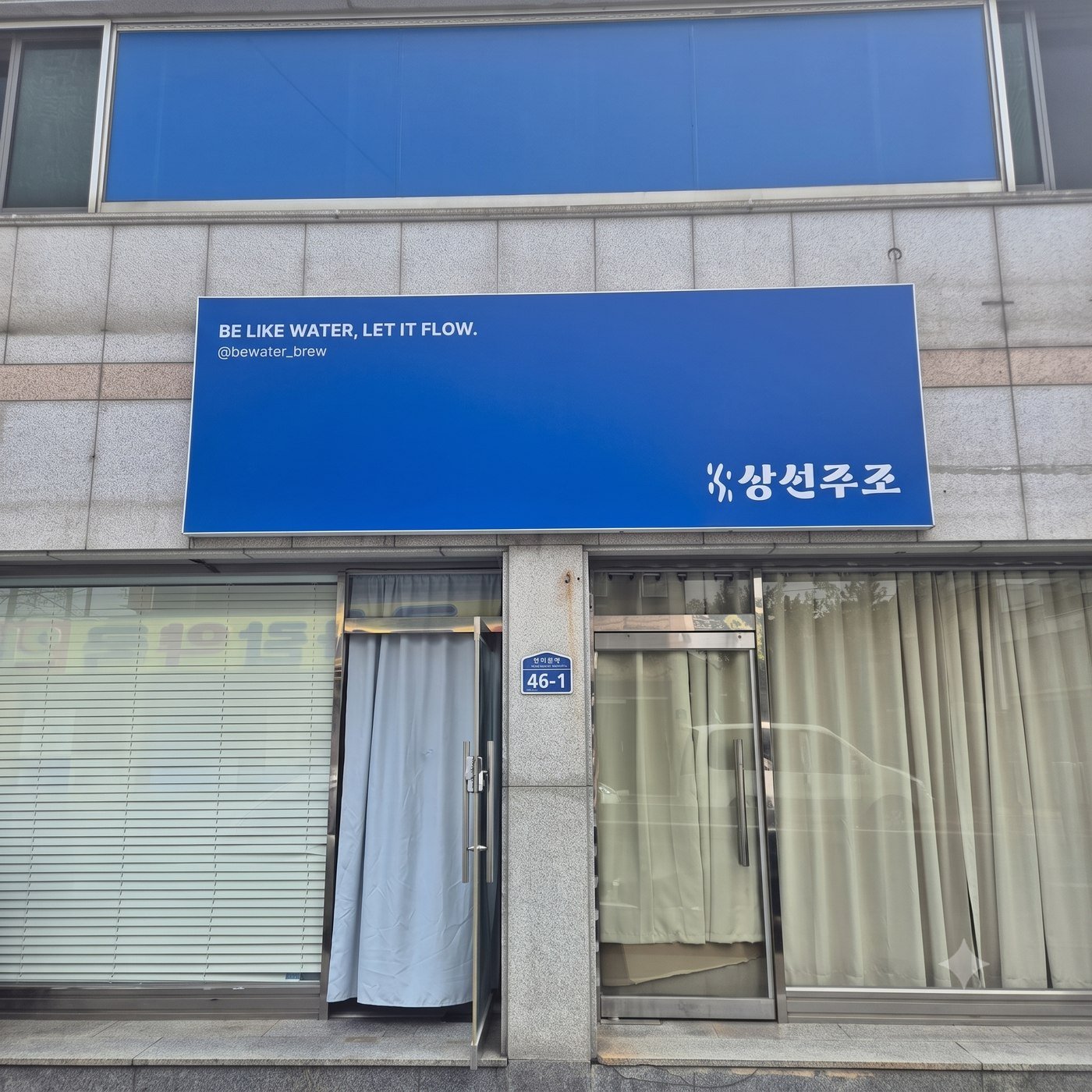
“BE LIKE WATER, LET IT FLOW” appears above the brewery, and the same idea runs through its INNER PEACE line. BeWater Brew. describes the drinks as a kind of meditative drinking ritual, a quiet pause in the middle of a busy day.
Meditation and alcohol may sound like strange companions at first.
The idea starts to feel less like a branding exercise, though, once you hear how the brewery began.
The Rice Fields Came First
Baek Kyung-rak, the founder of BeWater Brew, used to work for a company in Seoul.
About eight years ago, he left the city and moved to Sangju, where he began farming organically. The brewery came later.
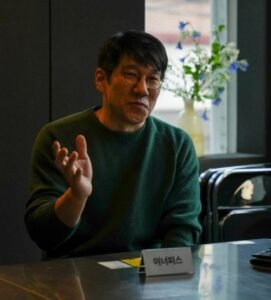
“As I farmed organically and opened the brewery, it felt natural to use organic rice in the makgeolli too. I wanted the healthy taste of nature to carry through into the alcohol itself.”
That sequence matters. Organic rice wasn’t something added later to the story. The rice fields came first; the brewery came after.
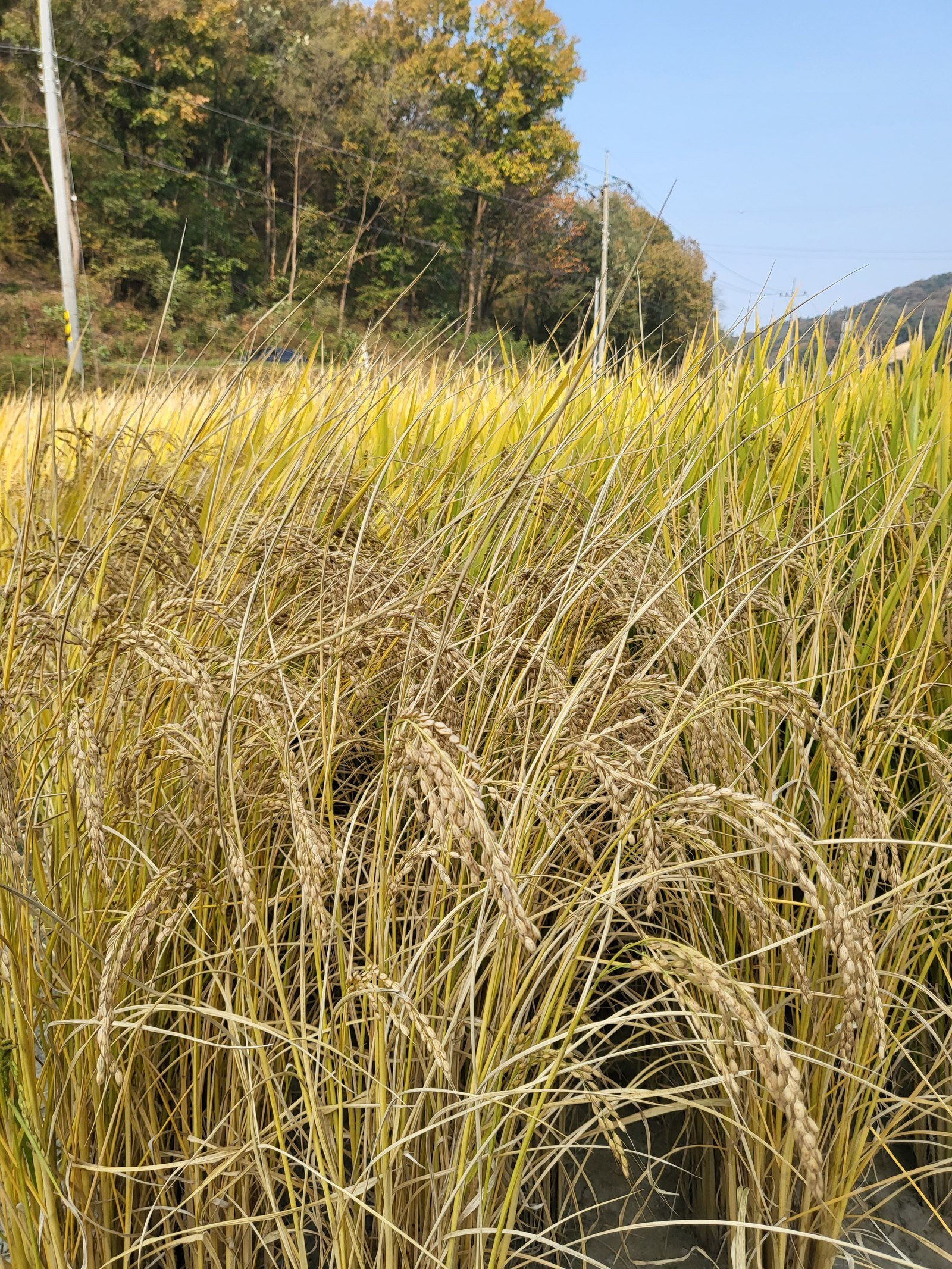
Today BeWater Brew uses 100% organic rice grown in Sangju for its INNER PEACE line. Baek describes the resulting makgeolli as clean and gently nutty, with more depth than he expected when he first began working with the rice.
But choosing the rice was only the beginning.
What Happens When You Leave the Additives Out
BeWater Brew’s makgeolli is made without food additives, including artificial sweeteners.
That sounds simple enough. In practice, Baek says it makes fermentation more demanding.
“Without additives, it’s difficult to adjust sweetness or acidity artificially, so fermentation requires much more careful control.”
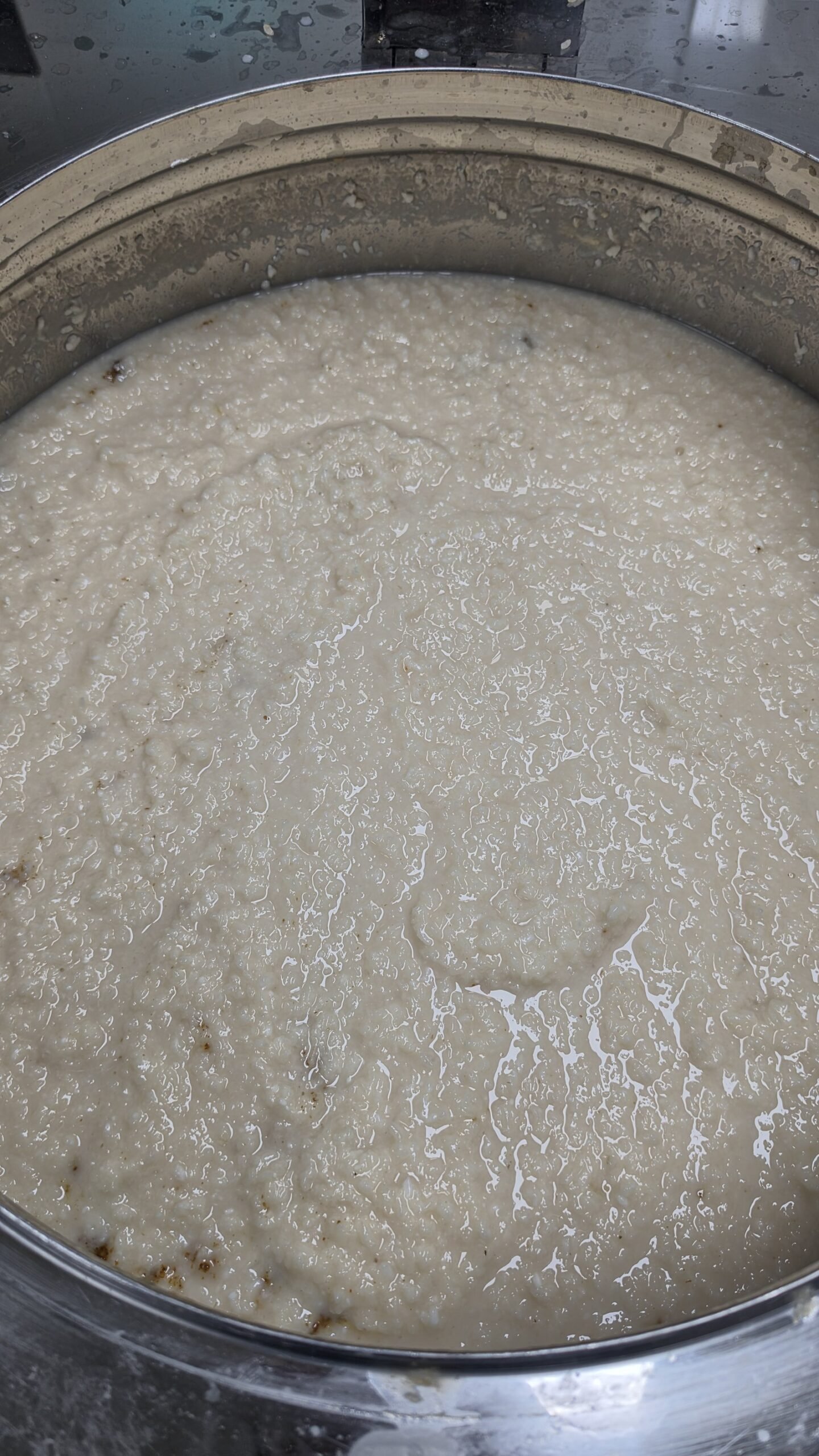
Temperature, fermentation time, residual sweetness, and acidity all have to be watched and adjusted as the batch develops. It takes more attention, and the finished drink also needs more care once it leaves the brewery.
For Baek, the point was never simply to be able to print “no additives” on the bottle. He wanted to make a style of makgeolli that felt cleaner and less rough, and to challenge some of the impressions people carry about the category: overly sweet flavors, harsh acidity, or the idea that makgeolli inevitably leaves you feeling heavy afterward.
So what BeWater Brew leaves out is only half the story. The more interesting part is what it is trying to leave behind in the glass.
Three Kinds of Nuruk, Then Time
The fermentation starter is another part of that process.
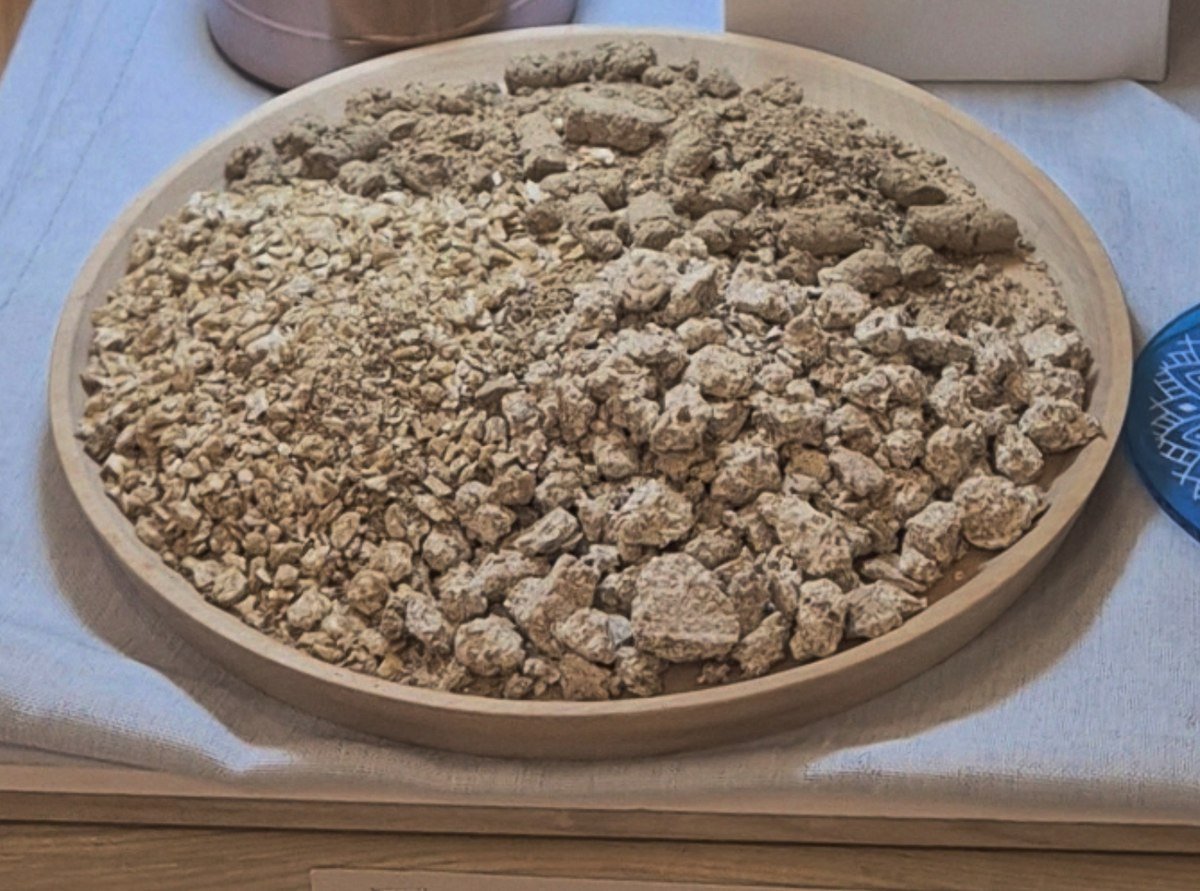
BeWater Brew blends three types of nuruk: two traditional wheat nuruk and one modified starter.
They are not doing the same job.
According to Baek, one helps build aroma and flavor, another contributes brighter acidity, while the modified nuruk adds stability to fermentation. Together, the aim is to keep the sweetness and body of the rice, introduce a more citrus-like acidity, and stop the distinctive aroma of traditional nuruk from taking over the entire drink.
Then BeWater Brew waits.
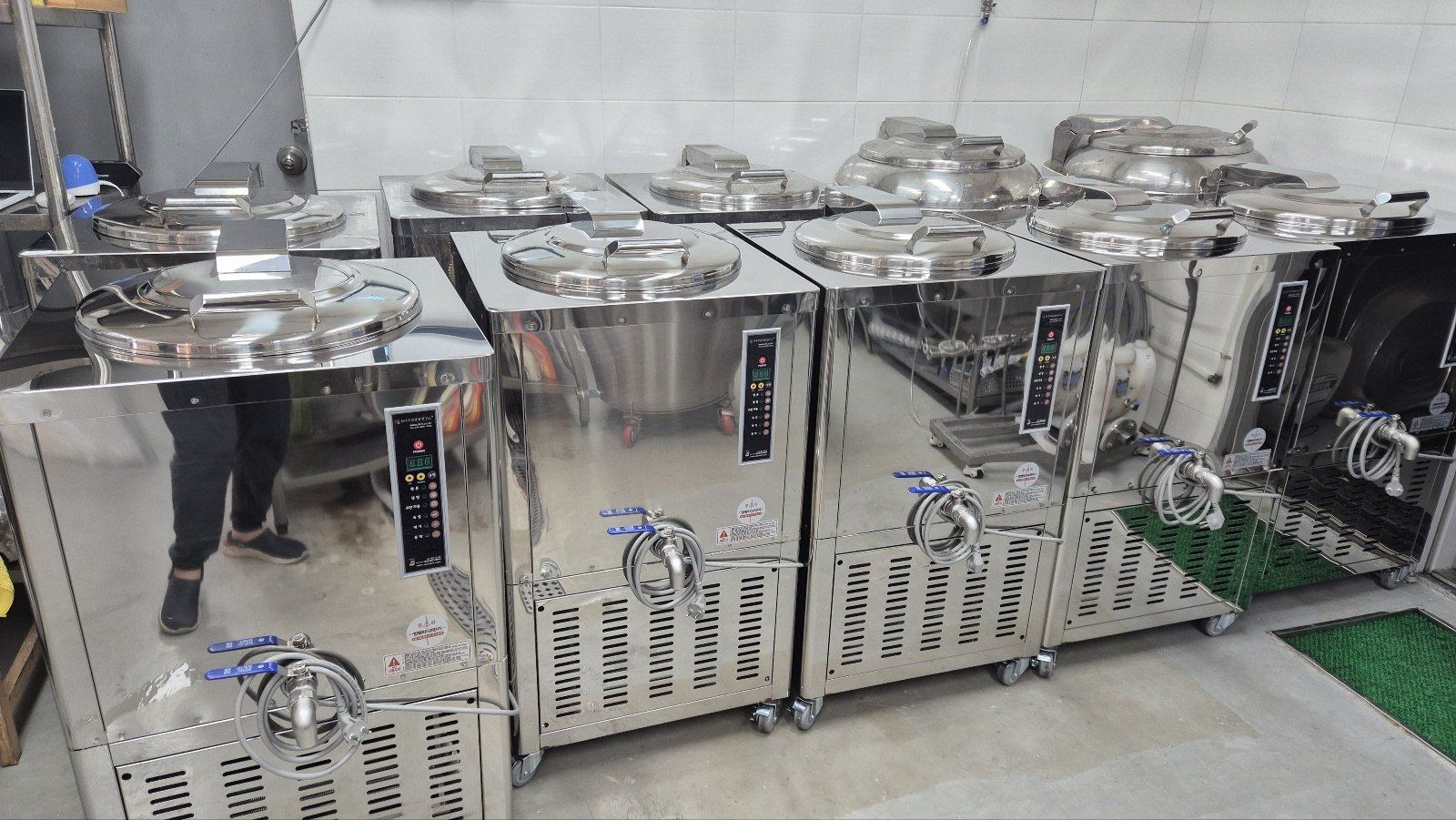
The makgeolli spends at least a month aging at low temperature. Baek says this softens the bitterness of the alcohol and gives the aromas more time to come together.
Rice, additive-free fermentation, blended nuruk, low-temperature aging. On paper, they look like separate production choices.
At BeWater Brew, they eventually arrive at the same place: creating the sensory experience behind what the brewery calls “meditation sool.”
One Makgeolli Idea, Four Different Expressions
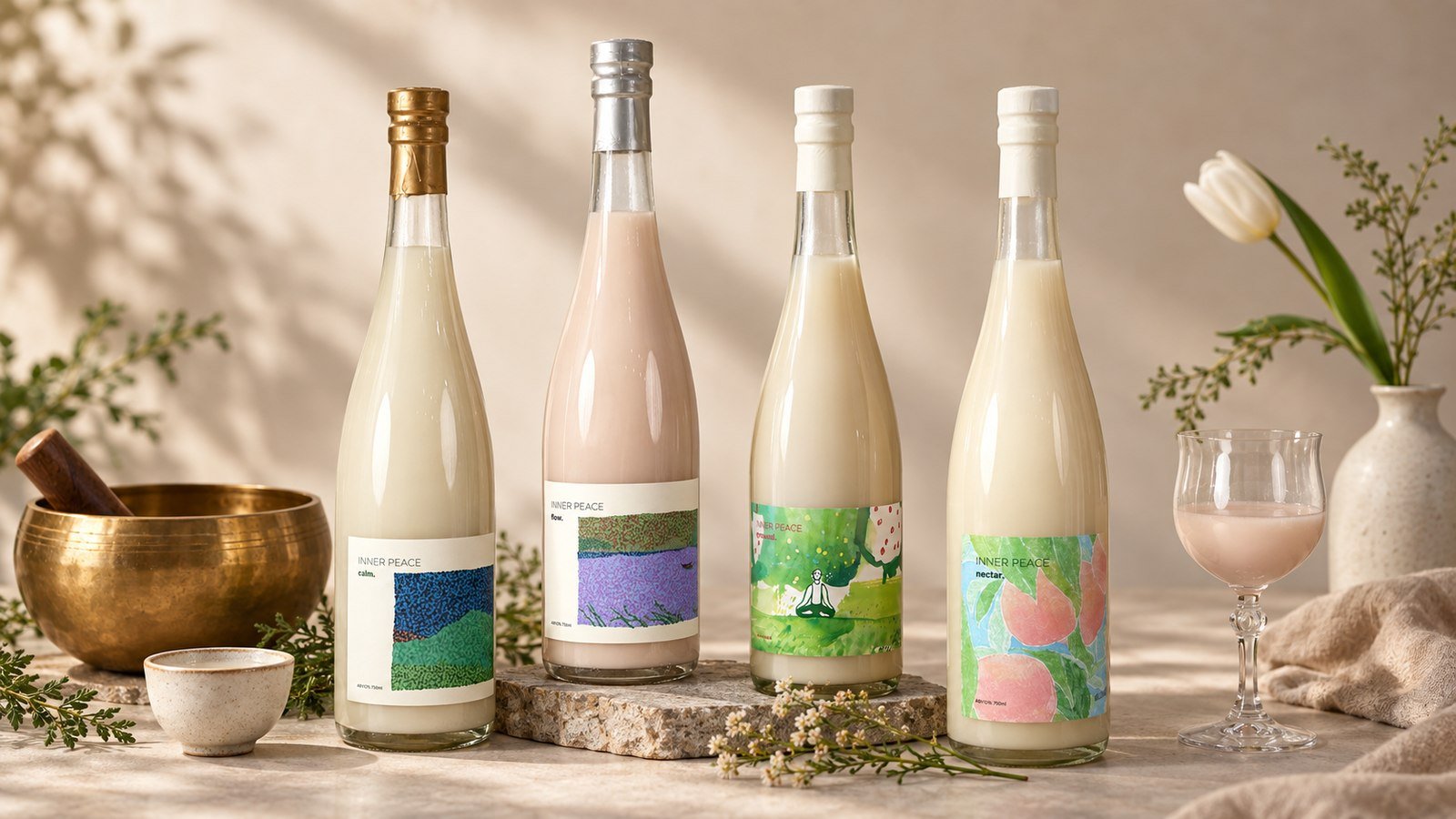
That idea became INNER PEACE.
Rather than treating it as a single makgeolli with a few flavor variations, BeWater Brew developed each bottle around a different state of mind.
During development, Baek consulted wine-meditation specialists in Korea. Aromatic herbs became an important part of the concept, along with fruit and other ingredients intended to give each drink its own shape.
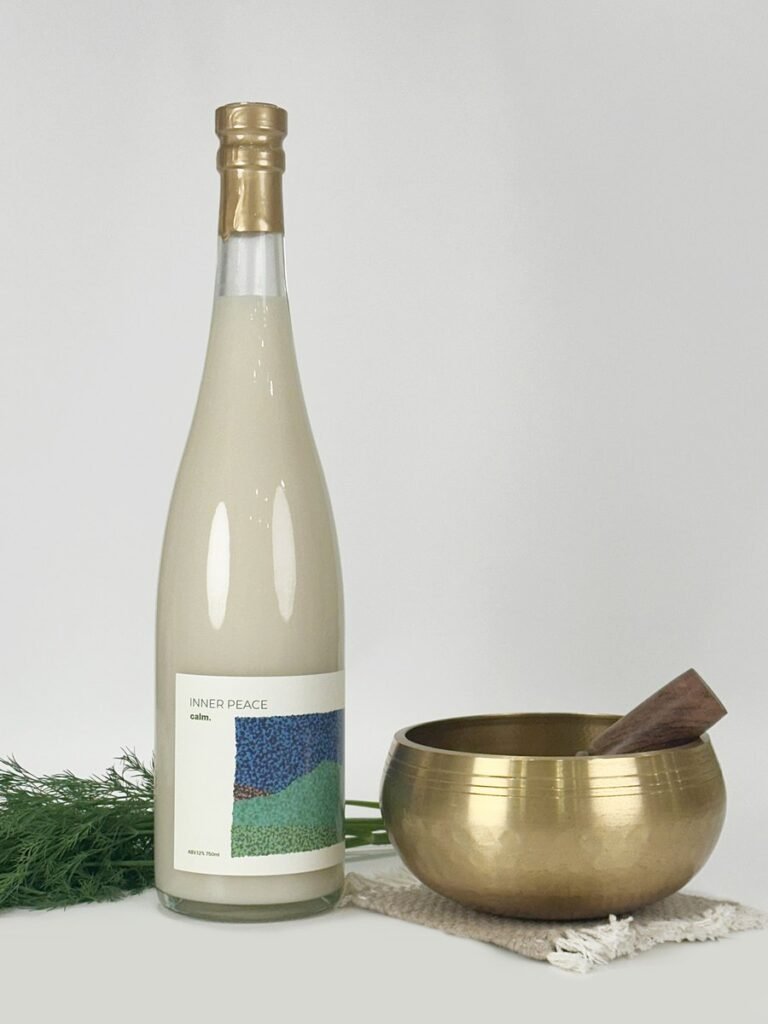
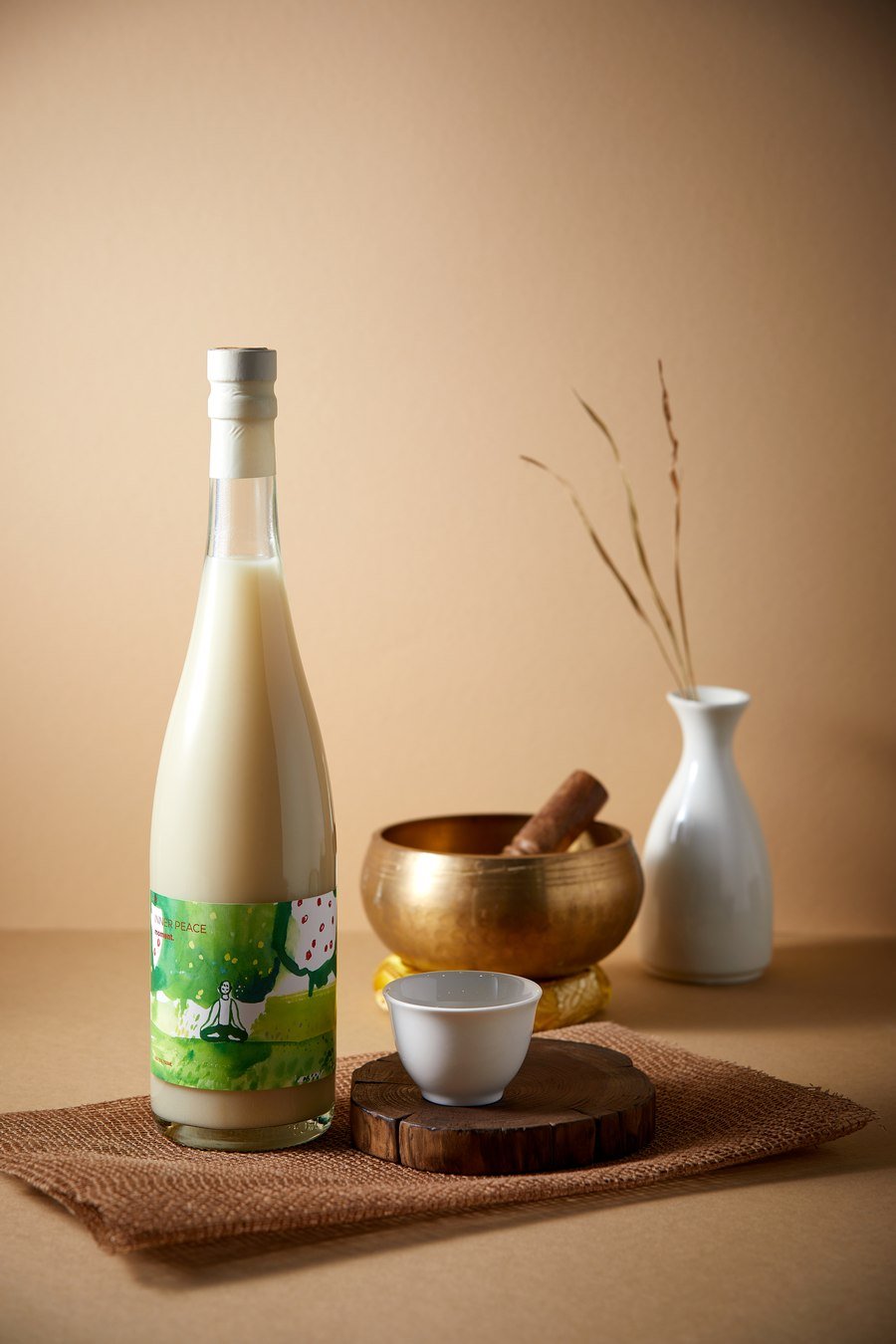
INNER PEACE Calm
INNER PEACE Calm combines organic rice with dill and mint.
The idea is quietness: “true calm found through emptying rather than adding.”
For Baek, this is the bottle that comes closest to the sangseonyaksu philosophy behind BeWater Brew. Dill and mint give the drink a fresh herbal edge, while the aged rice base keeps it soft underneath.
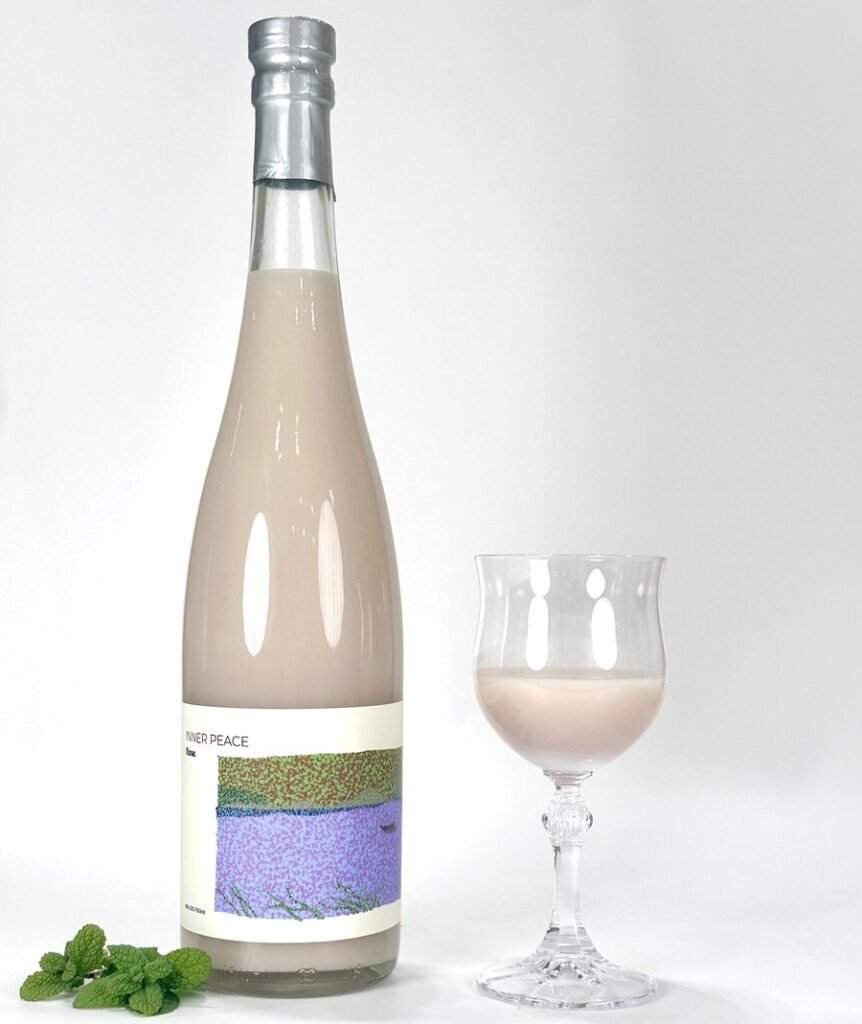
INNER PEACE Flow
INNER PEACE Flow moves in another direction.
It combines organic rice and grapes with lavender and mint, built around the idea of immersion and concentration.
BeWater Brew describes it as an attempt to bring some of the layered, aromatic character associated with rosé or red wine into the structure of makgeolli.
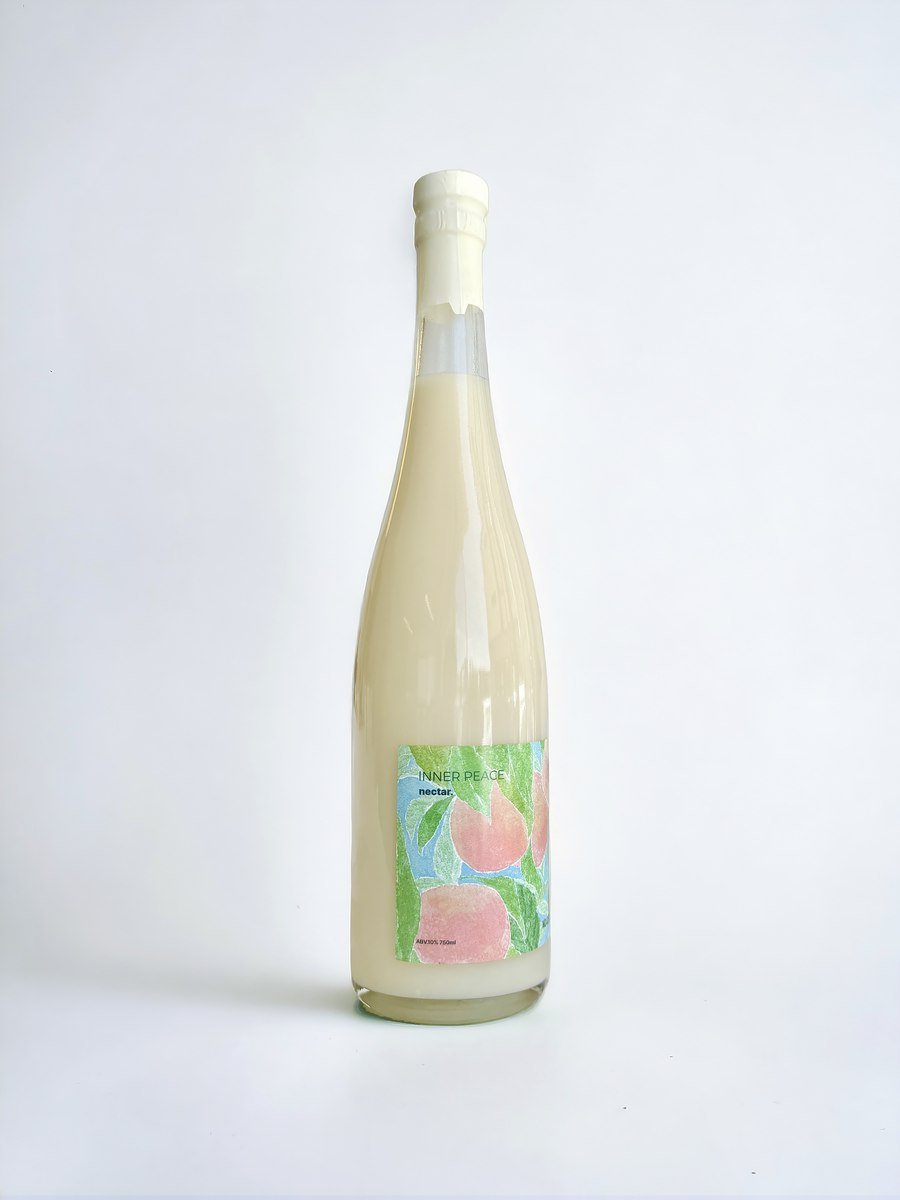
INNER PEACE Nectar
INNER PEACE Nectar uses peach and mint and takes its name from the mythical drink associated with immortality.
The peach also carries a familiar East Asian association with longevity and an idealized world beyond ordinary life.
The result is the lighter, sweeter side of the INNER PEACE idea, framed around refreshment and a wellness-oriented sensibility.
INNER PEACE Moment
INNER PEACE Moment combines apple, thyme, and lemon around a much simpler thought: being present.
BeWater Brew connects the apple to the familiar image of Newton’s sudden moment of realization.
Here, though, there is no grand discovery to make. The idea is simply to put everything else down for a moment.
The labels extend the concept visually as well. BeWater Brew has worked with illustrators including la kitki and Han Cha-yeon to turn different inner states into landscapes and images on the bottles.
In April 2026, INNER PEACE Calm won the Excellence Award in the takju category at the 2026 K-Food Fermentation Culture Expo’s Woori Sool Awards. The competition evaluates not only the drink itself, but also elements such as story, design, and marketability.
But perhaps the clearest explanation of “meditation sool” comes from how Baek asks people to drink it.
Not ice-cold straight from the refrigerator.
He recommends around 10 to 15°C, when the aromas have more room to open up, ideally in a white-wine or tulip-shaped glass.
First, look at the color.
Then swirl the glass gently and smell it.
Finally, take a small sip and let it sit for a moment instead of swallowing immediately.
It looks a lot like wine tasting.
For BeWater Brew, that’s the meditation.
Not sitting cross-legged beside a bottle. Just slowing down enough to notice what is already in the glass.
When Makgeolli Travels
BeWater Brew’s makgeolli has also begun finding its way beyond Korea.
More recently, the brewery took part in Korean Food & Sool Week 2026 in Singapore. That led to a partnership with Sool Cellar, where its makgeolli is now sold to consumers in Singapore.
What struck Baek most was that some consumers in Singapore already knew more about makgeolli than he had expected. Some had tried different styles while traveling in Korea, so a makgeolli like INNER PEACE did not need to be introduced entirely from scratch.
Because it is unpasteurized, though, shipping it abroad depends on a cold chain kept below 2°C the entire way.
Baek hopes INNER PEACE will eventually be remembered as more than another bottle of makgeolli.
He describes it as an “object of mindfulness,” something that might give people, in Korea or elsewhere, a small moment to check in with themselves.
That may sound ambitious for a bottle of rice wine.
But makgeolli itself is already becoming harder to describe with a single image. Different rice, different nuruk, herbs, fruit, longer aging, natural fermentation, new ways of serving it. The category is widening.
If you want to understand the basics behind that range, from rice and nuruk to sweetness, carbonation, and pasteurization, start with our guide to what makgeolli actually is.
BeWater Brew is exploring one corner of that widening space.
A Different Direction for Korean Alcohol
BeWater Brew does not currently run a formal tour program.
Baek says visitors who contact the brewery through Instagram in advance may be able to arrange a visit.
His hope is fairly simple: that people outside Korea eventually know there is such a thing as a Korean “meditation sool,” just as other drinking cultures have developed rituals around slowing down and paying attention to what is in the glass.
Whether INNER PEACE becomes widely known is another question.
What makes BeWater Brew worth looking at now is the question behind it.
Korean alcohol is no longer changing in only one direction. Some producers are rediscovering old methods. Some are looking harder at Korean ingredients. Others are trying to work out what a distinctly Korean whisky might become.
Whether a bottle like INNER PEACE is also legally jeontongju is a separate question, one we untangle in our guide to what traditional Korean liquor actually means.
And in Sangju, one small brewery is asking whether drinking itself can feel different.
BeWater Brew is not the whole story of where Korean alcohol is going.
It is one small scene showing just how many directions that story can take.